
TL;DR:
- An effective event music selection workflow ensures seamless coordination from pre-event planning to live management. It involves phased planning, request control, and technical alignment to create a cohesive atmosphere. Proper structure and communication prevent chaos, ensuring guests enjoy a memorable musical experience.
An event music selection workflow is the systematic process organisers use to choose, control, and adapt music to match event themes and guest expectations from the first arrival to the final farewell. Without a defined process, even well-intentioned playlists collapse under crowd pressure, awkward silences, or genre whiplash that clears the dance floor. The tools available today, including Rekwest for request management, Spotify for playlist curation, and Hooray.live for guest surveys, make a structured approach more achievable than ever. This guide walks you through every phase of that process, from pre-event planning to live adjustments on the night.
What does an event music selection workflow actually involve?
Music curation for gatherings is the industry term professionals use. The event music selection workflow is the operational layer that sits on top of it, turning creative choices into a repeatable, manageable process. The two concepts work together: curation defines what music fits, and the workflow defines how it gets selected, approved, and played.
The workflow covers three distinct phases. Pre-event planning sets the foundation through guest research and theme alignment. Live event management handles requests, pacing, and real-time decisions. Post-event review captures what worked for future reference. Most organisers who struggle with music do so because they treat it as a single task rather than a phased process.
What preliminary steps are essential for planning event music?
The preparatory phase determines everything that follows. Start by collecting guest music preferences through invitations, online surveys, or a dedicated music planning form. Platforms like Hooray.live allow guests to submit song preferences before the event, giving you concrete data rather than guesswork. Spotify’s collaborative playlist feature lets guests add suggestions directly, which you can then review and approve.
Aligning music style with your event theme and guest demographic is not optional. A corporate awards dinner in Glasgow calls for a very different energy arc than a wedding ceilidh in the Highlands. Age range, cultural background, and the formality of the occasion all shape which genres belong in the mix.
The concept of an energy arc is one of the most useful frameworks in event audio planning. You welcome guests with inviting, upbeat tracks, raise energy through dance anthems and culturally relevant styles during peak hours, then wind down with mellow ballads or jazz to signal the event’s close. That arc gives the evening a narrative shape that guests feel even if they cannot name it.
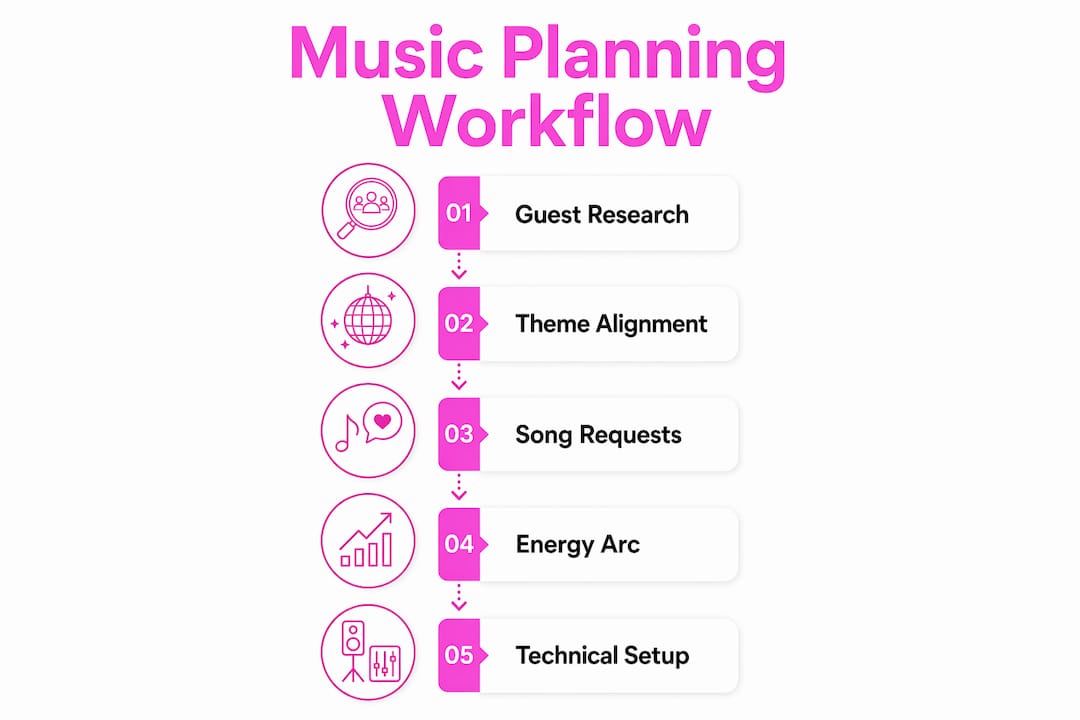
Pro Tip: Use the Freshentertainments Spotify playlist planning form to capture must-play and do-not-play preferences before you brief your DJ. It takes ten minutes and prevents hours of back-and-forth on the night.
The planning calendar matters too. A phased technical schedule for sound engineering recommends a site survey 8–12 weeks before the event, final technical discussions 4–6 weeks out, logistics confirmed 1–2 weeks prior, and setup with a full soundcheck on the morning of the event. Tying your music planning milestones to this same calendar keeps audio and curation decisions aligned.
| Planning Phase | Music Task | Timing |
|---|---|---|
| Initial planning | Collect guest preferences and theme brief | 8–12 weeks before |
| Creative development | Build draft playlists and energy arc | 4–6 weeks before |
| Final confirmation | Approve must-play list and DJ brief | 1–2 weeks before |
| Event morning | Soundcheck and playlist load | Day of event |
How do you design a centralised song request workflow?
A structured request workflow for request-enabled events includes three components: a pre-event request phase, a centralised digital queue, and continuous queue review until the dance floor energy stabilises. Getting this right separates a smooth evening from a chaotic one.
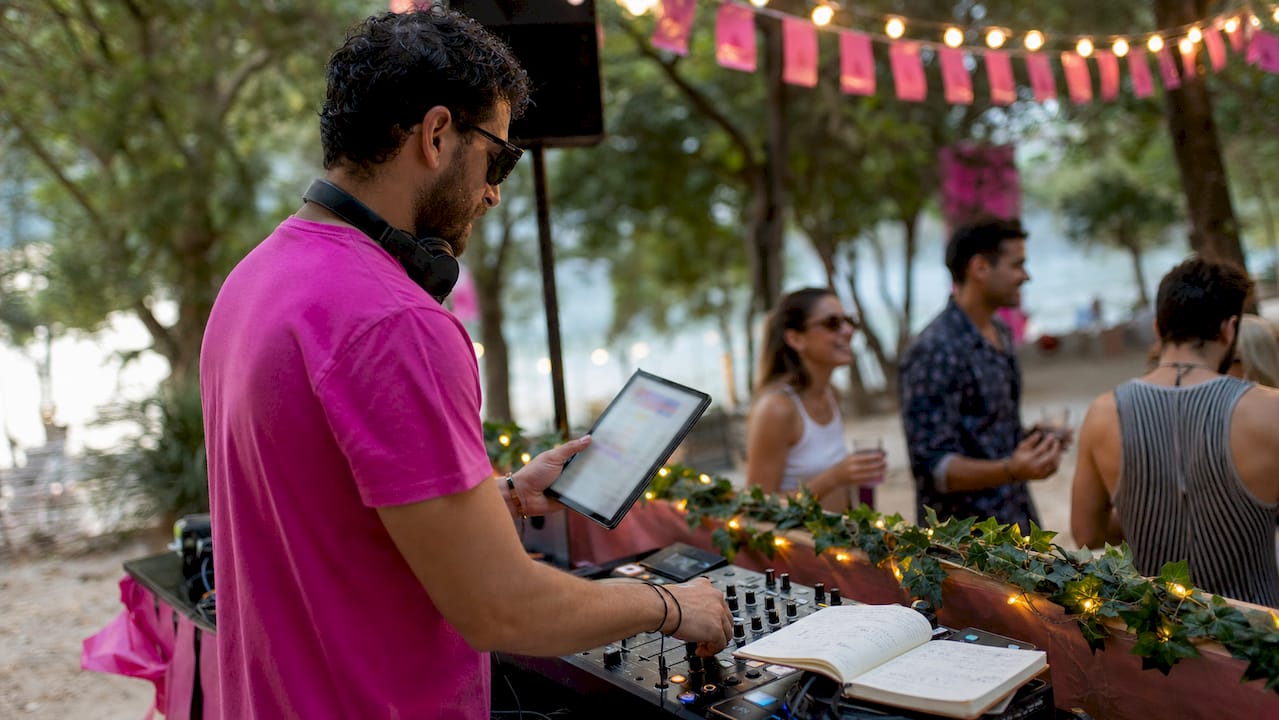
The rules for handling requests must be decided before the event starts, not during it. Define which songs are eligible, who approves requests, and how declined requests are communicated to guests. Polite, consistent messaging for declined requests prevents awkward moments and keeps goodwill intact.
Assign one person as the request controller. Multiple staff managing requests without a clear lead causes genre and pacing inconsistencies that are very difficult to recover from mid-event. Single controller models are critical for large events where crowd energy can shift quickly.
Rekwest uses a four-stage request queue with tabs labelled Pending, Accepted, Played, and Declined. This system improves operational clarity and integrates directly with DJ software exports. Here is how to operate it effectively:
- Open the Pending queue at the start of each set and review new requests.
- Accept tracks that fit the current energy arc and move them to Accepted.
- Decline requests that conflict with theme or pacing, using a pre-written polite message.
- Allow accepted requests to auto-export to playlists, reducing manual workload during the event.
- Mark tracks as Played once queued, keeping the queue accurate in real time.
Pro Tip: Limiting guest requests to a curated repertoire acts as safety rails. Rekwest’s repertoire restriction feature means guests can only browse and request songs from your approved list, so out-of-theme requests never reach the queue.
| Approach | Guest Freedom | Organiser Control | Risk Level |
|---|---|---|---|
| Open requests (any song) | High | Low | High |
| Curated repertoire requests | Medium | High | Low |
| No requests allowed | None | Full | Very Low |
The curated repertoire model is the most practical for weddings and corporate events. It gives guests a sense of participation while keeping the music direction firmly in your hands.
What strategies ensure your playlist meets pacing and atmosphere goals?
Replacing a wish-list with a structured ranked framework greatly improves DJ performance and guest satisfaction. Build a must-play list of 40–50 songs, a do-not-play list, and detailed moment-by-moment notes for each segment of the event. Deliver the DJ brief well before the event, not on the day.
Specifying exact track versions matters more than most organisers realise. Providing exact track versions and edits to your DJ, rather than generic song titles, ensures choreographed moments proceed without timing errors. For a first dance, note the specific recording, the fade time, and whether a live edit or studio version is required. A wrong version of a song at the wrong moment is one of the most common and avoidable disruptions at weddings.
Genre diversity within a coherent theme is achievable when you plan by segment rather than by genre. Assign each segment of the evening a mood and energy level, then select tracks that serve that mood regardless of genre. A Scottish wedding might move from traditional ceilidh tunes through 90s anthems to current chart hits, all within a single evening, provided the transitions are managed carefully.
- Build a ranked must-play list of 40–50 tracks covering every segment.
- Create a do-not-play list and share it with your DJ in writing.
- Specify exact song versions, including edit type and fade timing, for key moments.
- Assign energy levels (low, medium, high) to each playlist segment.
- Review the full playlist against the energy arc before finalising.
- Allow guest input only within the curated repertoire to prevent theme drift.
The energy arc is your quality control mechanism. If a track does not serve the arc at the point it is scheduled, it belongs elsewhere in the programme or not at all.
How does technical planning enhance the music selection process?
The event sound design process and music curation are not separate disciplines. They are two halves of the same planning exercise. A track that sounds powerful in a studio recording can lose all its impact in a venue with poor acoustics or incorrect speaker placement.
In complex or outdoor venues, music selection must account for acoustics, speaker placement, and ambient noise constraints. A garden ceremony with ambient wind noise requires different track choices and volume levels than a purpose-built ballroom. Your song choices should be informed by the acoustic profile of the space, not just personal preference.
Coordinating with your sound engineer and DJ before the event is non-negotiable. Share your playlist and energy arc with both parties so they can plan transitions, volume curves, and equipment settings in advance. Last-minute adjustments during the event are inevitable, but they should be minor corrections, not structural changes.
- Conduct a site survey and note the acoustic characteristics of each zone.
- Discuss speaker placement with your sound engineer relative to your playlist’s dynamic range.
- Confirm volume levels for each segment, particularly for speeches and quiet moments.
- Use sound and lighting packages to align mood lighting with playlist energy shifts.
- Schedule a full soundcheck on the morning of the event with the actual playlist loaded.
- Assign one person to monitor sound levels throughout the event and flag issues immediately.
The soundcheck is your final rehearsal. Treat it as seriously as the event itself.
Key takeaways
A structured event music selection workflow, built around phased planning, centralised request control, and technical coordination, is the single most reliable method for delivering a consistent and memorable event atmosphere.
| Point | Details |
|---|---|
| Phase your planning | Align music milestones with the technical schedule, starting 8–12 weeks before the event. |
| Use an energy arc | Structure playlists to rise and fall in energy, giving the evening a clear narrative shape. |
| Centralise request control | Assign one controller and use a four-stage queue to maintain pacing and theme coherence. |
| Specify exact track versions | Give your DJ precise recording details for key moments to prevent timing errors. |
| Link music to sound design | Venue acoustics and speaker placement directly affect which tracks work in a given space. |
What i have learned from running music workflows at live events
The biggest mistake I see organisers make is treating the playlist as the finished product. A playlist is a plan. The workflow is what turns that plan into a live experience that holds together under pressure.
The single most valuable change I have made over the years is moving to a one-person request controller model. Before that, requests were handled by whoever was nearest the DJ booth. The result was predictable: genre chaos, energy crashes, and guests who felt the music was out of control. One person with clear authority and a polite decline script changes everything. Guests respect the process when it is communicated clearly.
I have also learned that the do-not-play list is more important than the must-play list. Every organiser has songs they love. Far fewer think carefully about what they absolutely cannot have played. At a corporate event I worked on, a track appeared that was associated with a recent public controversy involving one of the guests. It was not on any approved list. It was simply in the DJ’s library and felt like a crowd-pleaser. A thorough do-not-play list, shared in writing, would have prevented it entirely.
The energy arc concept from Hooray.live is something I now build into every brief I write. Clients often push back initially, wanting their favourite high-energy tracks played early. The data from events consistently shows that guests who are eased into the energy arc stay on the dance floor longer and leave with a stronger positive impression of the evening. Front-loading the big tracks is a short-term win that costs you the second half of the night.
Finally, the technical and creative sides of music planning must be treated as one process, not two. The wedding entertainment timeline and the playlist brief should be built together, not handed off separately to different suppliers. When the DJ, sound engineer, and event organiser are working from the same document, the evening runs as planned.
— STUART
How Freshentertainments can support your music planning
Planning a flawless event soundtrack takes more than a good playlist. It takes a structured process, the right people, and suppliers who understand how music, sound, and atmosphere work together.
Freshentertainments brings together professional DJ hire, MC services, and bespoke sound and lighting packages designed specifically for weddings and corporate events across Scotland. Every booking includes a detailed music planning consultation, so your energy arc, must-play list, and request workflow are built into the brief from day one. Whether you are planning an intimate celebration or a large-scale event, the team at Freshentertainments can help you create a perfect wedding party atmosphere that guests talk about long after the night is over. Explore the full range of wedding entertainment packages to find the right fit for your event.
FAQ
What is an event music selection workflow?
An event music selection workflow is the structured process of choosing, approving, and adapting music across all phases of an event, from pre-event planning through to live request management and pacing control.
How do i choose event music that suits all guests?
Collect guest preferences via surveys or a collaborative Spotify playlist before the event, then build a curated repertoire that covers the demographic range while staying true to the event theme.
What is the best way to handle song requests at events?
Use a four-stage digital queue (Pending, Accepted, Played, Declined) with one designated controller, and limit requests to a pre-approved repertoire to maintain pacing and theme coherence throughout the event.
How far in advance should i plan my event playlist?
Begin collecting preferences and building your draft playlist 4–6 weeks before the event, and deliver the final DJ brief with exact track versions and moment-by-moment notes at least one to two weeks prior.
Why does venue acoustics affect music selection?
Venue acoustics, speaker placement, and ambient noise all affect how tracks sound in a live space. Songs with heavy bass or wide dynamic range may not translate well in certain venues, so music choices should be reviewed alongside the sound engineering plan.