
TL;DR:
- Sound design for events involves creating clear, emotionally impactful audio environments through careful planning, configuration, and real-time monitoring. It combines technical elements like acoustic mapping, speaker placement, and system optimization with creative techniques such as spatialisation and sonic layering to enhance audience experience. Effective collaboration, early planning, and investing more budget into sound are crucial for delivering memorable live events.
Sound design for events is the deliberate engineering and artistic process of crafting audio environments that deliver flawless clarity, emotional impact, and consistent quality across every corner of a venue. It is not simply choosing speakers and pressing play. Professional event sound design covers planning, configuring, operating, and monitoring the entire audio system from the first rehearsal to the final note. The industry term is live sound engineering, and understanding what it involves separates events that feel polished from those that feel amateur. Whether you are organising a corporate conference, a wedding reception, or a large-scale concert, the principles of sound design for live events determine whether your audience remembers the experience for the right reasons.
What is sound design for events?
Sound design for events is defined as a comprehensive process that spans system design, real-time operation, and continuous monitoring throughout the duration of an event. The industry recognises three core functional blocks within live sound engineering: sound reinforcement, audio mixing, and system optimisation. Sound reinforcement amplifies and distributes audio using microphones, amplifiers, and speaker arrays. Mixing balances the levels of every audio source in real time, while system optimisation tunes the entire setup to deliver the best possible sound quality for the audience. Together, these three blocks form the backbone of any professional event audio setup.
The process begins long before the event itself. Acoustic mapping and speaker distribution planning are the first steps, creating consistent sound quality across all audience areas. Tools like EASE (Enhanced Acoustic Simulator for Engineers) allow designers to model a venue digitally and predict how sound will behave before a single cable is run. Digital Signal Processors (DSPs) then handle real-time tuning, managing equalisation, delay alignment, and feedback suppression during the event. This is not guesswork. It is a structured, measurable discipline.
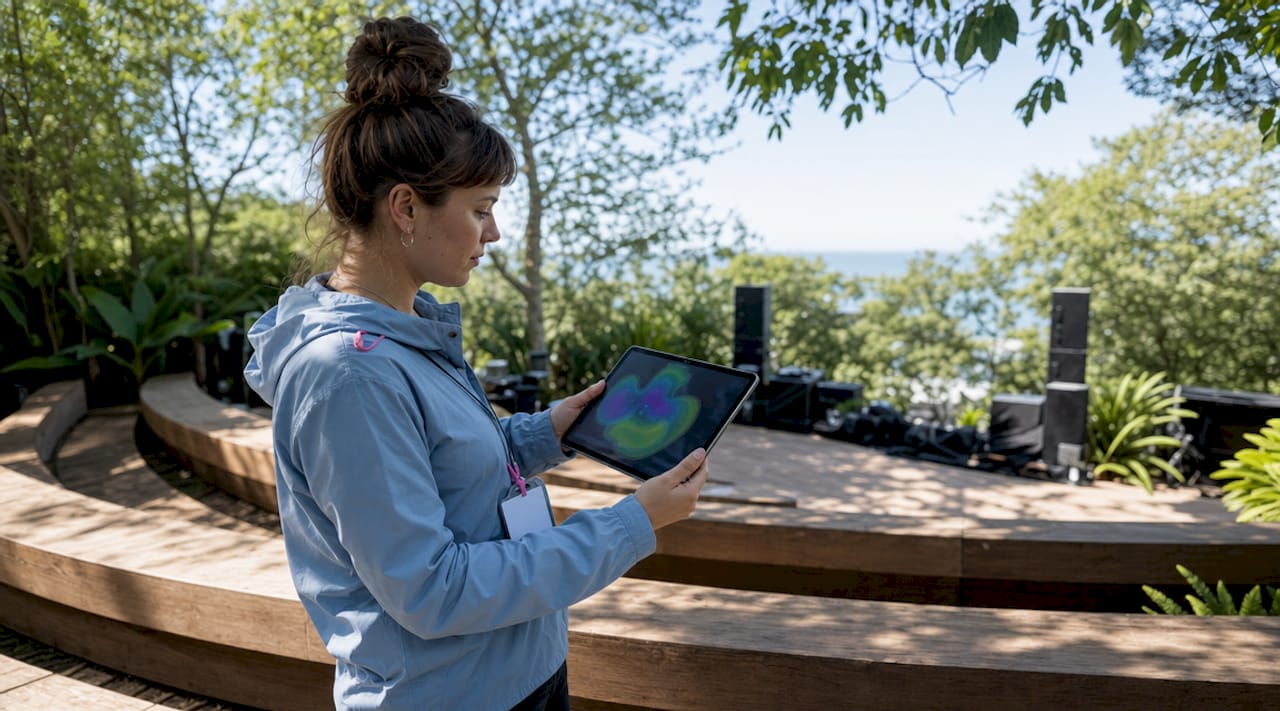
Pro Tip: Ask your sound engineer to share the acoustic model of your venue before the event. Seeing the predicted coverage map gives you confidence that every seat will receive balanced audio, and it opens a productive conversation about any problem areas.
What are the core technical components of event sound engineering?
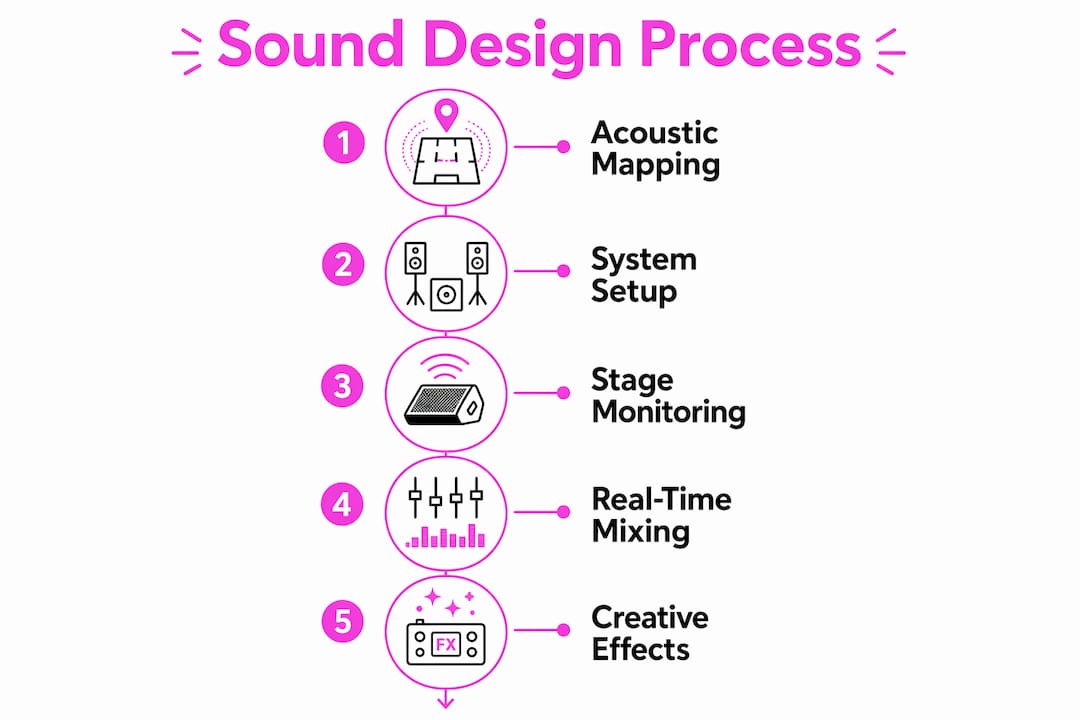
Understanding the technical components helps you ask better questions and make smarter decisions when working with a sound team. The workflow follows a logical sequence.
- Acoustic mapping. The room is measured using standardised metrics. ISO 3382 provides the framework for measuring reverberation time, clarity, and other acoustic parameters in performance spaces. These measurements reveal how long sound lingers in the room and where reflections cause problems.
- Speaker placement and calibration. Line arrays, subwoofers, and fill speakers are positioned based on the acoustic model. Placement is physical and cannot be corrected by software alone. Proper acoustic treatment and speaker placement are foundational because expensive mixers cannot fix poor venue acoustics.
- Sound reinforcement. Microphones capture the source, amplifiers drive the signal, and speakers project it. The choice between cardioid, supercardioid, or omnidirectional microphones depends on the source and the ambient noise level of the venue.
- Audio mixing. The front-of-house (FOH) engineer balances every channel in real time. This includes speech, music, video playback, and any live instruments. Mixing desks from manufacturers such as Yamaha, DiGiCo, and Allen & Heath are standard in professional event production.
- System optimisation. DSPs apply corrective equalisation and time alignment. Speech Transmission Index (STI) measurements, defined by IEC 60268-16, confirm whether the system achieves the intelligibility targets set for the event.
| Technical element | Primary purpose |
|---|---|
| Acoustic mapping (ISO 3382) | Measures reverberation and identifies problem frequencies |
| Speaker placement and line arrays | Achieves uniform coverage across the audience area |
| DSP and equalisation | Corrects frequency response and aligns speaker timing |
| FOH mixing console | Balances all audio sources in real time |
| STI measurement | Confirms speech clarity meets the event’s intelligibility target |
A separate but equally critical element is stage monitoring. Performers need to hear themselves clearly on stage, and this mix is entirely different from what the audience hears. Managing both the FOH mix and the stage monitor mix simultaneously is one of the defining skills of a live sound engineer.
How does sound design differ by event type and venue?
The same technical principles apply across all events, but the application changes dramatically depending on the context. A corporate conference in a glass-walled boardroom presents entirely different acoustic challenges from an outdoor music festival or a candlelit wedding reception in a stone-walled Scottish castle.
- Corporate events prioritise speech intelligibility above all else. The STI score becomes the primary design target. Reverberation must be controlled so that every word from the podium reaches the back row with clarity. Systems tend to use distributed speaker arrays rather than large line arrays, keeping sound levels consistent without excessive volume.
- Concerts and live music events demand high sound pressure levels, wide frequency response, and precise time alignment between speaker clusters. Large-scale festivals like Sonar Festival rely on detailed acoustic mapping to manage the interaction between multiple stages and prevent sound bleed.
- Hybrid and streaming events add a layer of complexity. The mix for a live audience and the mix captured for broadcast are not the same. A dedicated broadcast engineer often handles the streaming feed separately, using different microphone placements and processing chains to suit the compressed audio formats used online.
- Immersive and experiential events treat the entire space as a sonic canvas. Sound moves around the room deliberately, guiding attention and creating atmosphere rather than simply reinforcing a source.
“Venue acoustics are not a problem to be solved after the equipment arrives. They are the first design constraint, and every decision that follows must respect them.” — DHS Event Solution
Real-time monitoring is non-negotiable regardless of event type. A sound engineer who is not actively listening and adjusting throughout the event is not doing the job. Redundancy planning, including backup amplifiers, spare cables, and secondary mixing paths, protects against the technical failures that are inevitable in live production.
What creative techniques elevate sound design beyond basic audio setup?
The technical foundation gets the sound into the room. Creative sound design determines what that sound does to the people in it. Immersive sound design uses spatialisation, sonic textures, and deliberate sound movement to create narrative and emotional impact. This is where live sound engineering crosses into artistic territory.
- Spatialisation places sound in three-dimensional space. Rather than a single stereo image, audio moves between speaker clusters to draw attention, create anticipation, or signal a transition. A product launch, for example, might use a slow sweep of sound from the back of the room to the stage to build tension before a reveal.
- Sonic layering combines ambient textures, music beds, and live audio to create depth. The audience may not consciously notice the low-frequency hum of a crowd ambience track underneath a speaker’s introduction, but it fills the room and prevents the uncomfortable silence that makes audiences restless.
- Sound choreography coordinates audio cues with lighting changes, video playback, and stage movement. The result is that the audience experiences a unified sensory moment rather than separate technical elements happening simultaneously.
The critical discipline here is restraint. Overusing obvious sound effects reduces narrative impact. Skilled immersive designers plan transitions, spatial cues, and sonic thresholds rather than cueing a playlist of effects. The sound should guide perception without the audience noticing the mechanism. Think of it as the difference between a film score that manipulates your emotions invisibly and a sound effect that makes you aware you are being manipulated.
Pro Tip: When briefing your sound designer on a creative event, describe the emotional journey you want the audience to experience rather than listing specific effects. “We want the room to feel intimate during the welcome and then electric by the time the main act begins” gives a skilled designer far more to work with than “can you add some reverb?”
Coordinating sound with event lighting is particularly powerful. The two disciplines share timing cues and emotional intent, and when they are designed together from the outset, the results are noticeably more cohesive than when they are bolted together on the day.
How can event organisers collaborate effectively with sound designers?
The quality of the final audio experience depends as much on the working relationship between the organiser and the sound team as it does on the equipment. These are the steps that make the difference.
- Brief early and in detail. Share the event programme, the venue layout, the expected audience size, and any technical constraints as early as possible. Sound designers who receive a full brief two months out produce better results than those briefed two weeks before the event.
- Provide accurate venue information. Dimensions, ceiling height, surface materials, and any existing installed audio systems all affect the design. If possible, arrange a site visit with the sound engineer before finalising the technical specification. Guidance on collaborating with event venues can help you navigate the conversation with venue management.
- Attend the sound check. A sound check is not a formality. It is the moment when the system is tuned to the specific conditions of the day, including the acoustic effect of a room full of people versus an empty room. Your presence means you can flag any concerns before the audience arrives.
- Coordinate across departments. The sound team needs to know what the lighting team, the staging crew, and the streaming team are doing. Conflicting technical requirements discovered on the day of the event are expensive and stressful to resolve.
- Avoid late changes. Changing the running order, adding a live instrument, or requesting a different microphone configuration on the day of the event creates risk. Every change has a technical consequence. Communicate changes as early as possible and accept that some requests may not be achievable without compromising quality.
Key takeaways
Sound design for events is a structured technical and creative discipline that requires acoustic measurement, precise equipment placement, real-time mixing, and coordinated collaboration between the organiser and the sound team to deliver a consistent, engaging audience experience.
| Point | Details |
|---|---|
| Three core functional blocks | Sound reinforcement, audio mixing, and system optimisation form the foundation of every professional event audio setup. |
| Acoustic measurement first | ISO 3382 and STI metrics must guide speaker placement and system tuning before any mixing begins. |
| Context changes everything | Corporate, concert, hybrid, and immersive events each require a different technical and creative approach to sound. |
| Creative design requires restraint | Spatialisation and sonic layering guide audience emotion most effectively when the mechanism stays invisible. |
| Early collaboration is critical | Briefing your sound engineer early, attending the sound check, and coordinating across departments prevents costly last-minute problems. |
Why sound design deserves more of your event budget than you think
Most event organisers I speak with allocate their budget to what guests will see: the venue, the décor, the catering. Sound is treated as a utility, something to sort out once everything else is confirmed. That is a mistake I have watched undermine otherwise exceptional events more times than I can count.
The reality is that poor audio is the single most disruptive element at any live event. A guest can overlook a centrepiece that does not quite match the colour scheme. They cannot ignore a speech they cannot hear, feedback that makes them wince, or music that sounds thin and distant. Sound is the one element that is physically inescapable. It reaches every person in the room simultaneously, and it shapes their emotional state whether they are aware of it or not.
What surprises most organisers is how much of sound design happens before the event. The acoustic measurement and speaker placement work that happens in the days before an event is where the real quality is built. By the time guests arrive, a well-designed system should require only minor real-time adjustments. If your engineer is fighting the room all night, the groundwork was not done properly.
My advice is to treat sound design as you would treat catering. You would not hire a caterer without discussing the menu, the dietary requirements, and the service style in detail. Apply the same rigour to your audio brief. The events where sound truly transforms the experience, where guests feel the music rather than just hear it, are the ones where the sound designer was part of the conversation from the very beginning. For weddings in particular, understanding how sound shapes atmosphere is the difference between a reception that feels alive and one that simply passes.
— STUART
Professional sound design for your next event with Freshentertainments
Freshentertainments brings award-winning expertise in event sound and entertainment to weddings and corporate events across Scotland and beyond. Every package is built around your venue, your programme, and the specific atmosphere you want to create, from intimate wedding receptions to large-scale celebration nights. The team handles acoustic planning, professional DJ and MC services, and full audio coordination with lighting and staging, so every element works together from the first dance to the final song. If you are ready to make sound a priority at your next event, explore the entertainment packages available and find the right fit for your occasion.
FAQ
What is the difference between sound design and sound engineering?
Sound engineering refers to the technical operation of audio equipment, while sound design encompasses both the technical setup and the creative decisions about how sound shapes the audience experience. In practice, professional live sound engineers perform both roles at events.
How early should I book a sound designer for my event?
Book your sound designer at the same time you confirm your venue, ideally three to six months before the event. Early booking allows time for site visits, acoustic planning, and coordination with other technical suppliers.
Why does sound quality vary so much between venues?
Venue acoustics depend on room geometry, surface materials, ceiling height, and the number of people present. Acoustic parameters such as reverberation time vary significantly between a carpeted hotel ballroom and a stone-walled castle, requiring different speaker configurations and tuning approaches for each.
What is a sound check and why does it matter?
A sound check is the pre-event session where the audio system is tuned to the specific conditions of the venue on that day. It accounts for the acoustic effect of the room, the temperature, and any last-minute changes to the programme. Skipping it significantly increases the risk of audio problems during the event.
Can good sound design work for small events and weddings?
Sound design principles apply to events of any size. A wedding reception for 80 guests benefits from the same acoustic planning and real-time monitoring as a concert for 800. The scale of the equipment changes; the discipline does not.