
TL;DR:
- Effective venue collaboration depends on detailed, written agreements and strategic site inspections to prevent misunderstandings. Building long-term relationships through clear communication, contractual role allocation, and digital planning tools enhances event success. Strong preparation and trusting partnerships enable swift problem-solving and seamless execution, even under tight timelines.
Knowing how to collaborate with event venues can be the difference between an event that runs like clockwork and one that unravels before the first guest arrives. Yet most planners underestimate just how much structured preparation goes into a productive venue partnership. Verbal agreements, last-minute layout changes, and vague role divisions are the most common culprits behind events that fall short. This guide walks you through every stage of the process, from writing your first inquiry to coordinating on the day itself, so you can build venue relationships that genuinely serve your events and your clients.
Key takeaways
| Point | Details |
|---|---|
| Start with a structured RFP | Written inquiries with clear timelines and requirements prevent misunderstandings and speed up venue comparisons. |
| Use site visits strategically | Treat inspections as intelligence-gathering sessions that inform contract negotiations, not just casual walkthroughs. |
| Document every agreement | Explicit contracts covering roles, staffing, and cancellation terms reduce confusion during event execution. |
| Use digital layout tools | Real-time collaborative diagrams keep all stakeholders on the same page and reduce approval delays. |
| Build relationships, not transactions | Strong, ongoing venue partnerships provide a safety net when timelines compress or problems arise unexpectedly. |
How to collaborate with event venues: start with preparation
The single most underused tool in venue collaboration is the written Request for Proposal, commonly known as an RFP. Most planners send a quick email asking about availability and pricing, then wonder why they receive inconsistent, hard-to-compare responses. Treating venue selection as a two-sided process changes the dynamic entirely. You are qualifying venues just as much as they are pitching to you.
A well-structured RFP sets the tone for the entire working relationship. It signals that you are organised, that you have clear expectations, and that you will hold partners accountable. Aligning on scope early using documented requirements is one of the most reliable ways to prevent misunderstandings that surface weeks later during planning.
Here is what every venue inquiry or RFP should include:
- The event date and any hold dates required
- Expected guest numbers and layout requirements
- Required facilities (AV, catering, breakout spaces, loading access)
- Deadlines for responding and for your internal decision
- Named contacts on both sides
- Any external suppliers or entertainers you plan to bring in
- Documents you need from the venue (licences, insurance, capacity certificates)
Pro Tip: Format your venue inquiry so that the information you receive can be copied directly into an internal decision memo. If you structure questions around the criteria you will use to compare venues, you eliminate a second round of follow-up emails and speed up your shortlisting significantly.
Consistency in how you gather information also helps when presenting options to clients or stakeholders. If every venue response follows the same structure, comparisons become straightforward and decisions get made faster.
Site inspections: more than a walkthrough
Once you have shortlisted venues, the site inspection is where many planners lose their negotiating advantage. A casual visit to admire the space is not the same as a structured site inspection that validates operational readiness. The distinction matters enormously.
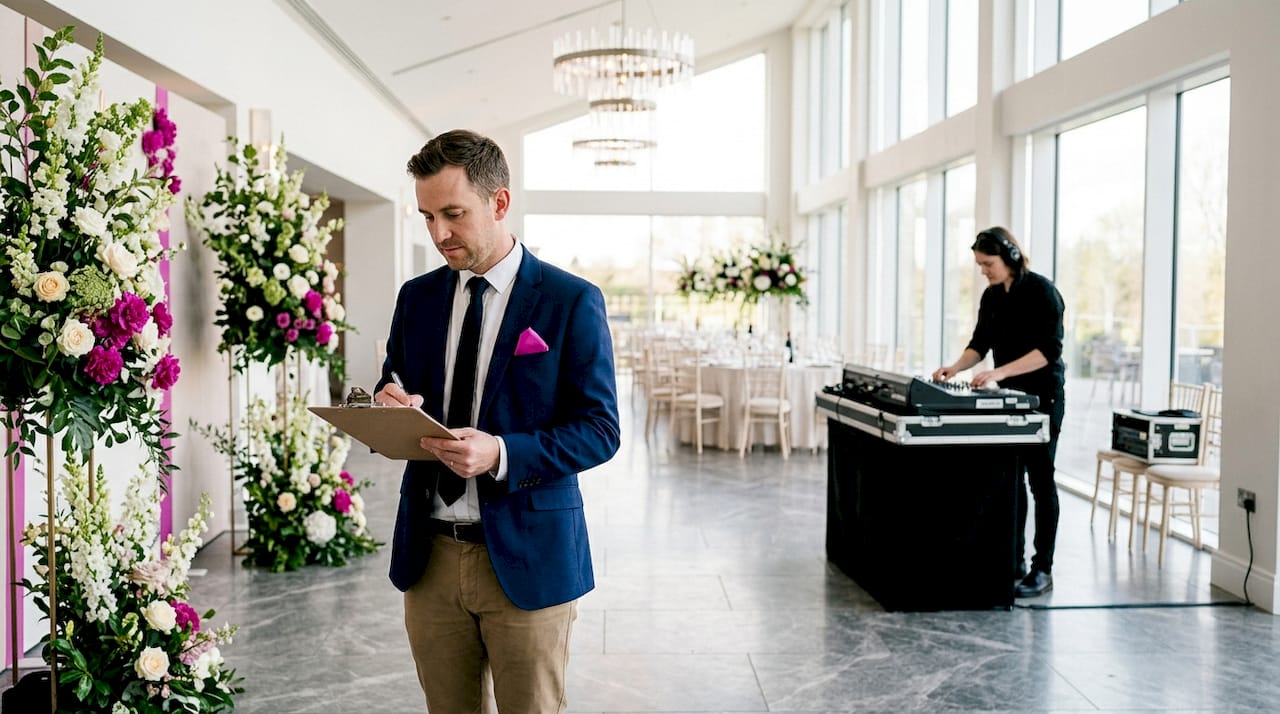
A proper inspection should cover four core areas. AV and technology: test the systems yourself if possible, ask who operates them on the day, and clarify handover procedures. Catering logistics: walk the route from the kitchen to the event space, assess holding areas, and ask about the staffing ratios for your guest numbers. Operational readiness: check setup windows, parking, load-in routes, and any restrictions on décor, noise, or external suppliers. Contract terms: ask directly which elements are negotiable before you receive the draft.
| Inspection area | What to verify | Why it matters |
|---|---|---|
| AV and technology | System spec, operator presence, handover process | Prevents technical failures on the day |
| Catering logistics | Kitchen proximity, holding areas, staffing ratios | Avoids service delays during meals |
| Setup windows | Access times, load-in routes, breakdown deadlines | Prevents scheduling conflicts with other events |
| External suppliers | Whether they are permitted, any surcharges | Affects your entertainment and décor choices |
| Contract terms | What is negotiable before the draft is issued | Strengthens your position before signing |
Site visits function as intelligence-gathering for contract leverage. Every operational detail you verify on site becomes a point you can push into the contract. Promises made verbally during a tour have a habit of disappearing once the event is over.
Pro Tip: Bring a checklist and take photographs during every inspection. A written record of what was shown or promised during the visit is your strongest reference point if a dispute arises later.
Contracts and role allocation
Effective venue partnerships do not run on goodwill alone. They run on clear, written agreements that leave no ambiguity about who does what and when. Explicit role allocation in contracts is one of the most direct ways to reduce operational confusion during event execution.
The following table shows how responsibilities can be divided between planner and venue, and why getting this in writing matters:
| Responsibility | Planner role | Venue role |
|---|---|---|
| Guest communications | Full ownership | Provide capacity, arrival info |
| AV setup and operation | Brief venue team on requirements | Supply and operate in-house AV |
| External entertainment | Contract, brief, and manage | Grant access and coordinate logistics |
| Catering timeline | Provide event schedule | Execute service to agreed timings |
| Health and safety | Overall event risk assessment | Venue-specific compliance and documentation |
| Cancellation terms | Agree and document in contract | Apply as per agreed policy |
Beyond the table above, setting expectations early and using project management tools to track tasks and check-ins keeps collaboration structured between initial signing and event day. A shared project board, even a simple one, removes the ambiguity of who is chasing whom and what is still outstanding.
Where planners often lose time is in assuming the venue will manage operational details without explicit instruction. Catering timings, external vendor access, and noise curfews all need to be in the contract, not in a friendly email thread that nobody can find three weeks later.
Digital tools for layout and planning
The way event planners and venues share floorplan information has changed significantly. Real-time collaborative layout tools now allow both parties to edit, comment, and approve event diagrams without the back-and-forth of static PDFs. The practical impact is measurable: fewer approval delays, fewer version conflicts, and faster stakeholder sign-off.
The specific benefits worth noting for venue collaboration include:
- Remote commenting means venue staff can flag practical issues (blocked fire exits, insufficient service access) without needing a meeting
- Real-time editing prevents the problem of multiple saved versions circulating simultaneously
- Visual layouts improve client and stakeholder buy-in far more effectively than written descriptions
- Integration with broader event management platforms keeps layout decisions connected to the wider planning timeline
Shared real-time diagrams are particularly useful when working with venues that have in-house coordinators who need to sign off on layouts independently. Rather than waiting for a scheduled call, changes can be reviewed asynchronously, which matters when both parties are managing multiple events simultaneously.
Pro Tip: Agree at the outset of your collaboration which platform will be used for layout sharing and set a rule that any change made outside that platform must be formally entered before it is considered confirmed. This one habit prevents most version control disputes.
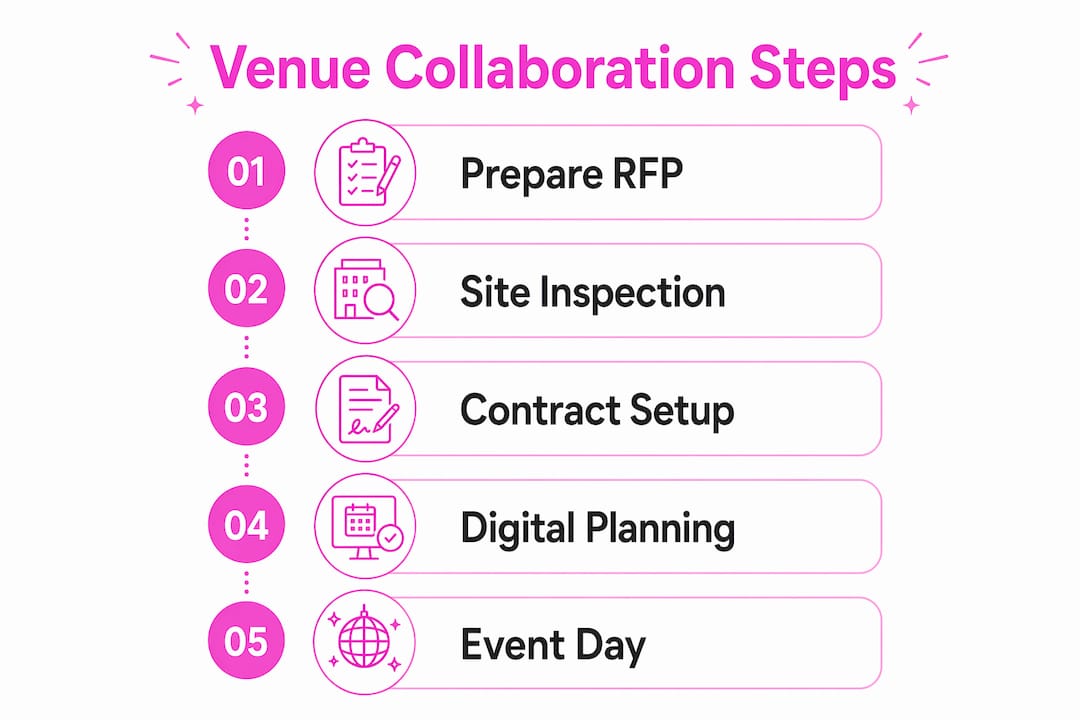
Tight timelines and event day coordination
When timelines compress, the planners who manage best are those who have already built strong working relationships with their venues. Reliable partnerships enable rapid, creative problem-solving when something changes unexpectedly, whether that is a supplier delay, a layout adjustment, or a last-minute guest count change.
Here is a practical framework for maintaining alignment under pressure:
- Send a structured briefing document to the venue at least two weeks before the event. Include the full programme, contact names for every external supplier, and any changes made since the contract was signed.
- Schedule a pre-event call with the venue coordinator in the week before the event. Keep it focused: confirm setup times, catering schedule, AV checks, and emergency contacts.
- Structure venue outreach so that responses confirm capacity, date holds, and next steps in a single message. This accelerates shortlisting when working to tight deadlines.
- On the day, assign a named contact from your team as the sole point of communication with the venue. Multiple planners giving instructions to venue staff is one of the most common sources of confusion and delay.
- Hold a brief end-of-day debrief with the venue coordinator after the event. This builds the relationship for future events and surfaces any issues while they are fresh.
The planner who treats every venue interaction as a deposit into a long-term relationship will always have more flexibility when something goes wrong.
My honest take on venue collaboration
I have worked alongside some exceptional venue teams over the years, and I have also made the mistake of trusting verbal commitments that evaporated when it mattered most.
The uncomfortable truth I have learned is that most venue collaboration problems are not caused by bad intentions. They are caused by assuming both parties have the same picture in their heads. I have seen beautifully organised events fall apart in the final hour because a catering manager had a different understanding of the service schedule than the planner who briefed them. The planner was not wrong. The venue was not wrong. The documentation was wrong.
What I have come to understand is that the early stages of any venue partnership are where the real work happens. Not the fun work of selecting spaces and imagining atmospheres, but the disciplined work of writing things down, asking uncomfortable questions during site visits, and pushing verbal promises into contractual clauses. In my experience, planners who do this consistently are the ones venues trust with repeat bookings, because they make the venue’s job easier too. You can read more about building these partnerships with premium spaces and why they benefit both sides.
The other thing I would say is this: technology is not a luxury in modern event collaboration. Digital layouts, shared project tools, and structured RFP templates are the difference between a planning process that compounds errors and one that catches them early. The investment in getting these habits right pays back every single time.
— STUART
Make your venue partnership work harder with Freshentertainments
When your venue collaboration is working well, the next step is making sure the entertainment matches the same standard. Freshentertainments works directly with premium venues across Scotland to integrate DJ hire, MC services, and bespoke entertainment packages in a way that complements, rather than complicates, your venue relationship. Their team understands venue logistics, sound restrictions, and setup windows because they have navigated them hundreds of times. If you are planning a wedding or corporate event and want entertainment that slots into your venue planning process without creating extra work, explore their wedding atmosphere packages and see how a well-coordinated entertainment partner changes the experience for everyone in the room.
FAQ
What should an event venue RFP include?
A venue RFP should include the event date, expected guest numbers, required facilities, decision deadlines, named contacts, and any documents needed from the venue such as licences and insurance certificates. Structured RFPs allow consistent comparison across multiple venues and reduce follow-up correspondence significantly.
How do site inspections help with venue negotiations?
A site inspection gives you verified, documented information about the venue’s operational capabilities, which becomes your negotiating leverage before the contract is signed. Inspection details become contract points, and verbal promises made during tours are far easier to enforce when you have written records of what was shown and discussed.
What contract terms matter most for venue collaboration?
The most critical contract terms cover booking process, event hours, payment schedules, cancellation policies, staffing commitments, external supplier permissions, and health and safety responsibilities. Explicit documentation of these points reduces disputes and makes role allocation clear for both the planner and the venue team.
How do digital layout tools improve venue collaboration?
Shared, real-time editable floorplans allow planners and venue coordinators to review, comment on, and approve layouts without scheduling calls or circulating multiple PDF versions. This prevents version drift and speeds up sign-off, particularly when stakeholders are working across different locations or managing multiple events simultaneously.
How can you coordinate effectively with venues on the day?
Assign a single named contact from your team to liaise with the venue on the event day, share a full briefing document at least two weeks in advance, and hold a focused pre-event call to confirm timings and emergency contacts. Strong relationships with venue teams make last-minute problem-solving faster and less stressful for everyone involved.