
TL;DR:
- Collaborating with upscale venues offers operational efficiency, trusted vendor networks, and measurable increases in guest satisfaction.
- Building long-term partnerships requires demonstrating reliability through pilot events and understanding venue hierarchies to foster trust.
Most event professionals assume the decision to work with upscale venues is primarily a budget conversation. It is not. Understanding why collaborate with upscale venues matters requires a fundamentally different lens: one focused on guest outcomes, operational efficiency, and long-term reputation. Luxury venues are not simply expensive backdrops. They are structured environments built to make events work better, and the planners who recognise this early gain a genuine competitive advantage. This guide unpacks the strategic case for collaboration with premium locations, from building trust with venue directors to understanding what distinguishes real luxury from expensive mediocrity.
Table of Contents
- Key takeaways
- Why collaborate with upscale venues: the ecosystem argument
- Strategic advantages of upscale venue partnerships
- Building lasting partnerships with luxury venues
- Upscale venues vs. conventional venues: what actually changes
- Challenges planners face with high-end venues
- My take on what actually makes the difference
- How Freshentertainments supports your venue partnerships
- FAQ
Key takeaways
| Point | Details |
|---|---|
| Venues are ecosystems | Upscale venues offer vetted vendor networks and established workflows that reduce friction and improve event delivery. |
| Reputation by association | Partnering with recognised luxury venues directly strengthens a planner’s professional standing and client confidence. |
| Pilot events build trust | Starting with a small-scale event is the most effective way to secure and develop a lasting venue partnership. |
| Reliability matters most | Luxury venues prioritise dependability and client satisfaction in vendors, far above competitive pricing. |
| Upscale venues lift satisfaction | Premium venues correlate with measurable improvements in guest joy scores and overall event engagement. |
Why collaborate with upscale venues: the ecosystem argument
The most persistent misconception about luxury venues is that you are paying for aesthetics. Marble floors. Crystal chandeliers. Impressive architecture. These things exist, but they are not the actual product. The real value is systemic.
Luxury venues operate as managed ecosystems with established vendor lists, operational protocols, and tested workflows. When you work within this infrastructure rather than around it, you reduce the number of unknown variables in your event by a significant margin. Venue-vetted suppliers already understand the loading dock schedule, the AV routing, the fire egress requirements, and the preferred communication hierarchy. That institutional knowledge does not appear on a floorplan.
Consider how this plays out in practice. At a conventional venue, a planner might spend the first three hours of a setup day resolving conflicts between the caterer, the AV technician, and the venue coordinator about access times and equipment placement. At a well-run luxury venue, those relationships are already established. The conversations have happened before you arrived.
There is also a subtler benefit that planners frequently overlook. Luxury environments minimise distractions present in standard venues, creating the conditions for emotional connection and better memory retention among guests. The architecture, acoustic design, and thoughtful lighting all reduce cognitive load. When a guest is not unconsciously processing uncomfortable seating, poor sightlines, or intrusive ambient noise, they are fully present in the experience you have created.
- Established vendor networks reduce coordination time and eliminate the risk of unfamiliar suppliers disrupting event flow
- Tested protocols for setup, breakdown, and service delivery mean fewer surprises on the day
- Architecture and acoustics do a significant portion of the atmospheric work before entertainment even begins
- Venue staff familiarity with high-expectation clients means your team is supported rather than carrying the full burden of service delivery
Pro Tip: When you first visit a potential venue partner, ask specifically about their preferred supplier list and how those relationships are managed. A venue that cannot clearly articulate this has not yet developed a true operational ecosystem.
True luxury in 2026 centres on execution quality and guest comfort over mere extravagance. Features like pillarless ballrooms and dedicated pre-event sanctuaries create an atmosphere of exclusivity without requiring excessive ornamentation. Recognising this distinction shapes how you select and collaborate with premium spaces.
Strategic advantages of upscale venue partnerships
Once you understand venues as operational systems, the strategic advantages of collaboration with premium locations become considerably clearer. These are not soft benefits. Several of them are directly measurable.
-
Elevated guest satisfaction scores. Hosting at luxury venues increases guest joy by approximately 40%, reflecting measurable improvements in emotional response and overall engagement. For planners who track post-event feedback, this is not a trivial figure. It is the difference between a five-star review and a four-star one.
-
Reputation by association. Clients search for planners who have worked with venues they recognise and respect. Being listed as a preferred supplier at a well-regarded luxury venue functions as a quality signal that is significantly harder to manufacture than any marketing campaign. Your association with the venue becomes part of your professional identity.
-
Better logistical support. Luxury venues tend to employ experienced coordinators who understand the difference between a rehearsal run-through and the actual event. They anticipate problems rather than react to them. This means you spend less time managing operational fires and more time delivering the client experience you were hired to create.
-
Differentiated client offerings. Access to exclusive spaces and amenities that simply do not exist in standard venues allows planners to offer clients experiences that cannot be replicated elsewhere. Exclusive use of a listed historic estate, a rooftop with an unobstructed city skyline, or a private wine cellar for pre-dinner drinks are not decorative add-ons. They are the event itself.
-
Increased earning potential. Clients who choose upscale event spaces have already signalled a willingness to invest in quality. This shifts the commercial conversation. Rather than defending your fee against budget pressure, you are discussing how to make the best use of a shared commitment to excellence.
The advantages of high-end venues extend beyond any single event. Each successful collaboration builds institutional trust, and that trust compounds over time into a pipeline of referred business from both the venue and its client base.
Building lasting partnerships with luxury venues
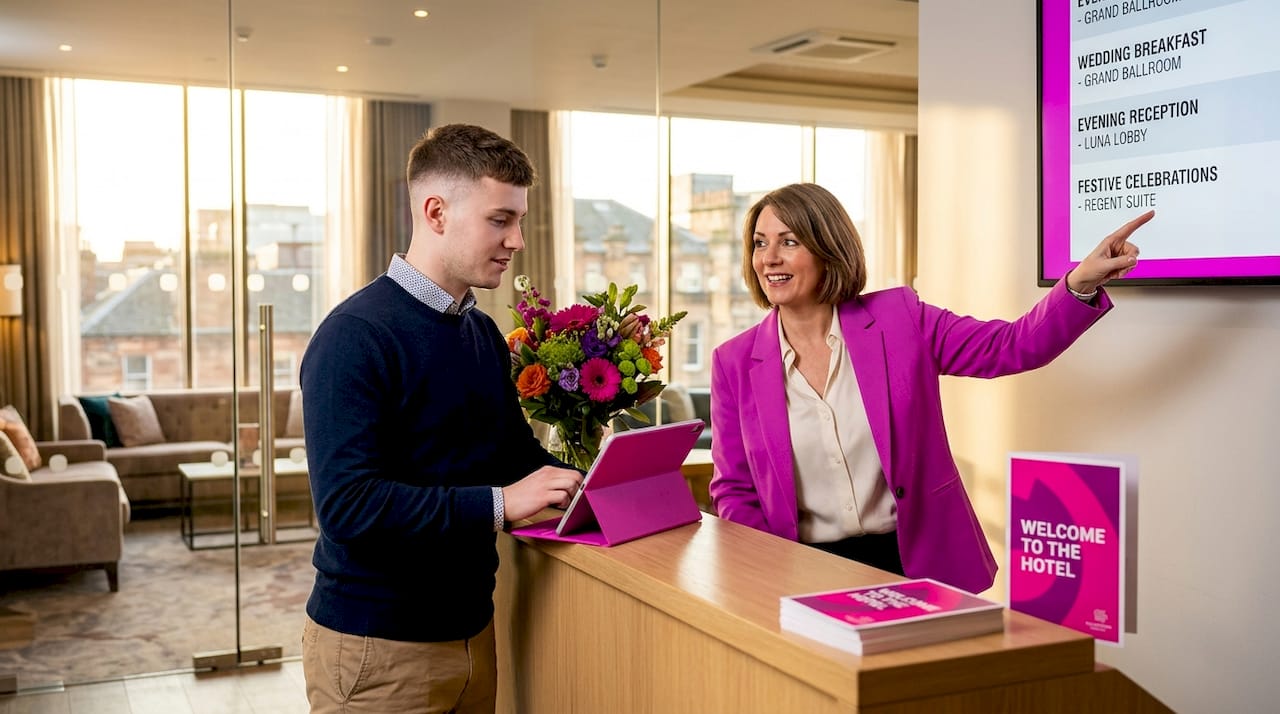
Understanding the benefits of upscale venues is one thing. Developing genuine, long-term partnerships requires a different set of skills. The relationship-building process matters as much as the operational delivery.
A small-scale pilot event is consistently identified as the most effective route into a meaningful venue partnership. Rather than pitching your credentials in a meeting, you demonstrate them in action. A venue director who watches you manage a 50-person private dinner with precision and calm will trust you with a 300-person gala in a way that no CV or reference letter can replicate.
- Lead with shared goals. Approach venue directors through what DMC professionals call collaborative discovery, identifying where your objectives align rather than opening with pricing or availability. Ask about their sustainability initiatives, their difficult-to-fill dates, and their ideal client profile.
- Prioritise consistency. Luxury venues rank reliability and consistency above price when evaluating vendor partners. Showing up fully prepared, communicating proactively, and resolving issues before they escalate are the behaviours that get you recommended.
- Share testimonials strategically. After a successful event, provide the venue coordinator with client feedback that reflects well on the collaboration. This reinforces your value not just to the couple or client, but to the venue’s own reputation.
- Understand the venue’s hierarchy. Every upscale venue has an internal power structure. Understanding who makes procurement decisions versus who manages day-of operations helps you direct conversations correctly and avoid inadvertently undermining the relationship.
Pro Tip: Frame your initial approach to a luxury venue as a proposal for mutual value, not a request for access. Explain specifically how your presence enhances their guest experience and supports their positioning. Venues are far more receptive to partners who think like collaborators.
Freshentertainments has built its reputation in Scotland precisely through this kind of relationship-led approach, working with entertainment coordination principles designed to fit within venue operational frameworks rather than compete with them.
Upscale venues vs. conventional venues: what actually changes
| Factor | Upscale venue | Conventional venue |
|---|---|---|
| Guest satisfaction | Approximately 40% higher joy scores | Baseline satisfaction, variable |
| Vendor coordination | Managed via established preferred lists | Planner responsible for all coordination |
| Operational support | Experienced coordinators, tested protocols | Variable staffing, reactive management |
| Atmosphere | Architectural and acoustic design works for the event | Planner must compensate through décor and styling |
| Differentiation | Unique spaces, exclusive access, prestige association | Limited distinctiveness |
| Client willingness to invest | Elevated, aligned with venue positioning | Price-sensitive, higher objection frequency |
| Post-event reputation benefit | Venue association strengthens planner’s profile | Minimal residual brand value |
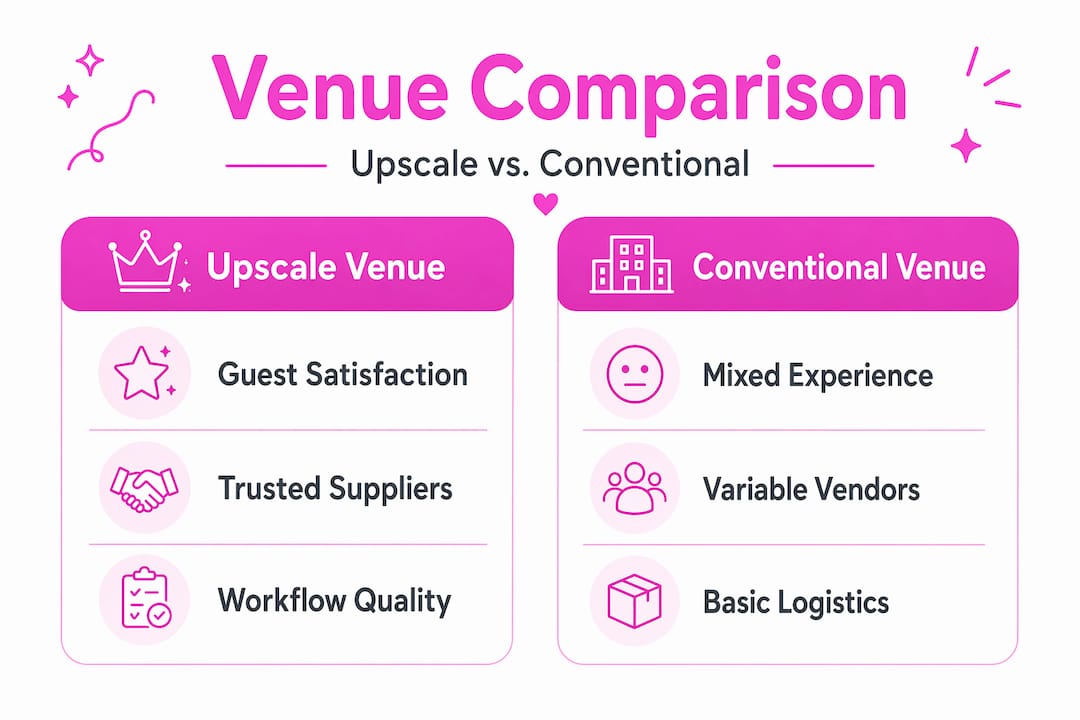
The operational differences in this comparison are significant, but the final row deserves particular attention. When you collaborate with upscale venues, the residual brand equity from each event continues working for you long after the guests have gone home. The venue’s name appears alongside yours in photographs, testimonials, and social content. That associative value accumulates in a way that conventional venue work simply does not.
Challenges planners face with high-end venues
Working with luxury venues is not without its complications. Being aware of the common pitfalls before they arise is what separates experienced planners from those who learn the hard way.
- The first impression gap. Unconventional luxury venues such as repurposed offices or industrial spaces with stunning views can disorient guests on arrival. The contrast between a corporate lobby and a beautifully dressed event space requires active management. Specialist signage, confident greeters, and a deliberate transition experience are not optional extras in these contexts.
- Status anxiety among guests. Not all guests are equally comfortable in high-end environments. Some attendees experience a form of social discomfort in spaces associated with wealth or exclusivity. Skilled planners actively design the guest journey to feel welcoming rather than intimidating, regardless of the venue’s prestige.
- Venue constraints on creativity. Listed buildings, heritage spaces, and architecturally significant venues often come with firm restrictions on décor, fixings, and technical installations. Knowing these constraints before the client brief is finalised avoids the expensive and embarrassing process of revising plans after commitments have been made.
- Navigating operational hierarchies. Upscale venues have their own service standards and they take them seriously. Attempting to override or bypass venue staff protocols, even with good intentions, can damage the relationship quickly. The most effective planners work with the venue’s systems rather than importing their own wholesale.
My take on what actually makes the difference
I have spent years watching planners approach venue partnerships in completely the wrong way. The mistake is treating the venue as a rental asset and the collaboration as a transactional arrangement. The planners who consistently deliver outstanding events at luxury venues think about it entirely differently. They treat the venue as a co-author of the guest experience.
What I have learned is that the quality of the relationship with the venue’s operational team matters more than almost any other single factor. You can book the most impressive room in the country and still deliver a mediocre event if the venue coordinator is not genuinely invested in your success. Conversely, I have seen planners achieve extraordinary results in spaces that were not even top-tier, purely because of the depth of trust and communication they had built with the team on the ground.
The practical implication of this is uncomfortable for planners who prefer to maintain full control. Real collaboration means ceding some creative decisions to the venue’s expertise. Their knowledge of how that specific space performs at different capacities, in different seasons, with different entertainment configurations, is genuinely irreplaceable. Use it.
The other thing I would say is that reliable entertainment is often the element that determines whether a venue will want you back. An entertainment partner who integrates smoothly with the venue’s schedule and technical infrastructure makes the planner look exceptional by extension. That multiplier effect is worth considering when you build your supplier team.
— STUART
How Freshentertainments supports your venue partnerships
If you are working with upscale venues across Scotland and want an entertainment partner who understands how luxury spaces operate, Freshentertainments is built precisely for that context. From wedding entertainment packages designed around venue acoustics and technical specifications, to MC and DJ services that integrate with coordinator timelines rather than disrupting them, the team has deep experience delivering within the operational frameworks that high-end venues require. Every performance is tailored to the event’s atmosphere and the venue’s character. If you want to understand how entertainment shapes wedding memories at the venues you work with, start a conversation with Freshentertainments today.
FAQ
Why collaborate with upscale venues rather than standard spaces?
Upscale venues function as managed operational ecosystems, providing vetted vendor networks, experienced coordinators, and architecturally optimised spaces that reduce planning complexity and measurably improve guest satisfaction compared to conventional alternatives.
What are the main benefits of upscale venues for event planners?
The core benefits include stronger logistical support, differentiated client offerings, reputational uplift through venue association, and higher guest joy scores. Premium venues increase guest satisfaction by approximately 40% compared to standard event spaces.
How do I get onto a luxury venue’s preferred supplier list?
Start with a small-scale pilot event that allows venue directors to observe your operation directly. Venue directors assess reliability, consistency, and client satisfaction above all else, so demonstrating these qualities in action is far more persuasive than any written proposal.
What challenges should I anticipate when working with high-end venues?
Key challenges include managing the first impression gap in unconventional spaces, respecting strict heritage or architectural restrictions, and working within the venue’s established operational hierarchy rather than attempting to override it.
How does venue collaboration affect a planner’s long-term reputation?
Each successful event at a recognised luxury venue builds associative credibility. Venue names appear in testimonials, photography, and referrals, creating a compounding reputational benefit that extends well beyond the individual booking.