
The soundtrack of your wedding doesn’t just accompany moments, it actively constructs how you and your guests will remember them for decades. Research reveals that music-evoked autobiographical memories are linked to specific auditory features that shape emotional content, meaning your entertainment choices directly influence which feelings become permanently attached to your celebration. Understanding this connection transforms entertainment from background noise into the architect of lasting memories.
Table of Contents
- Understanding How Music Influences Wedding Memories
- Live Music Versus Recorded Entertainment: Emotional Impact And Guest Engagement
- Interactive Entertainment Elements For Personalised And Memorable Weddings
- Planning Entertainment Timing And Flow To Maximise Memorable Moments
- Discover Premium Wedding Entertainment To Create Your Perfect Memories
Key takeaways
| Point | Details |
|---|---|
| Music features shape memory | The energetic versus acoustic nature of songs determines whether guests remember calm romance or social excitement |
| Live music amplifies emotion | Live bands generate 25% higher emotional responses than DJs, creating more vivid wedding memories |
| Interactive elements boost engagement | Photo booths and live performers increase guest participation, strengthening memory formation through active involvement |
| Strategic timing matters | Coordinating entertainment flow prevents energy dips and maintains consistent emotional engagement throughout your celebration |
Understanding how music influences wedding memories
Your choice between a gentle acoustic ballad and an upbeat dance track does more than set a mood, it determines which types of memories your guests form. The science behind music-evoked autobiographical memories reveals that songs exist on an energetic-acoustic spectrum, with each position triggering distinct emotional associations.
Low-energy acoustic pieces activate memories centred on intimacy, reflection, and personal connection. When you play a stripped-back version of your first dance song, guests naturally recall quiet romantic moments from their own lives. Their brains connect the sparse instrumentation with contemplative experiences, embedding your ceremony within a framework of tenderness.
Conversely, high-energy songs elicit fast, social memories characterised by movement and collective joy. A driving beat with full instrumentation prompts guests to remember energetic celebrations, group activities, and moments of shared excitement. This explains why receptions featuring dynamic music create memories of vibrant community rather than solitary appreciation.
The practical implication transforms how you personalise wedding music. Rather than simply choosing favourite songs, map your entertainment to the emotional memories you want guests to form.
“The acoustic and energetic properties of music directly influence the emotional tone and social context of the memories we form, making entertainment selection a powerful tool for shaping how events are remembered long after they conclude.”
Consider structuring your day along this spectrum:
- Ceremony: acoustic arrangements fostering intimate, romantic associations
- Cocktail hour: moderate energy pieces encouraging relaxed conversation
- Reception: high-energy selections building collective excitement and social bonding
This deliberate progression guides guests through distinct emotional landscapes, ensuring varied and rich memory formation rather than a single-note experience that blurs together in retrospect.
Live music versus recorded entertainment: emotional impact and guest engagement
The format of your entertainment carries as much weight as the songs themselves. Research demonstrates that live bands increase emotional response and social interaction more than DJs or recorded music, with live performances generating approximately 25% higher emotional engagement amongst attendees.
This disparity stems from multiple factors. Live musicians create unpredictable moments, brief improvisations or audience interactions, that demand attention and prevent the passive listening common with recorded tracks. Your guests can’t anticipate exactly how each song will unfold, maintaining active engagement rather than background awareness.
The visual component amplifies this effect. Watching skilled performers creates a multisensory experience that embeds memories more deeply than audio alone. Guests remember not just what they heard but what they saw, the saxophonist’s movement during your first dance or the drummer’s energy during the reception’s peak.
Social interaction increases by roughly 20% with live entertainment because performers serve as focal points for collective attention. When everyone watches the same spontaneous guitar solo, they share an unrepeatable moment that becomes a common reference point. This shared experience strengthens social bonds and creates group memories rather than individual impressions.
| Entertainment Type | Emotional Response | Social Interaction | Memory Vividness | Flexibility |
|---|---|---|---|---|
| Live Band | Highest (25% above baseline) | High (20% increase) | Very High | Moderate |
| DJ | Moderate | Moderate | Moderate | Very High |
| Recorded Playlist | Lowest | Low | Low | Limited |
However, DJs offer distinct advantages. Their extensive libraries allow instant pivots when crowd energy shifts unexpectedly, whilst the role of a DJ includes reading the room and adjusting accordingly. Many couples find hybrid approaches most effective, combining live musicians for key moments with DJ services for dancing.
Pro Tip: Schedule live music during your ceremony and first dance when emotional intensity peaks, then transition to a DJ for the reception where song variety and energy management become priorities. This captures live music’s memory-forming power without sacrificing the flexibility needed for sustained dancing.
When exploring wedding entertainment packages, evaluate how each option balances emotional impact against practical considerations like space, budget, and venue acoustics.
Interactive entertainment elements for personalised and memorable weddings
Passive entertainment creates memories, but interactive entertainment elements boost guest engagement and lasting memories by transforming attendees from observers into participants. When guests actively contribute to your celebration’s energy, they form stronger emotional connections to the experience.
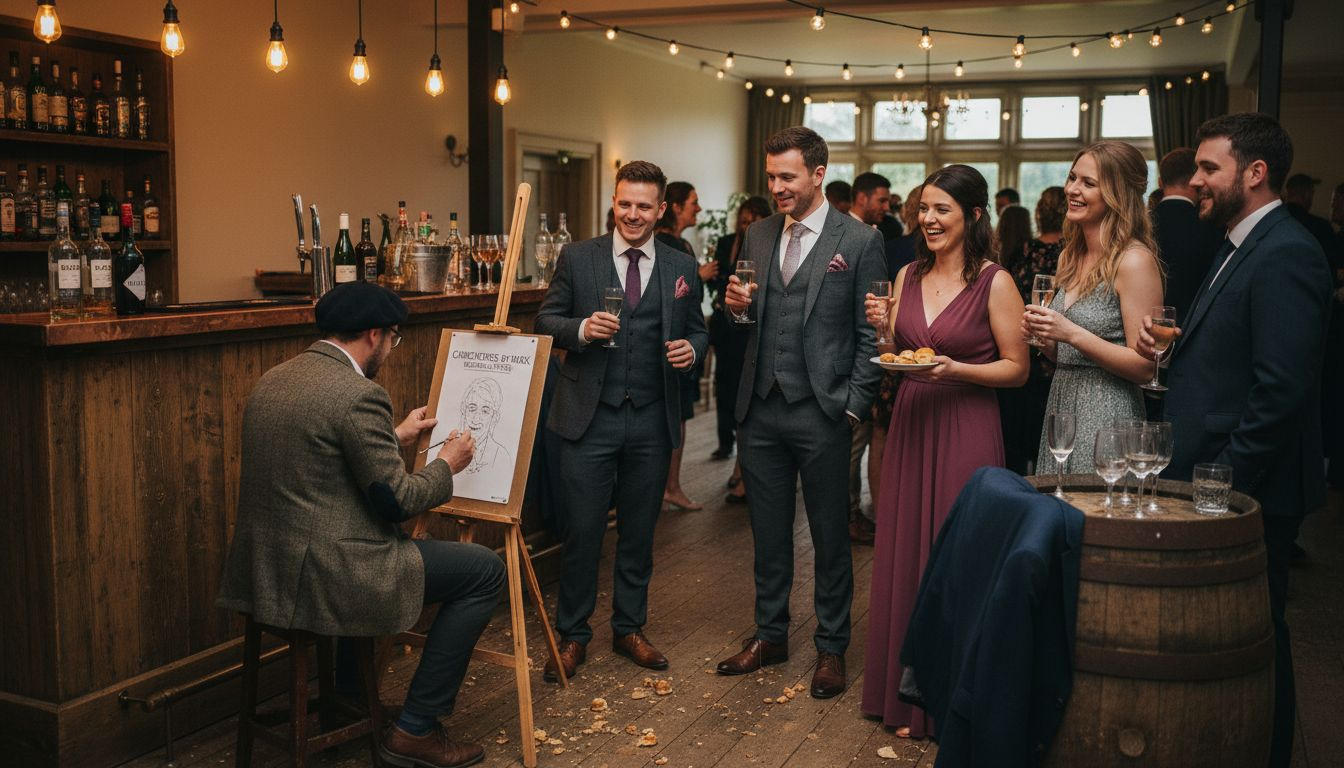
Photo booths exemplify this principle. Rather than simply watching your event unfold, guests create tangible mementos whilst engaging in spontaneous performances. The physical props and instant prints provide memory anchors, objects that trigger recollection of the emotions experienced whilst using them. Months later, discovering a photo booth print resurrects the joy of that moment far more vividly than a mental image alone.
Live performers who engage directly with guests amplify this effect:
- Roaming musicians who take requests create personalised moments for individual tables
- Interactive dance performances that invite guest participation transform spectators into collaborators
- Live artists creating portraits or calligraphy give guests personalised takeaways connected to specific conversations
These interactions increase emotional intensity because they demand active engagement rather than passive consumption. Your brain processes participatory experiences more deeply, allocating greater cognitive resources to encoding the memory.
The key lies in balancing interaction with flow. Excessive interruptions for games or activities fragment the evening’s narrative, whilst too little interaction allows energy to stagnate. Strategic placement maintains momentum, a photo booth available throughout the reception lets guests engage at their discretion without disrupting key moments.
Pro Tip: Position interactive wedding entertainment during natural transition periods like cocktail hour or between dinner courses. This capitalises on moments when guests might otherwise disengage, maintaining consistent involvement throughout your celebration.
Consider guest demographics when selecting interactive elements. A crowd of extroverts thrives with participatory performances, whilst more reserved groups appreciate opt-in activities like guest book alternatives or quieter creative stations. Matching interaction style to your audience ensures engagement rather than discomfort.
For broader inspiration beyond traditional options, explore diverse wedding reception entertainment ideas that range from lawn games to interactive food stations, all designed to keep guests actively involved in creating memorable moments.
Planning entertainment timing and flow to maximise memorable moments
Even exceptional entertainment fails if poorly timed. Smooth transitions between entertainment segments ensure sustained engagement and memorable experiences by preventing the energy valleys that cause guest disengagement and fragmented memories.
Consider your reception as an energy arc rather than discrete segments. Successful timing maintains momentum whilst allowing brief recovery periods that prevent exhaustion:
- Grand entrance (high energy): Establish celebration tone with dynamic music that signals the party’s beginning
- First dance (intimate focus): Create an emotional peak through a carefully chosen song that reflects your relationship
- Dinner service (moderate background): Maintain pleasant atmosphere without overwhelming conversation
- Transition to dancing (building energy): Gradually increase tempo and volume as dinner concludes
- Peak dancing hour (maximum energy): Deliver your most engaging entertainment when guest energy and alcohol consumption align
- Late evening wind-down (sustained moderate energy): Maintain celebration atmosphere whilst accommodating guests ready for quieter interaction
The critical mistake couples make is creating unintended gaps. When entertainment stops whilst technical adjustments occur or performers take extended breaks, guest attention drifts. Conversations fragment into small groups, and rebuilding collective energy requires significant effort.
Your wedding entertainment coordination guide should specify exact transition timing. If switching from live band to DJ, the changeover must occur during a planned break like cake cutting, when guests expect a natural pause. Seamless transitions feel intentional rather than awkward.
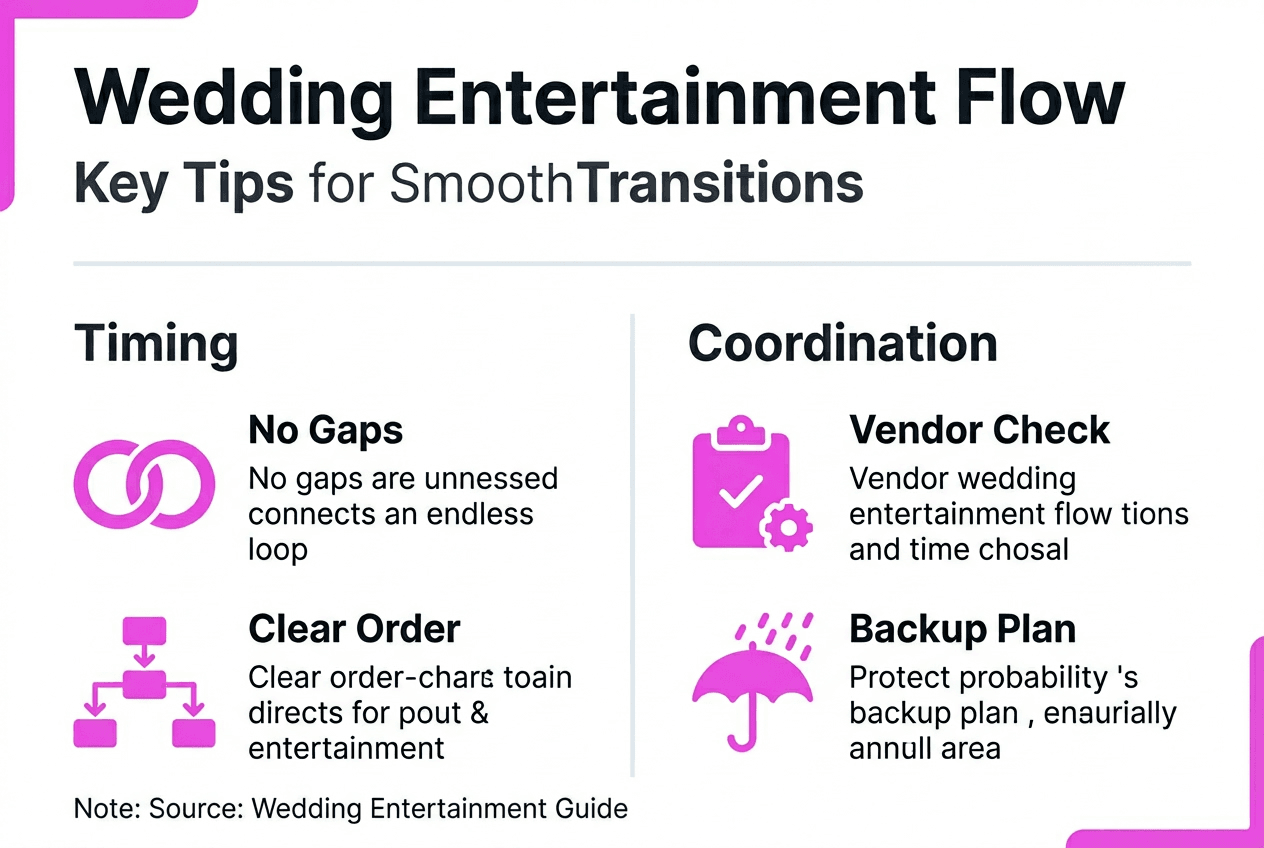
Backup planning proves essential. Weather forces outdoor entertainment inside, or technical issues require rapid adjustments. Prepare contingencies that maintain flow despite disruptions, alternative power sources, indoor entertainment options, or flexible timelines that accommodate delays without creating dead air.
Coordinate closely with your venue and other vendors. Entertainment timing affects catering schedules, photography opportunities, and bar service. When these elements align, guests experience a cohesive celebration rather than disconnected activities competing for attention.
Discover premium wedding entertainment to create your perfect memories
Transforming entertainment theory into your unforgettable celebration requires expertise in balancing emotional impact, guest engagement, and seamless coordination. Fresh Entertainments specialises in crafting bespoke wedding entertainment packages that align with your vision whilst incorporating the memory-forming principles outlined above.
Our award-winning team collaborates with couples across Scotland to design entertainment experiences that resonate with your unique story. Whether you envision live musicians creating intimate ceremony moments, professional DJs reading your crowd’s energy throughout the reception, or interactive wedding entertainment that transforms guests into active participants, we coordinate every element to ensure flawless execution. Our expertise in managing entertainment flow prevents energy dips whilst maintaining the spontaneity that makes celebrations feel authentic rather than scripted. Explore how our tailored approach to wedding party atmosphere can elevate your celebration into the vivid, joyful memories you and your guests will treasure for decades.
Frequently asked questions
What types of music best create lasting wedding memories?
Low-energy acoustic songs evoke calm, romantic memories centred on intimacy and personal reflection, whilst high-energy tracks with full instrumentation trigger memories of social excitement and collective celebration. The most effective approach involves deliberately selecting music along this spectrum to create varied emotional memories throughout your day. Understanding how to select wedding music based on desired emotional outcomes ensures your soundtrack shapes memories intentionally rather than accidentally.
Why is live music often preferred over DJs at weddings?
Live bands typically generate 25% stronger emotional responses and increase social engagement by approximately 20% compared to recorded music, primarily because the visual performance and spontaneous moments demand active attention rather than passive listening. The unpredictability of live performance, brief improvisations or audience interactions, creates unique moments that guests can’t experience through recorded tracks. However, many couples find hybrid approaches most effective, using live music for peak emotional moments whilst leveraging the role of a DJ for sustained dancing and song variety.
How can interactive wedding entertainment enhance guest experiences?
Interactive entertainment transforms guests from passive observers into active participants, creating stronger emotional connections and more vivid memories through direct engagement. Activities like photo booths, roaming musicians taking requests, or participatory performances increase emotional intensity because your brain processes experiences requiring active involvement more deeply than passive consumption. Strategic placement of interactive wedding entertainment examples during transition periods maintains consistent guest engagement without disrupting key moments.
What is the best way to ensure entertainment flows smoothly during a wedding?
Plan entertainment timing as an energy arc rather than discrete segments, gradually building from intimate ceremony moments through peak reception energy whilst avoiding unintended gaps that cause guest disengagement. Coordinate transitions to occur during natural pauses like cake cutting or toasts, ensuring seamless handoffs between live performers and DJs without awkward silence. A comprehensive wedding entertainment coordination strategy aligns your entertainment schedule with catering, photography, and other vendor timelines, creating a cohesive celebration rather than competing activities.
Recommended
- Wedding Entertainment Trends 2026 – Unforgettable Experiences Await
- Premium wedding entertainment boosts guest joy 40%
- Bespoke Wedding Entertainment: Creating Unforgettable Moments
- Wedding Entertainment Packages: Creating Unforgettable Events
- Wedding Reception Entertainment Ideas that you wont forget!