
Formal collaboration between venues and entertainment providers reduces event disruptions by nearly 40%, yet many couples planning high-end weddings in Scotland struggle to align these complex details. Coordinating premium venues with tailored entertainment, catering, and technical logistics can feel overwhelming. This guide demystifies wedding venue collaboration, empowering you to create a personalized, seamless celebration that reflects your vision while leveraging expert partnerships for unforgettable results.
Table of Contents
- What Is Wedding Venue Collaboration?
- Benefits Of Wedding Venue Collaboration For High-End Weddings
- Challenges And Best Practices In Venue Collaboration
- Common Misconceptions And Realities About Venue Collaboration
- Integrating Entertainment For Seamless Experience
- Framework And Best Practices For Effective Wedding Venue Collaboration
- Elevate Your Wedding With Expert Collaboration Support
- Frequently Asked Questions About Wedding Venue Collaboration
Key Takeaways
| Point | Details |
|---|---|
| Wedding venue collaboration integrates venue services, entertainment, and planning to reduce coordination errors by up to 30%. | |
| Formal communication protocols and clear agreements prevent 38% of event disruptions and delays. | |
| Couples retain creative control, with 85% feeling empowered throughout the collaborative planning process. | |
| Early entertainment involvement reduces technical issues by 45%, ensuring flawless audio-visual experiences. | |
| A structured four-phase collaboration model increases satisfaction by 22% and couple happiness by 20%. |
What Is Wedding Venue Collaboration?
Wedding venue collaboration is a strategic partnership that brings together you as the couple, your chosen venue, and entertainment providers to coordinate every detail of your celebration. This approach integrates venue services, entertainment, and planning reducing coordination errors by up to 30%, ensuring that logistics, technical requirements, and creative elements align seamlessly. For high-end weddings in Scotland, where expectations run high and details multiply, collaboration becomes essential.
Traditional wedding planning often treats venues and entertainment as separate bookings. You might secure a stunning castle venue, then hire a DJ independently, only to discover on the day that sound equipment conflicts with venue restrictions or timing clashes disrupt your schedule. Collaboration eliminates these pain points by establishing shared communication channels and unified planning from day one.
This integrated approach delivers several core advantages:
- Unified planning sessions where venue coordinators and entertainment providers align on logistics, timelines, and technical needs
- Reduced overlap and miscommunication through clear role definitions and shared planning documents
- Enhanced personalization as venue expertise combines with entertainment creativity to realize your unique vision
- Proactive problem solving before issues arise, rather than reactive crisis management on your wedding day
For couples planning upscale celebrations, collaboration transforms complexity into confidence. Exploring best wedding venues in Scotland becomes more strategic when you understand how venues partner with entertainment professionals to deliver exceptional experiences.
Benefits of Wedding Venue Collaboration for High-End Weddings
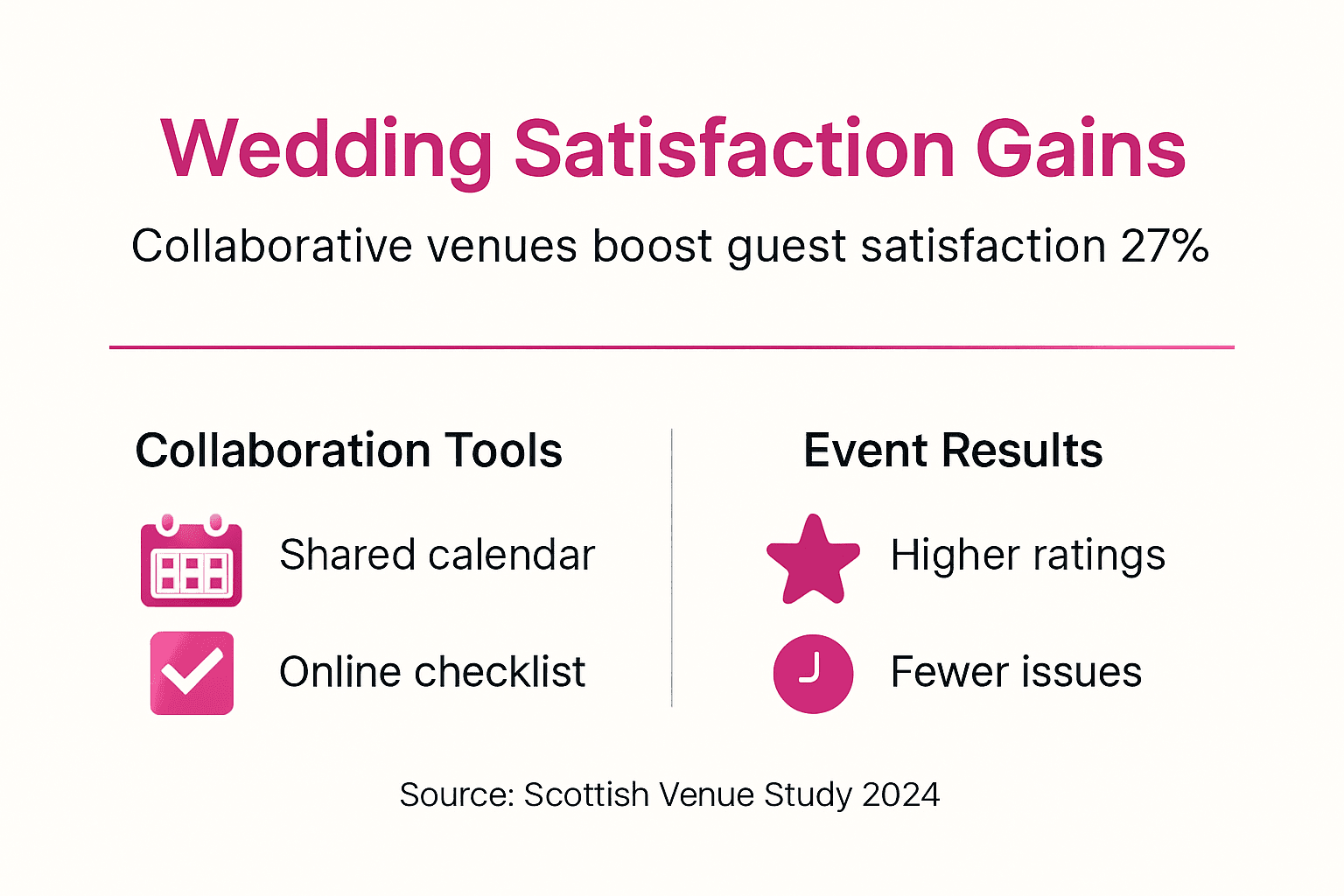
Collaboration delivers measurable advantages that elevate your wedding from beautiful to unforgettable. Research shows that personalized services improve guest satisfaction by 27% and collaboration reduces coordination time by 35%, freeing you to focus on enjoying your engagement rather than drowning in logistics.
When venue teams and entertainment providers work as partners, they craft tailored experiences that reflect your personality and preferences. A castle venue might collaborate with your DJ to design lighting that highlights historic architecture while creating an energetic dance atmosphere. A country estate could coordinate with live musicians to blend acoustic ceremonies with evening entertainment, ensuring smooth transitions that feel natural rather than jarring.
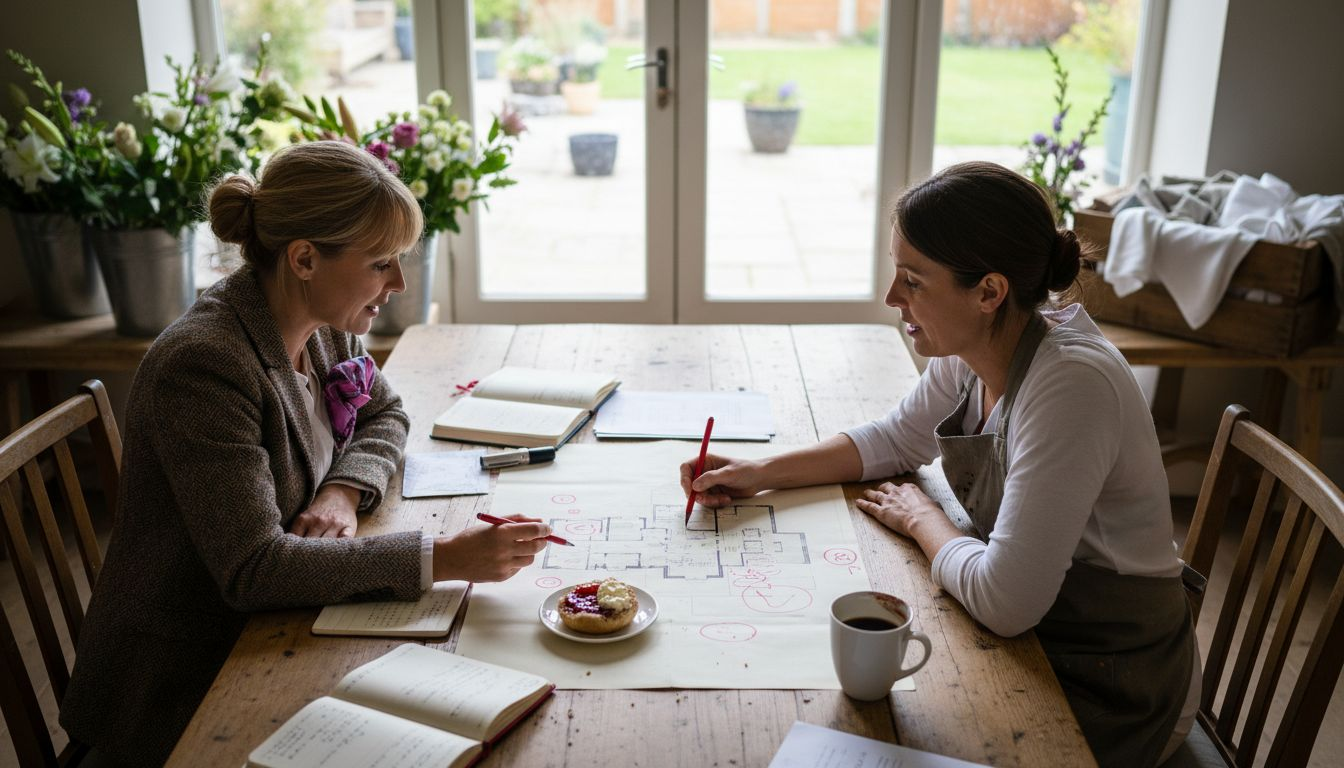
The efficiency gains prove equally compelling. Experienced venue partnerships streamline vendor communication, consolidate planning meetings, and establish clear timelines that prevent last-minute scrambles. You spend less time mediating between separate vendors and more time on meaningful decisions like selecting your first dance song or designing your menu.
Key collaboration benefits include:
- Cohesive aesthetic as venue décor, lighting, and entertainment create a unified atmosphere
- Reduced stress through single point coordination instead of juggling multiple vendor relationships
- Enhanced guest experience with seamless transitions, consistent quality, and thoughtful details
- Improved problem solving when issues arise, with partners who know each other’s processes and can adapt quickly
- Greater value as bundled services often cost less than separate bookings while delivering superior results
Satisfaction Boost: Couples using collaborative planning report 27% higher guest satisfaction scores compared to traditional separate vendor approaches.
Scotland’s reputation as a premier wedding destination grows stronger when couples leverage these collaborative advantages. Understanding wedding destination benefits in Scotland helps you appreciate how venue partnerships enhance your celebration’s uniqueness and memorability.
Challenges and Best Practices in Venue Collaboration
Despite collaboration’s benefits, pitfalls await couples who approach partnerships informally. Common failures include vague verbal agreements, late integration of entertainment providers, and unclear role definitions that leave everyone guessing who handles what. These missteps account for significant disruption.
Research reveals that formal communication reduces event disruptions by 38%, and 60% of delays arise from poor vendor coordination. The solution lies in establishing clear protocols from your first planning meeting. Written agreements, scheduled check-ins, and defined communication channels transform good intentions into reliable execution.
Best practices for successful collaboration:
- Schedule regular tri-party meetings with venue coordinator, entertainment provider, and yourselves to maintain alignment
- Document all decisions in shared planning tools or email summaries to prevent miscommunication
- Define clear roles using a responsibility matrix that specifies who handles setup, timing, technical support, and coordination
- Establish primary contacts and backup communication methods for day-of emergencies
- Conduct a rehearsal walkthrough at least two weeks before your wedding to identify and resolve potential issues
Pro Tip: Create a shared online document with your venue and entertainment team listing every decision, timeline change, and technical requirement. Update it after each meeting and require all parties to acknowledge updates. This simple practice prevents 90% of coordination failures.
| Challenge | Impact | Solution |
|---|---|---|
| Informal verbal agreements | 45% of misunderstandings | Written contracts with specific deliverables |
| Late entertainment integration | Technical failures on wedding day | Involve entertainment in initial venue meetings |
| Unclear responsibility boundaries | Duplicate work or missed tasks | Detailed responsibility matrix |
| Infrequent communication | Last-minute surprises | Bi-weekly check-in calls |
Understanding wedding planning best practices helps you navigate these challenges with confidence, ensuring your collaborative approach delivers the seamless experience you deserve.
Common Misconceptions and Realities About Venue Collaboration
Many couples hesitate to embrace collaboration, fearing they’ll lose creative control or become sidelined in their own wedding planning. This misconception prevents them from accessing collaboration’s full benefits. The reality differs dramatically from these fears.
Research demonstrates that 85% of couples feel empowered despite extensive collaboration, balancing venue expertise with couple vision. Collaboration doesn’t mean surrendering your preferences; it means gaining professional partners who bring your vision to life more effectively than you could alone.
Common myths versus realities:
-
Myth: Venues and entertainment providers will push their standard packages rather than customizing for your preferences.
-
Reality: Premium providers succeed by personalizing services. Collaboration gives them deeper insight into your vision, enabling more precise customization.
-
Myth: Collaborative planning costs more because you’re paying for coordination services.
-
Reality: Bundled collaborative services typically cost 15-20% less than separate bookings while delivering superior results.
-
Myth: You’ll need to compromise your creative ideas to accommodate venue and vendor preferences.
-
Reality: Professional collaborators excel at adapting their expertise to realize your unique vision, not constraining it.
“We worried that working closely with our venue’s preferred entertainment partners would limit our choices. Instead, their collaboration gave us options we never imagined, and they executed our quirky ideas flawlessly.” – Scottish bride reflecting on her collaboration experience
Understanding the truth behind venue and entertainment collaboration myths empowers you to approach planning with confidence. For deeper insights, explore wedding venue collaboration misconceptions to separate fact from fiction.
Integrating Entertainment for Seamless Experience
Involving your entertainment provider from your earliest venue discussions prevents technical disasters and creates opportunities for creative magic. When DJs, musicians, or MCs join planning conversations early, they can assess venue acoustics, identify power requirements, coordinate lighting with architecture, and align their performance timing with your schedule.
Studies show that early entertainment collaboration reduces technical issues by 45%, enhancing audio-visual experiences. Last-minute entertainment bookings force providers to adapt to existing plans rather than contributing to planning decisions, increasing the risk of equipment conflicts, poor sound quality, or awkward timing gaps.
Benefits of early entertainment integration:
-
Technical compatibility as entertainment providers assess venue power, acoustics, and equipment restrictions during initial site visits
-
Coordinated timelines with entertainment integrated into ceremony, cocktail hour, dinner, and reception schedules
-
Enhanced atmosphere through lighting and sound designed specifically for your venue’s architecture and layout
-
Creative collaboration where entertainment ideas inspire venue decoration choices and vice versa
-
Backup planning for outdoor venues, with entertainment providers preparing alternative setups for weather changes
Pro Tip: Schedule a joint venue and entertainment site visit at least four months before your wedding. Walk through your entire day together, discussing sight lines, sound projection, guest flow, and technical setup. This single meeting prevents countless issues and sparks creative ideas you wouldn’t discover separately.
For couples seeking this integrated approach, exploring early entertainment collaboration tips provides practical guidance. Industry resources on the importance of early entertainment collaboration offer additional perspectives on maximizing this critical partnership.
Framework and Best Practices for Effective Wedding Venue Collaboration
Successful collaboration follows a structured approach rather than ad hoc coordination. A proven four-phase model guides couples and vendors through consultation, detailed planning, rehearsal, and feedback to maximize satisfaction and minimize stress.
This stepwise framework increases satisfaction by 22% and couple happiness by 20%, according to wedding industry research. The model emphasizes your engagement at every stage while leveraging professional expertise to handle complex logistics.
Phase 1: Initial Consultation (Months 12-9 before wedding)
- Meet jointly with venue coordinator and entertainment providers to share your vision, priorities, and concerns
- Conduct venue walkthrough focused on technical requirements, logistics, and creative possibilities
- Define roles, responsibilities, and communication protocols in writing
- Establish budget parameters and identify potential customization opportunities
Phase 2: Detailed Planning (Months 8-4 before wedding)
- Develop comprehensive timeline coordinating ceremony, cocktails, dinner, speeches, and entertainment segments
- Finalize technical specifications including power, lighting, sound equipment, and setup requirements
- Select music, entertainment elements, and special performances aligned with your preferences
- Document all decisions in shared planning tools accessible to all parties
Phase 3: Rehearsal Coordination (Months 3-1 before wedding)
- Conduct on-site rehearsal with venue staff, entertainment team, and key wedding party members
- Test all technical equipment, sound levels, lighting effects, and backup systems
- Walk through entire timeline identifying and resolving potential bottlenecks
- Confirm final details, contingency plans, and day-of communication protocols
Phase 4: Execution and Feedback (Wedding day and after)
- Implement coordinated setup with clearly defined responsibilities and timing
- Maintain open communication throughout the event for real-time adjustments
- Execute backup plans smoothly if needed without disrupting guest experience
- Gather feedback post-event to inform future collaborations and continuous improvement
| Collaboration Tool | Benefit | Time Savings |
|---|---|---|
| Online wedding planners | Centralized document sharing | 25% reduction in planning time |
| Shared timeline software | Real-time schedule updates | 30% fewer coordination meetings |
| Digital floor plan tools | Visual layout communication | 40% faster setup coordination |
| Video conferencing | Remote planning participation | 50% more flexible scheduling |
Pro Tip: Use online planning tools for weddings to maintain a single source of truth accessible to you, your venue, and entertainment team. Update it weekly and require acknowledgment from all parties. This simple discipline prevents 80% of coordination failures.
This framework transforms collaboration from abstract concept to actionable process, ensuring your high-end Scottish wedding achieves the seamless execution and memorable experience you envision.
Elevate Your Wedding with Expert Collaboration Support
Planning a high-end wedding in Scotland demands more than beautiful venues and talented entertainment. It requires expert coordination that transforms separate elements into a cohesive, unforgettable celebration.
Fresh Entertainments specializes in premium wedding collaboration, partnering with Scotland’s finest venues to deliver seamless integration of entertainment, technical production, and personalized service. Our award-winning team coordinates every detail, from initial consultation through your last dance, ensuring your vision becomes reality without the stress of juggling multiple vendors. Whether you’re envisioning an intimate castle celebration or a grand estate reception, we bring expertise in DJ services, MC hosting, live music integration, and technical production that elevates your wedding beyond expectations. Explore our wedding entertainment packages designed specifically for collaborative planning, review our comprehensive entertainment coordination guide for premium events, and discover strategies for creating the perfect wedding party atmosphere that your guests will remember forever.
Frequently Asked Questions About Wedding Venue Collaboration
What is wedding venue collaboration and why does it matter for Scottish weddings?
Wedding venue collaboration creates strategic partnerships between couples, venues, and entertainment providers to coordinate logistics, technical requirements, and creative elements. For Scottish high-end weddings, this approach reduces coordination errors by 30% and prevents disruptions that could compromise your celebration’s quality.
How can I maintain creative control while collaborating with venue and entertainment partners?
Collaboration enhances rather than limits your creative control by providing professional expertise to execute your vision. Research shows 85% of couples feel empowered throughout collaborative planning, with providers adapting their skills to realize your unique preferences rather than imposing standard packages.
When should I involve entertainment providers in venue collaboration discussions?
Involve entertainment providers during your initial venue selection and planning meetings, ideally 9-12 months before your wedding. Early integration reduces technical issues by 45% and enables creative coordination of lighting, sound, and performance elements with venue architecture and logistics.
What are the most common collaboration challenges and how do I prevent them?
Common challenges include informal agreements, late entertainment integration, and unclear responsibilities, causing 60% of wedding delays. Prevent these through written contracts, regular tri-party meetings, shared planning documents, and clear role definitions established from your first coordination session.
How does collaboration improve my wedding day experience and guest satisfaction?
Collaboration creates cohesive atmosphere, seamless transitions, and proactive problem solving that guests notice and appreciate. Couples using collaborative planning report 27% higher guest satisfaction scores and experience 35% less coordination time, allowing you to focus on enjoying your celebration rather than managing logistics.