
Most couples spend months agonising over flowers, table settings, and lighting rigs, yet the single most powerful force shaping how your guests feel on your wedding day is almost invisible. Sound is everywhere at a wedding, from the hush before you walk down the aisle to the final song of the night, and it works on your guests at a level they rarely notice consciously. Behavioural science confirms that pleasant sound environments raise heart rate variability, a reliable marker of emotional openness and positive engagement. In this guide, we share the expert strategies that Scotland’s most memorable weddings use to turn sound into something truly extraordinary.
Table of Contents
- The science behind sound and emotion at weddings
- Layers of a soundscape: types of sound that shape ambiance
- How sound sets the tone: ceremony to celebration
- Tailoring sound to your Scottish wedding: regional flair and practical tips
- Common pitfalls: mistakes to avoid when planning wedding sound
- Next steps: curating your signature wedding sound
- Transform your wedding ambiance with expert entertainment partners
- Frequently asked questions
Key Takeaways
| Point | Details |
|---|---|
| Sound shapes emotion | Research proves that your wedding’s soundscape can uplift, relax, and unite your guests at every moment. |
| Layering matters | Mixing music, ambient noise, and silence builds unique atmosphere for each part of your day. |
| Tailor to your venue | Custom sound plans that match your venue and traditions create a personal and seamless event experience. |
| Avoid common mistakes | Careful planning prevents awkward transitions and ensures every guest feels part of the celebration. |
| Professional support helps | Experts help you craft a soundscape that matches your vision and Scottish wedding style perfectly. |
The science behind sound and emotion at weddings
Sound does not simply accompany a wedding. It actively shapes what guests remember, how relaxed they feel, and whether the room buzzes with joy or sits in awkward silence. The effect is both psychological and physiological, meaning it works on the mind and the body at the same time.
“Pleasant sound environments increase heart rate variability, signalling emotional openness, relaxation, and approach behaviour in listeners.” — PMC12592159
When you hear a piece of music that moves you, your nervous system responds. Breathing slows, muscles relax, and the brain releases neurochemicals associated with bonding and happiness. At a wedding, this is enormously powerful because you want guests to feel connected, not just entertained.
Carefully planned sound dynamics also build anticipation and emotional unity. A gradual swell in volume before the bride enters, a sudden hush before vows, or a perfectly timed beat drop on the dance floor all guide the crowd through a shared emotional journey. These are not accidents. They are deliberate choices that unforgettable wedding memories are built upon.
Here is what the research tells us sound can do at your wedding:
- Trigger positive emotions and reduce social anxiety among guests
- Signal transitions between ceremony, meal, and celebration
- Create a sense of intimacy or grandeur depending on volume and genre
- Encourage guests to approach one another and engage socially
- Reinforce the couple’s personality and story throughout the day
Keeping up with wedding trends 2026 shows that couples are increasingly treating sound as a design element, not an afterthought.
Layers of a soundscape: types of sound that shape ambiance
A wedding soundscape is not just a playlist. It is a layered composition of different sound types, each playing a specific role in the atmosphere you create.
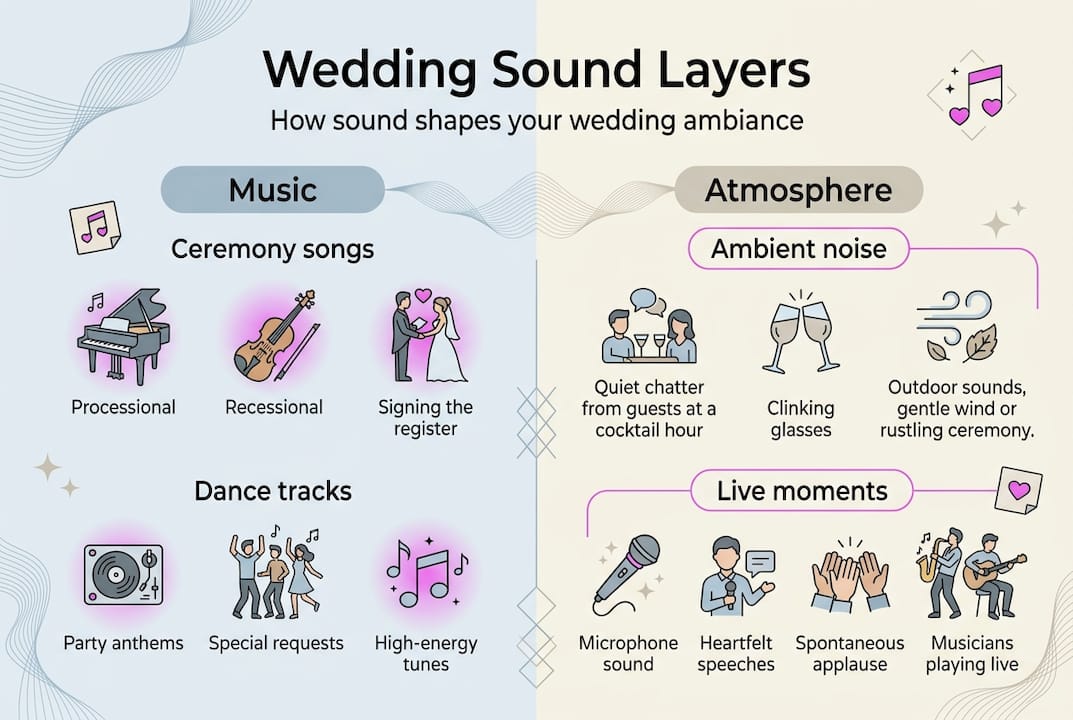
Music is the most obvious layer, but even here the choices are nuanced. Soft classical strings during the ceremony feel entirely different from an acoustic guitar set during the wedding breakfast, which in turn feels different from a DJ set at full energy later in the evening.
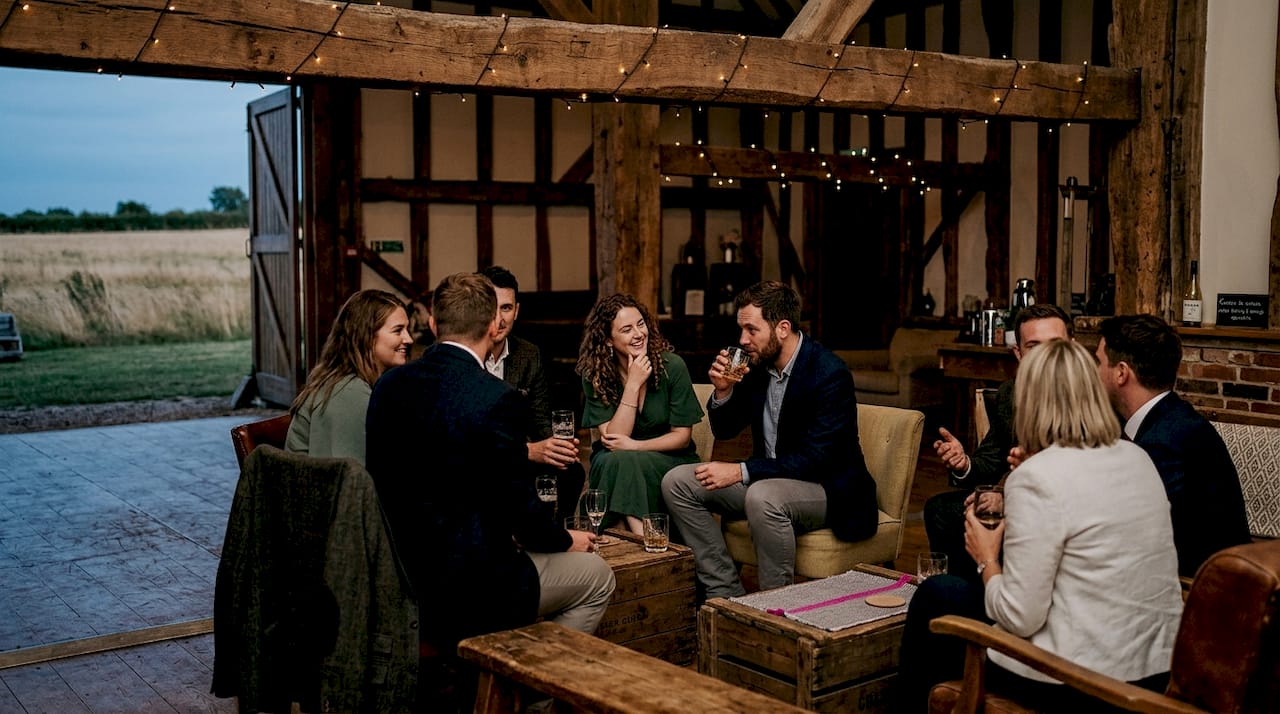
Ambient sound includes background chatter, the acoustics of your venue, and natural sounds if you are outdoors. A stone-walled Highland castle amplifies and echoes differently from a modern marquee. These environmental sounds either enhance intimacy or work against it, and rising dynamics increase anticipation in ways that ambient noise can either support or undermine.
Live sound covers toasts, live performances, and dramatic audio cues. A saxophonist playing during the drinks reception creates a completely different energy from recorded music alone. Intentional silence is perhaps the most underused tool of all. A pause before the first kiss, or a moment of quiet before the first dance begins, can make the subsequent sound hit twice as hard.
| Sound type | Best used for | Effect on guests |
|---|---|---|
| Soft instrumentals | Ceremony, arrival | Calm, emotional openness |
| Upbeat background music | Drinks reception, meal | Sociable, relaxed |
| Live performance | Key moments, party | Excitement, energy |
| DJ set | Evening celebration | High energy, dancing |
| Intentional silence | Vows, first dance intro | Heightened anticipation |
You can find a wealth of inspiration for entertainment ideas that blend these layers creatively, and there are excellent resources to help you personalise wedding music to your own story.
Pro Tip: Do not treat each sound layer in isolation. The magic happens when music, ambient sound, and live moments are timed and placed to complement one another, creating seamless transitions that guests feel but cannot quite explain.
How sound sets the tone: ceremony to celebration
Every stage of your wedding day calls for a different sonic approach. Getting this right means thinking about what you want guests to feel at each moment, then working backwards to choose the sound that delivers it.
Research shows that rising dynamics build anticipation and emotional unity, which is exactly why a gradual musical build before the processional is so effective. It is not just tradition. It is science.
Here is a practical stage-by-stage breakdown:
- Ceremony arrival: Soft, melodic instrumentals as guests are seated. Choose pieces that feel personal but are not so recognisable that they distract.
- Processional: A deliberate shift in music signals the moment has arrived. Volume, tempo, and emotional weight should all increase.
- Vows: Near silence, or very quiet underscore. This is where intentional quiet does its most powerful work.
- Recessional: Joyful, upbeat, celebratory. This is the emotional release after the tension of the ceremony.
- Drinks reception: Warm, sociable background music. Guests are mingling, so the sound should encourage conversation without overpowering it.
- Wedding breakfast: Slightly lower volume, curated playlist that reflects your taste without demanding attention.
- Speeches and toasts: Music fades completely. Silence here is respectful and keeps focus on the speaker.
- First dance: A personal selection that means something to you both. The room should feel like it belongs entirely to you.
- Evening party: Dynamic shifts in tempo and volume energise the floor. A skilled DJ reads the room and adjusts accordingly.
Knowing how to select wedding music for each of these stages is a skill in itself, and the value of professional DJs who understand this flow cannot be overstated.
Pro Tip: Use sound cues as signals for event flow. A change in music style or volume tells guests that the next phase is beginning, reducing the need for awkward announcements and keeping energy high.
Tailoring sound to your Scottish wedding: regional flair and practical tips
Scotland offers some of the most dramatic and acoustically varied wedding venues in the world, from vaulted castle halls to open Highland hillsides. This creates both opportunity and challenge when planning your soundscape.
Traditional Scottish instruments, particularly the fiddle, clarsach (Celtic harp), and of course the bagpipes, carry enormous emotional weight for Scottish guests and international visitors alike. Even a brief appearance by a piper during the arrival or recessional can anchor the day in a sense of place and heritage that no playlist can replicate.
Here are some practical considerations for Scottish venues:
- Historic venues: Stone walls and high ceilings create natural reverb. Work with your entertainment provider to position speakers carefully and avoid feedback.
- Outdoor Highland settings: Wind and open space absorb sound quickly. You will need more powerful equipment than you might expect, and a backup plan for weather.
- Noise curfews: Many Scottish venues, particularly those in residential areas or with listed building status, have strict noise regulations. Confirm these early and plan your evening programme accordingly.
- Guest demographics: A mix of Scottish locals and guests from further afield may have very different musical expectations. A good DJ will find the common ground.
- Balancing requests: Guest song requests are lovely in principle, but too many can derail your carefully planned atmosphere. Set clear expectations with your entertainment team in advance.
Personalised wedding music that weaves Scottish tradition with your own taste is one of the most powerful ways to make your day feel genuinely unique.
“Sound environments that feel personally meaningful and culturally resonant produce the strongest emotional responses, reinforcing approach behaviour and positive memory formation.”
Common pitfalls: mistakes to avoid when planning wedding sound
Even couples who invest heavily in entertainment can find their soundscape falling flat. Most problems are avoidable with a little foresight.
Sound influences emotion so directly that a poor audio experience does not just disappoint, it actively undermines the atmosphere you have worked so hard to create. Here are the mistakes we see most often:
- Ignoring venue acoustics: Choosing equipment without visiting the space first leads to tinny sound in large halls or overwhelming volume in small rooms.
- Flat volume throughout: Using the same volume level from ceremony to party makes every phase feel identical. Variation is essential.
- Underestimating outdoor challenges: Wind, distance, and ambient noise from the environment can swallow your carefully chosen soundtrack entirely.
- Misreading the room: Playing high-energy tracks before guests are warmed up, or slow ballads when the floor is finally moving, kills momentum instantly.
- Last-minute playlist changes: Changing your music selections the week before the wedding without consulting your DJ or entertainment team creates confusion and missed cues.
- No do-not-play list: Without one, you risk a song that brings up difficult memories or simply clears the dance floor.
Working with professional wedding DJs who have experience across Scottish venues means these issues are anticipated and resolved before they become problems on the day.
Next steps: curating your signature wedding sound
You now have the knowledge. Here is how to put it into action with a clear, practical checklist.
Behavioural science confirms that sound shapes emotion at every stage of the day, so treat your soundscape with the same care you give to your flowers or your menu.
- Map your day in sound: Write down each phase of your wedding and note the emotional tone you want for each one.
- Visit your venue with your entertainment team: Assess acoustics, power supply, and any restrictions before finalising equipment choices.
- Create a must-play list: Include songs that are personally meaningful, culturally relevant, or simply guaranteed to get people dancing.
- Create a do-not-play list: Be honest about songs that would feel wrong, even if they are popular.
- Add Scottish flair: Identify one or two moments where traditional Scottish music or instruments would add something genuinely special.
- Confirm noise regulations: Check curfews and volume limits with your venue coordinator well in advance.
- Brief your entertainment team thoroughly: Share your vision, your timeline, and your guest profile so they can make informed decisions on the day.
- Trust the professionals: Once you have briefed your team, let them read the room. The best wedding music selection happens when couples set the vision and experts handle the execution.
Transform your wedding ambiance with expert entertainment partners
You now have a clear blueprint for using sound to shape every moment of your wedding day. Turning that blueprint into reality is where the right entertainment partner makes all the difference.
At Fresh Entertainments, we specialise in creating bespoke soundscapes for Scottish weddings, from intimate ceremonies in historic venues to full-scale Highland celebrations. Our team of award-winning DJs and live musicians understands how to build a wedding party atmosphere that feels effortless and genuinely personal. Explore our wedding entertainment packages to see how we combine DJ performance, live music, and expert MC services into one seamless experience. When you are ready to create something truly unforgettable, we would love to hear your vision.
Frequently asked questions
How does music choice influence guest emotions at a wedding?
The right music triggers positive emotions and helps guests feel connected and relaxed, as pleasant sound environments raise heart rate variability, a physiological marker of emotional openness and social engagement.
What types of sounds should not be overlooked when planning wedding ambiance?
Background chatter, venue acoustics, and intentional silences are just as important as music. Rising dynamics in any sound layer build anticipation, so every element of your soundscape deserves deliberate attention.
What is a common mistake couples make with wedding sound?
Many couples use the same volume and energy level throughout the day, not realising that different phases need different sonic approaches. This leads to awkward transitions and guests who feel disengaged rather than swept along by the atmosphere.
How can we make our wedding sound unique to Scotland?
Incorporate traditional Scottish instruments such as the fiddle, clarsach, or bagpipes at key moments, and work with entertainment professionals who understand how Scottish venues and cultural expectations shape the ideal soundscape.