
TL;DR:
- Sound and lighting packages include specified AV equipment such as speakers, microphones, and fixtures, with detailed itemisation to ensure quality. Proper quotes specify brand, model, quantity, and technician roles, helping you compare options and budget accurately. Planning should consider venue size, event phases, and power requirements, with thorough site surveys and checklists to prevent common technical issues and guarantee a professional experience.
Sound and lighting packages are predefined bundles of audio and visual equipment, including PA systems, microphones, lighting fixtures, and control hardware, configured to deliver a professional event atmosphere. Whether you are planning a wedding in Edinburgh, a corporate dinner in Glasgow, or a private party, understanding what these packages contain is the difference between a memorable night and a costly disappointment. Explaining sound and lighting packages properly means going beyond vague labels to examine the exact gear, labour, and control systems involved. This guide breaks down every component, shows you how to read quotes, and helps you choose the right setup for your event.
What do sound and lighting packages actually include?
A sound and lighting package is an audio visual setup comprising two distinct but complementary systems: the sound reinforcement rig and the lighting rig. Together, they define how your guests hear the music and how the room looks and feels throughout the event.
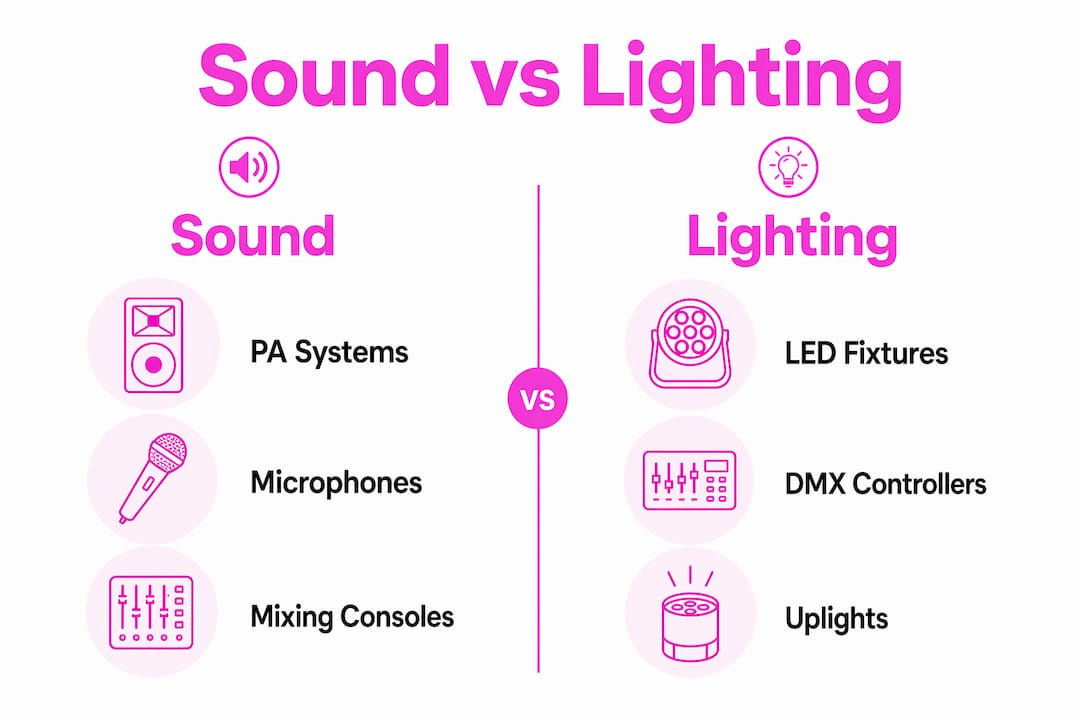
Sound components form the backbone of any package. A typical wedding or event package includes:
- A PA system with front-of-house speakers (brands such as QSC, Yamaha, or d&b audiotechnik are industry standards)
- Subwoofers for low-frequency reinforcement on dance floors
- Wireless microphones from manufacturers like Shure or Sennheiser for speeches and presentations
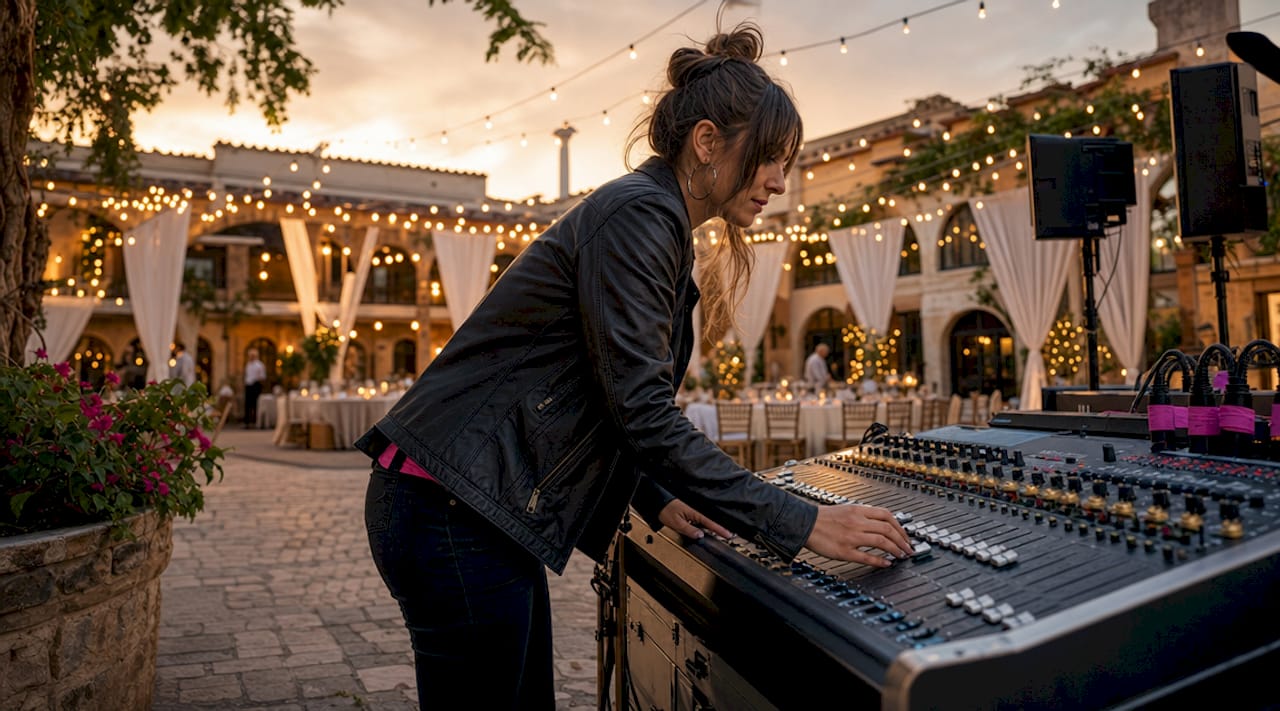
- A mixing console to balance audio sources
- Monitor speakers for performers or DJs on stage
Lighting components transform the visual character of a venue. Standard inclusions are:
- Static uplights to wash walls in colour
- Stage wash fixtures to illuminate performers
- Moving head fixtures for dynamic beam effects
- LED par cans for general colour fills
- A DMX controller to manage all fixtures from one point
Real quotes should list brand, model, quantity, and day rate for every major item. This level of detail is what separates a professional package from a vague promise.
A concrete example: a wedding reception sound system covering up to 250 guests can include powered speakers, subwoofers, wireless microphones, a DJ controller, mixer, and all cabling, with pricing starting around £320 per day. Optional upgrades such as additional wireless microphones or extra subwoofers are typically available at incremental cost. This gives you a useful benchmark when comparing quotes from suppliers.
Pro Tip: Ask every supplier to separate sound and lighting line items in their quote. Bundled totals make it impossible to assess whether you are paying a fair rate for each system.
Labour is also part of the package. Setup crew, audio engineers, and lighting technicians are often listed separately, and understanding their roles is covered in the next section.
How to decipher and compare quotes for AV packages
The single biggest mistake event organisers make is accepting a quote that reads “PA system and lighting rig: £1,200” without any further detail. Demanding detailed line items under every major category is the only way to verify quality tier and coverage. A quote without brand names and model numbers is not a quote. It is a blank cheque.
Here is what a properly structured sound and lighting quote should include:
- PA system: Speaker brand and model, quantity, power rating, and whether the system is line array or point source
- Subwoofers: Quantity, brand, and whether they are flown or ground stacked
- Wireless microphones: Brand (Shure, Sennheiser), model series, quantity, and frequency band
- Lighting fixtures: Type (moving head, uplight, wash), brand, quantity, and DMX channel count
- Mixing console: Brand and model (Yamaha QL series or Allen and Heath SQ series are common professional choices)
- Labour: Named roles with day rates
Labour roles follow a standard industry convention. Common labour roles include the A1 (audio lead, typically £500 to £720 per day), the A2 (audio assistant, typically £360 to £520 per day), and the L1 (lighting lead, typically £560 to £800 per day). These figures reflect 10-hour event days and give you a realistic baseline for evaluating whether a quote is competitive or inflated.
A quote that lists “wireless microphone system” without specifying Shure ULXD or Sennheiser EW 500 could mean anything from a professional touring unit to a budget consumer device. The difference in reliability is significant.
Pro Tip: Request quotes from at least three suppliers and build a comparison spreadsheet with identical line items side by side. This apples-to-apples method reveals price discrepancies and quality gaps immediately.
Understanding AV package pricing structures also helps you budget realistically for the full entertainment spend, not just the equipment hire.
How does DMX lighting control work in event packages?
The DMX protocol is the standard for lighting control at professional events. DMX stands for Digital Multiplex, and it functions as a communication language between your lighting controller and every fixture on the rig. One DMX universe carries 512 channels, and each fixture is assigned a starting address that tells the controller where to send its instructions.
| Fixture type | Typical channel count | Common functions controlled |
|---|---|---|
| LED par can | 3 to 7 channels | Red, green, blue, white, dimmer |
| Moving head wash | 16 to 20 channels | Pan, tilt, colour, dimmer, strobe |
| Moving head beam | 20 to 28 channels | Pan, tilt, gobo, prism, colour, focus |
| Static uplight | 4 to 6 channels | RGBW colour mixing, dimmer |
Mismatch in DMX addresses causes fixtures to respond to the wrong cues. A moving head might spin unexpectedly or change colour at the wrong moment, not because it is faulty, but because its address conflicts with another fixture on the same universe. This is a preventable error that a competent lighting technician resolves during the load-in and programming phase.
For a wedding, a well-programmed DMX rig might shift from warm amber uplighting during the wedding breakfast to deep blue washes for the first dance, then into full colour chases for the evening party. Each scene is pre-programmed and triggered on cue. The event lighting best practices that experienced suppliers follow ensure these transitions are smooth and timed precisely to the programme.
Pro Tip: Ask your lighting supplier how many DMX universes the rig requires and whether they are using a dedicated lighting console or a software-based controller. Hardware consoles like the Chamsys MagicQ or Avolites Pearl are more reliable in live event conditions than laptop-based solutions.
How to choose the right sound and lighting package for your event
Selecting the right package starts with four practical assessments before you contact a single supplier.
- Venue size and acoustics: A room holding 80 guests needs a fundamentally different PA system than one holding 300. Hard-surfaced rooms (stone walls, high ceilings) require more acoustic management than carpeted ballrooms. Ask your venue for the room dimensions and surface materials before specifying a PA.
- Event programme and timing: A wedding with a ceremony, drinks reception, wedding breakfast, and evening party has four distinct audio and lighting requirements. Each phase may need different microphone configurations, speaker zones, and lighting scenes. A run-of-show document covering PA, microphones, monitoring, recording, lighting atmospherics, and timing is the foundation of good AV planning.
- Lighting mood versus function: Functional lighting (stage washes, lectern spots) serves a practical purpose. Atmospheric lighting (uplights, moving heads, LED walls) serves an emotional one. Most events need both, but the balance shifts depending on whether you are hosting a conference, a wedding reception, or a concert.
- House AV versus external supplier: Many venues have in-house AV systems. These are convenient but often outdated or limited in scope. An external supplier brings specified, maintained equipment and dedicated technicians. A hybrid model, using the venue’s infrastructure for distribution but bringing in your own front-of-house system, is a common and cost-effective approach.
Backup equipment is not optional at professional events. Any reputable supplier carries spare wireless microphone receivers, spare DMX cables, and at minimum one spare amplifier channel. Ask directly what backup provision is included in the quote.
Budgeting for upgrades is also worth considering early. Adding a second subwoofer, upgrading from static uplights to moving heads, or including a wireless in-ear monitoring system for a live musician are all decisions that are far cheaper to make before the quote is finalised than on the day itself.
What are the most common pitfalls when renting AV packages?
Most AV failures at events are entirely avoidable. Package failures commonly originate from missing power specifications, unclear run-of-show documents, or incomplete load-in preparation. The following pitfalls appear repeatedly across weddings and corporate events.
- Vague or incomplete quotes: Accepting a quote without brand names and model numbers means you cannot verify what arrives on the day. Always insist on full itemisation.
- Ignoring power distribution: A large PA system and lighting rig can draw 30 to 60 amps or more. Failing to confirm available power circuits with the venue in advance leads to tripped breakers mid-event. Request a power specification sheet from your AV supplier and share it with the venue coordinator.
- No run-of-show document: Without a written cue sheet, audio and lighting engineers are guessing at transitions. A detailed cue sheet with room layouts, role assignments, and backups reduces risk and improves the guest experience measurably.
- Skipping the site survey: A site survey lets the AV team assess cable runs, power locations, rigging points, and sightlines before the event day. Skipping it is the single most common cause of last-minute technical problems.
- Forgetting to coordinate with house systems: If the venue has a built-in speaker system or house lighting rig, your external supplier needs to know. Conflicts between systems cause feedback, signal interference, and lighting control issues.
Pro Tip: Build an AV checklist covering audio, lighting, power, run-of-show, and contingency plans at least four weeks before your event. Share it with every supplier and the venue. The AV checklist approach assigns roles, documents backups, and ensures missing items are discovered before guests arrive, not after.
Key takeaways
Sound and lighting packages deliver professional event experiences only when every component, from speaker model to DMX address, is specified, verified, and planned in advance.
| Point | Details |
|---|---|
| Demand full itemisation | Every quote must list brand, model, quantity, and day rate for each piece of equipment. |
| Understand labour roles | A1, A2, and L1 roles carry distinct responsibilities and day rates; verify all three are included. |
| Learn DMX basics | Correct DMX addressing prevents lighting cue failures; ask your supplier how addresses are assigned. |
| Plan for your venue | Room size, acoustics, and power availability determine which PA and lighting configuration is appropriate. |
| Use an AV checklist | A written checklist covering audio, lighting, power, and run-of-show prevents the majority of event day failures. |
What I have learned from years of event AV planning
After working across hundreds of weddings and events in Scotland, the pattern is consistent: the events that go wrong almost always had one thing in common. Someone accepted a vague quote and assumed the supplier would fill in the gaps on the day.
The couples and planners who have the best experiences are the ones who ask uncomfortable questions early. They want to know the exact speaker model. They ask what happens if a wireless microphone fails during the speeches. They request a site survey as a condition of booking. This is not being difficult. It is being thorough.
Lighting is where I see the most underinvestment. Clients often treat it as an afterthought, allocating the smallest portion of the budget to it, then wondering why the room feels flat during the first dance. A well-programmed moving head rig costs more than a set of static uplights, but the difference in atmosphere is not incremental. It is transformational. When the lighting shifts from warm gold to deep violet as the first dance begins, guests feel it before they consciously register it.
My honest recommendation: treat your AV package the same way you treat your catering. You would not accept a catering quote that said “food for 150 guests: £3,000” without a menu. Do not accept an AV quote without an equipment list. The wedding entertainment coordination process works best when every supplier is held to the same standard of specificity.
— STUART
Create the atmosphere your event deserves
Freshentertainments designs wedding party atmosphere packages that integrate professional sound, DMX-controlled lighting, and DJ services into a single, coordinated experience. Every package is built around your venue, your programme, and your guests, with full itemisation provided as standard. From intimate ceremonies to large evening receptions across Scotland, Freshentertainments delivers the technical precision and creative energy that transforms a good event into an unforgettable one. Explore the full range of wedding entertainment packages and find the configuration that fits your vision.
FAQ
What is typically included in a sound and lighting package?
A sound and lighting package typically includes a PA system, subwoofers, wireless microphones, a mixing console, lighting fixtures such as uplights and moving heads, a DMX controller, and the labour to set up and operate the equipment. Quotes should itemise every component by brand, model, and quantity.
How much does a sound and lighting package cost for a wedding?
Costs vary significantly by venue size, equipment specification, and labour requirements. A package covering up to 250 guests with professional speakers, wireless microphones, and a lighting rig starts from approximately £320 to £600 per day for equipment alone, with labour roles such as A1 and L1 adding further cost.
What is DMX and why does it matter for event lighting?
DMX is the digital communication protocol that connects a lighting controller to every fixture on the rig. Each fixture receives a DMX address and responds only to the channels assigned to it, allowing precise, cue-based control of colour, movement, and intensity throughout your event.
How do I avoid problems when hiring a sound and lighting package?
Request a fully itemised quote, confirm power requirements with your venue, insist on a site survey, and provide your supplier with a written run-of-show document. An AV checklist covering audio, lighting, power, and contingency plans is the most reliable way to prevent technical failures on the day.
Should I use the venue’s in-house AV or hire an external supplier?
In-house systems are convenient but are often limited in specification and may not suit your event’s scale or style. An external supplier brings specified, maintained equipment and dedicated technicians. A hybrid approach, using the venue’s infrastructure alongside a hired front-of-house system, often delivers the best balance of cost and quality.