
TL;DR:
- Tailored event solutions provide customized services that improve outcomes through personalized technology and strategic planning. They generate higher attendee satisfaction, engagement, and measurable results compared to standard packages. Professional coordination ensures coherence and maximizes the impact of bespoke elements.
Tailored event solutions are fully customised event services that integrate personalised technology, bespoke physical builds, and strategic planning to deliver measurable outcomes beyond what standard packages can achieve. The case for choosing them is no longer theoretical. Organisations using attendee-insight personalisation report 28% higher revenue and 35% better retention. That gap between generic and bespoke is widening every year. In the industry, the recognised term for this approach is event personalisation, and it spans everything from RFID tracking and API integrations to custom fabrication and targeted post-event follow-up. If you are planning a wedding, corporate event, or large-scale gathering in Scotland or beyond, understanding why choose tailored event solutions is the most useful question you can ask before signing a single contract.
Why choose tailored event solutions over standard packages?
Bespoke event planning is defined by its ability to align every element of an event with a specific goal, audience, and brand identity. Standard packages deliver a predictable baseline. Tailored solutions deliver a measurable result.
64% of attendees in 2026 say personalised events are a priority when deciding whether to attend. That figure tells you something critical: your guests are already comparing your event against a personalised benchmark before they arrive. Standard turnkey services, while efficient, limit customisation and strategic flexibility in ways that matter most at high-visibility events. Customisation transforms an event from a logistical task into a measurable business or personal asset. The difference shows up in guest satisfaction scores, social sharing, and long-term loyalty.
How do tailored event solutions improve attendee engagement?
Personalised content and real-time data are the two mechanisms that drive engagement at bespoke events. When attendees receive a schedule built around their preferences, they spend less time navigating and more time participating.
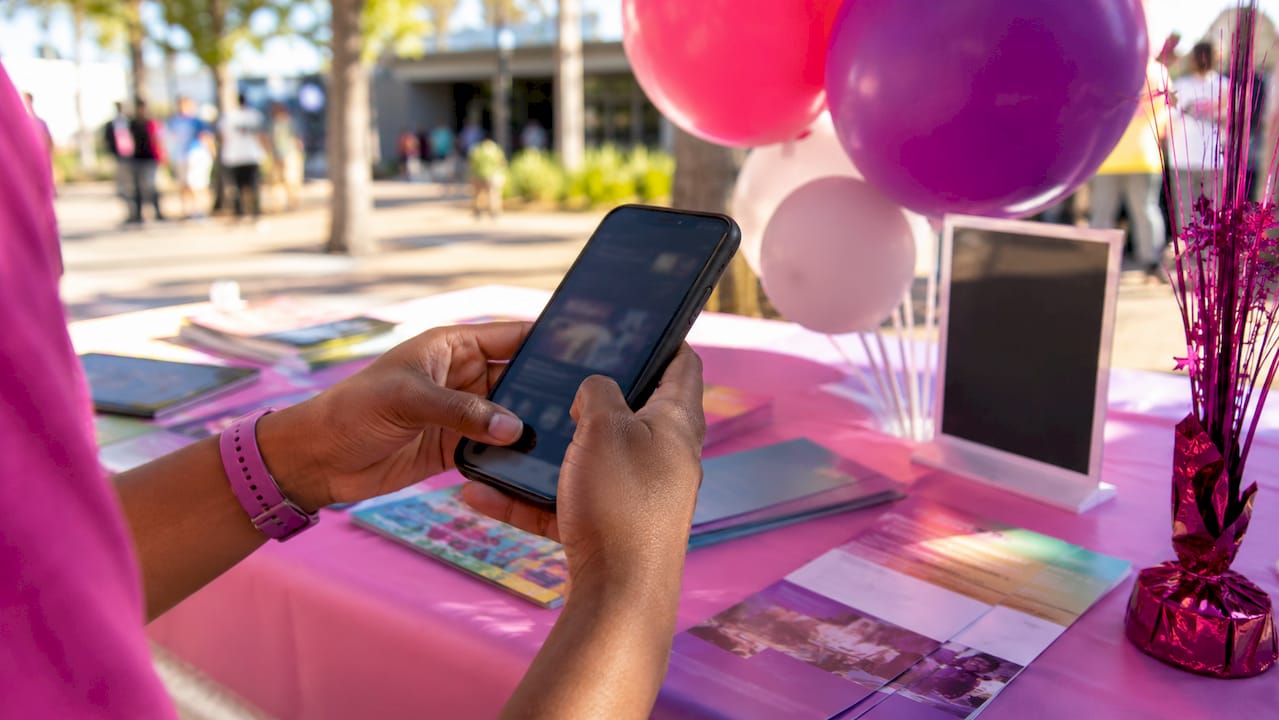
61% of meetings and events in 2026 use mobile apps to deliver personalised agendas and real-time networking opportunities. Tools like personalised event schedules give attendees control over their experience without requiring staff intervention at every touchpoint. The result is a higher-quality interaction at lower operational cost.
Post-event engagement is equally important. 92% of event marketers now focus on personalised post-event follow-ups, and 77% pursue year-round engagement rather than treating each event as a one-off. Follow-up communications built on actual attendee behaviour, such as which sessions they attended or which exhibitors they visited, outperform generic thank-you emails by a significant margin.
There is, however, a real risk in getting this wrong. Over-personalisation during registration can reduce attendance by creating data friction. Asking attendees for too much information before they have committed to attending is a common mistake. The fix is straightforward: collect only the data that directly improves their experience, such as session preferences, dietary requirements, or networking goals.
- Personalised agendas reduce attendee confusion and increase session attendance rates
- Real-time networking tools connect guests with relevant contacts rather than leaving them to chance
- Behaviour-based follow-up communications build loyalty beyond the event itself
- Interactive tools like message walls maintain engagement without feeling intrusive
Pro Tip: Limit your registration form to five fields or fewer. Every additional field you add increases the likelihood that a prospective attendee abandons the process entirely.
What are the benefits of bespoke fabrication and custom technology?
Custom event fabrication is not decoration. It is an operational decision that affects traffic flow, staffing requirements, brand consistency, and emergency costs. Custom fabrication supports brand visibility, functional efficiency, and a consistent attendee experience from arrival to departure.
A bespoke build designed around your venue removes the guesswork from crowd management. Entrances, registration points, and breakout areas can be positioned to reduce bottlenecks rather than adapted from a generic floor plan. Fabricated elements also reduce the need for last-minute rental equipment, which is one of the most common sources of unexpected cost at large events.
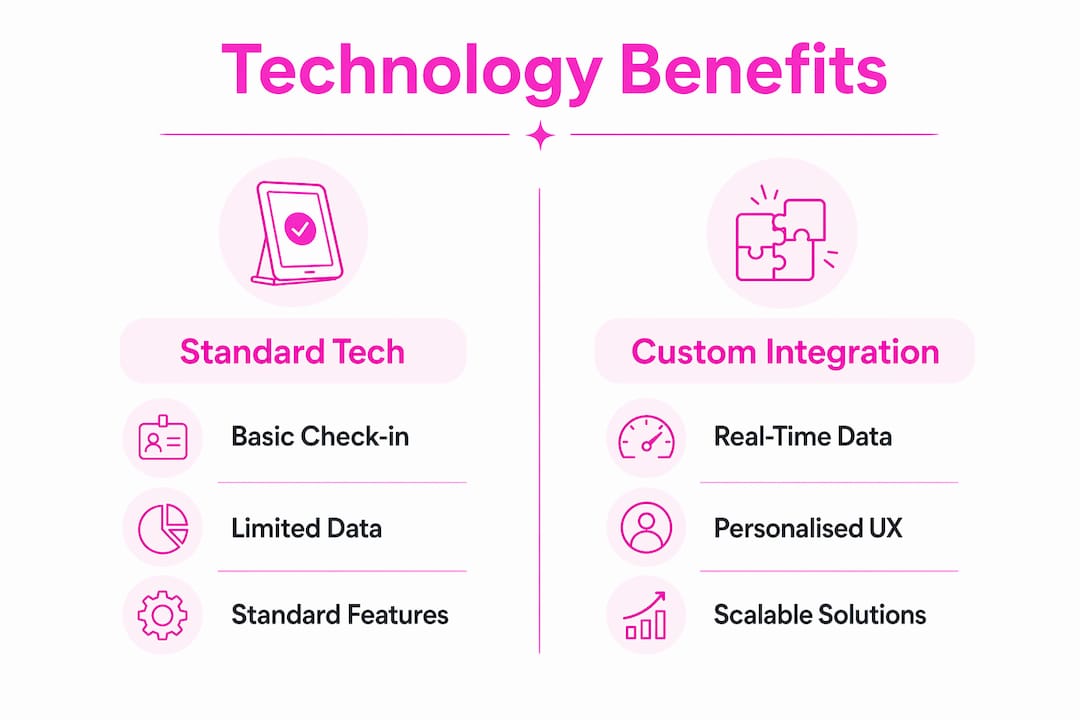
On the technology side, bespoke does not mean building everything from scratch. Modular platforms combined with bespoke API integration balance budget control with genuine customisation. A proven event management platform with a custom data layer gives you the reliability of tested infrastructure and the flexibility of a tailored solution. RFID tracking, for example, can be layered onto an existing registration system to provide real-time attendance data, lead retrieval, and session analytics without replacing the entire technology stack.
| Feature | Standard technology | Custom technology integration |
|---|---|---|
| Attendee data | Basic check-in records | Real-time RFID tracking and session analytics |
| Personalisation | Generic communications | Behaviour-based messaging and custom agendas |
| Brand alignment | Template-based design | Fully branded interfaces and custom API connections |
| Scalability | Fixed feature set | Modular layers added as event complexity grows |
| Cost profile | Lower upfront, limited ROI data | Higher upfront, measurable return on investment |
Pro Tip: Before commissioning a fully custom technology build, audit your existing platform’s API documentation. Most enterprise event tools already support 80% of the integrations you need.
How do expert event management companies deliver bespoke results?
Professional event management companies act as architects. Their primary role is not to execute tasks but to guide you through decisions that would otherwise create decision fatigue and incoherent outcomes. Event planners simplify choices for hosts, ensuring that every element of a bespoke event connects to a central vision rather than pulling in separate directions.
The practical benefits of working with an experienced company extend well beyond creative direction. Here is what professional coordination delivers at a bespoke event:
- Vendor relationships. Established planners have pre-negotiated rates and proven reliability with suppliers. Trusted vendors who understand bespoke needs unlock better pricing, faster problem-solving, and smoother event flow than cold procurement ever will.
- Budget transparency. Bespoke events carry more variables than standard packages. A skilled planner maps every cost category upfront, reducing the likelihood of late-stage surprises that compromise the guest experience.
- Integrated planning. Full-service planners unify every detail, from catering timelines to entertainment cues, so the event flows without visible joins. Guests experience coherence. You experience fewer emergency calls on the day.
- Simplicity within complexity. The paradox of bespoke planning is that the more customised an event becomes, the more important it is to keep the attendee experience feeling effortless. Expert coordinators balance personalisation with simplicity, removing friction without removing character.
The risk of attempting full customisation without professional support is not just stress. It is the specific failure mode where individual elements are excellent but the event as a whole feels disconnected. A bespoke lighting rig, a personalised menu, and a custom entertainment programme only work together when someone has planned the transitions between them.
Tailored event solutions vs. standard turnkey options: which fits your event?
The choice between bespoke and turnkey is not a question of quality. It is a question of fit. Both approaches have legitimate use cases, and the wrong choice in either direction costs money.
Turnkey event solutions are designed for speed, predictability, and reduced decision load. They work well for recurring internal meetings, smaller corporate gatherings, and events where brand differentiation is not a primary objective. The trade-off is limited flexibility and a guest experience that is competent but rarely memorable.
Tailored solutions suit events where the guest experience is the product. Weddings, flagship corporate conferences, product launches, and award ceremonies all benefit from the advantages of personalised event services that bespoke planning provides. The higher initial effort and cost are offset by measurable outcomes: stronger brand recall, higher attendee satisfaction scores, and the kind of word-of-mouth that no marketing budget can replicate.
- Choose turnkey when: the event is internal, the timeline is short, and consistency matters more than differentiation
- Choose tailored when: the audience is external, the event represents your brand, and you need measurable engagement data
- Choose a hybrid when: budget is constrained but brand alignment is non-negotiable. Modular platforms with custom layers deliver bespoke results at closer to turnkey cost
The suitability question also depends on executive expectations. A board-level corporate dinner or a high-end Scottish wedding carries implicit expectations that a standard package simply cannot meet. At that level, bespoke event planning benefits extend beyond aesthetics into reputation management.
Key takeaways
Tailored event solutions outperform standard packages on every measurable outcome when implemented with clear goals, selective data collection, and expert coordination.
| Point | Details |
|---|---|
| Personalisation drives revenue | Organisations using attendee-insight strategies report 28% higher revenue and 35% better retention. |
| Mobile tools boost engagement | 61% of 2026 events use mobile apps for personalised agendas, reducing friction and increasing participation. |
| Fabrication is operational, not decorative | Custom builds improve traffic flow, reduce staffing needs, and cut emergency rental costs. |
| Expert coordination prevents fragmentation | Professional planners unify bespoke elements so the event feels coherent rather than assembled. |
| Match the approach to the event type | Turnkey suits internal, low-differentiation events; tailored suits external, brand-critical occasions. |
The part most planners get wrong about bespoke events
I have seen event organisers approach customisation as a shopping list. They add a personalised welcome screen here, a custom cocktail menu there, and a branded photo booth in the corner. Each element is thoughtful in isolation. Together, they feel like a collection of ideas rather than a single experience.
The mistake is starting with the elements rather than the goal. Before you commission a single bespoke component, you need a clear answer to one question: what do you want your guests to feel when they leave? That answer should determine every customisation decision that follows, not the other way around.
The second misconception I encounter regularly is that bespoke means expensive by default. It does not. Modular platforms with custom layers, selective fabrication in high-visibility areas, and targeted personalisation at key touchpoints deliver a genuinely tailored experience at a fraction of the cost of building everything from scratch. The skill is in knowing where customisation creates the most impact and concentrating your budget there.
My honest advice is to treat your entertainment programme as the anchor of your bespoke strategy. Music, hosting, and atmosphere are what guests remember and talk about. Everything else supports that core experience. Getting the entertainment right for your event is not a finishing touch. It is the foundation.
— STUART
How Freshentertainments brings tailored entertainment to life
Freshentertainments specialises in bespoke wedding and event entertainment across Scotland, offering fully customised packages that combine premium DJ hire, professional MC services, and interactive performance options including saxophone integration and custom lighting design.
Every package is built around your event goals, venue, and guest profile rather than a fixed template. Whether you are planning an intimate ceremony or a large-scale corporate celebration, the team works with you to create an entertainment programme that fits precisely. Explore the full range of bespoke entertainment packages or read the guide to creating the perfect wedding atmosphere to see how tailored entertainment transforms an event from good to genuinely unforgettable.
FAQ
What are tailored event solutions?
Tailored event solutions are fully customised event services that align technology, entertainment, fabrication, and planning with specific event goals and audience needs. They differ from standard packages by delivering measurable outcomes rather than a generic baseline experience.
How much do bespoke event solutions cost compared to turnkey?
Bespoke events carry higher upfront costs than turnkey options, but custom event production offers better alignment with brand goals and stronger measurable returns. Modular approaches with selective customisation reduce the cost gap significantly.
What data should I collect for personalised event planning?
Collect only data that directly improves the attendee experience, such as session preferences, dietary requirements, and networking goals. Exhaustive data collection during registration increases drop-off rates and reduces overall attendance.
When does a tailored approach outperform a standard event package?
A tailored approach outperforms standard packages at external-facing events where brand representation, guest experience, and measurable engagement matter. Weddings, product launches, and flagship corporate conferences are the clearest use cases.
How do I avoid decision fatigue when planning a bespoke event?
Work with a professional event management company from the outset. Expert planners act as architects, simplifying choices and ensuring every bespoke element connects to a coherent central vision rather than competing with each other.