
TL;DR:
- The wedding hosting process involves a carefully sequenced series of decisions from budgeting to day-of coordination, ensuring a smooth event. Correctly ordering steps like booking venues and securing vendors based on fixed timelines drastically reduces stress and last-minute issues. A detailed operational timeline and effective communication, particularly through a dedicated day-of coordinator, are key to executing a successful and enjoyable wedding day.
The step by step wedding hosting process is a structured sequence of decisions and actions that takes you from initial budget setting through to the final moments of your wedding day. Most couples underestimate how much the order of these steps matters. Book a venue before fixing your guest count and you will either overspend or scramble to cut names from the list. Get the sequence right, and every subsequent decision falls into place with far less friction. This guide covers every phase of the wedding event planning process, from foundational finances to day-of coordination, so you can host your wedding with confidence and clarity.
What does the step by step wedding hosting process actually involve?
The wedding hosting process is the industry term for what most couples call “wedding planning,” but it is more specific. It refers not just to choosing suppliers and décor, but to the operational management of the entire event, from the first planning meeting to the last dance. Organising the process as a timeline from 12 or more months out ensures logical sequencing of tasks including budgeting, venue booking, vendor hiring, invitations, and day-of logistics. That sequencing is the difference between a wedding that flows and one that lurches from crisis to crisis.
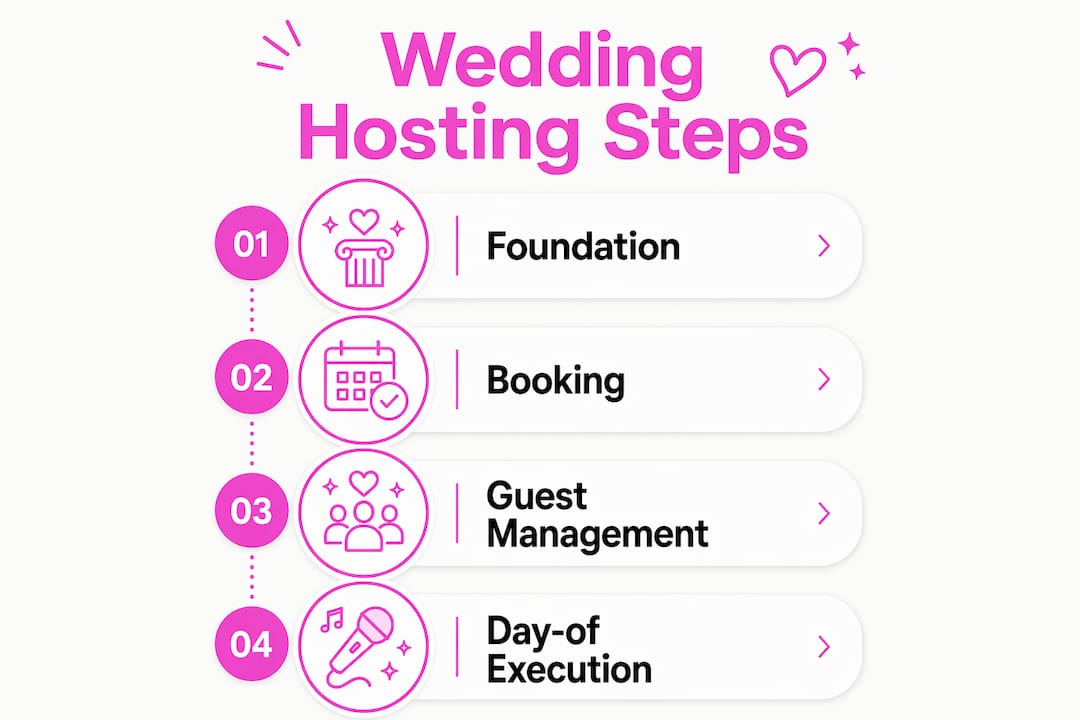
The process has four distinct phases: foundation setting, vendor and venue securing, guest management, and day-of execution. Each phase depends on the one before it. You cannot finalise your catering numbers without confirmed RSVPs, and you cannot send invitations without a confirmed venue and date. Understanding this dependency chain is the single most useful mental model you can bring to your wedding preparation steps.
Why do budget and guest list come before everything else?
Your budget and guest count are the two variables that determine every other decision you will make. The venue, the catering style, the entertainment package, the floral budget, all of it scales directly from these two numbers. Setting them after you have fallen in love with a venue is one of the most common and costly mistakes couples make.
Start by having an honest conversation with everyone contributing financially, whether that is parents, in-laws, or yourselves. Assign a realistic total figure, then allocate percentages across categories. A rough starting framework used by many professional planners is:
- Venue and catering: 40 to 50 per cent of total budget
- Photography and videography: 10 to 12 per cent
- Entertainment (DJ, band, MC): 8 to 10 per cent
- Flowers and décor: 8 to 10 per cent
- Attire and beauty: 8 to 10 per cent
- Stationery, favours, and miscellaneous: 5 to 8 per cent
Your guest list directly controls the catering and venue costs, which together consume the largest share of your budget. Every additional guest adds cost across catering, seating, stationery, and favours. Trim the list before you book anything. Tools like Google Sheets or dedicated apps such as Zola or Hitched work well for tracking both budget allocations and guest details in one place.
Pro Tip: Create two guest list tiers: a confirmed “A list” and a secondary “B list” of people you would invite if numbers allow. As regrets come in, you can extend invitations from the B list without awkwardness.
How should you book your venue and priority vendors?
Venue availability drives your wedding date, not the other way around. Lock the venue first, then confirm the date, then book every other vendor around that fixed point. This is the correct sequence for the complete wedding hosting plan, and deviating from it creates avoidable conflicts.
Once the venue is confirmed, book vendors in this order of priority:
- Photographer and videographer (often booked 12 to 18 months in advance for popular dates)
- Caterer (if not included with the venue)
- Entertainment (DJ, live band, or MC, typically 9 to 12 months out)
- Officiant or celebrant
- Florist and décor suppliers
- Hair and make-up artists
- Transport
| Vendor | Ideal booking window | Key contract clause to check |
|---|---|---|
| Venue | 12 to 18 months | Exclusivity and curfew terms |
| Photographer | 12 to 18 months | Second shooter and rights |
| Entertainment | 9 to 12 months | Cancellation and substitution policy |
| Caterer | 9 to 12 months | Final headcount deadline |
| Florist | 6 to 9 months | Deposit and substitution terms |
Read every contract before signing, and pay particular attention to cancellation and force majeure clauses. A vendor who cannot provide a clear written policy on cancellations is a vendor worth reconsidering. Working with a wedding planner or coordinator from this stage onwards pays dividends. They know which local suppliers are reliable and which have a history of letting couples down.
Pro Tip: When hiring a wedding DJ, ask specifically for their contingency plan if their primary equipment fails. Any professional worth booking will have a clear answer.
How do you manage invitations, RSVPs, and guest communications?
Guest communication is where many otherwise well-organised weddings begin to unravel. The fix is to over-communicate logistics early and create a single source of truth that guests can reference without messaging you directly.
Send invitations 6 to 8 weeks before the wedding with RSVP deadlines set 3 to 4 weeks before the date. For destination weddings, extend this to 10 to 12 weeks to give guests adequate time to arrange travel and accommodation. Save-the-dates should go out 6 to 12 months in advance for local weddings, and up to 18 months for destination events.
A wedding website is the most effective tool for reducing last-minute guest queries. Platforms like Hitched, Zola, and Joy all offer free wedding website builders with built-in RSVP tracking. Your website should include:
- Ceremony and reception venue addresses with map links
- Parking and public transport information
- Dress code guidance with specific examples if needed
- Accommodation options at different price points
- Schedule overview (ceremony time, reception start, approximate finish)
- Dietary preference collection alongside the RSVP
Clear logistics on invitations and digital platforms help manage expectations and reduce the volume of messages you receive during the event itself. That matters more than most couples realise. On the wedding day, every message you answer is a moment you are not present in.
What are the best day-of hosting strategies for a smooth wedding?
Day-of execution is where the entire wedding hosting guide either pays off or falls apart. The foundation is a detailed timeline distributed to every vendor and team member before the day begins.
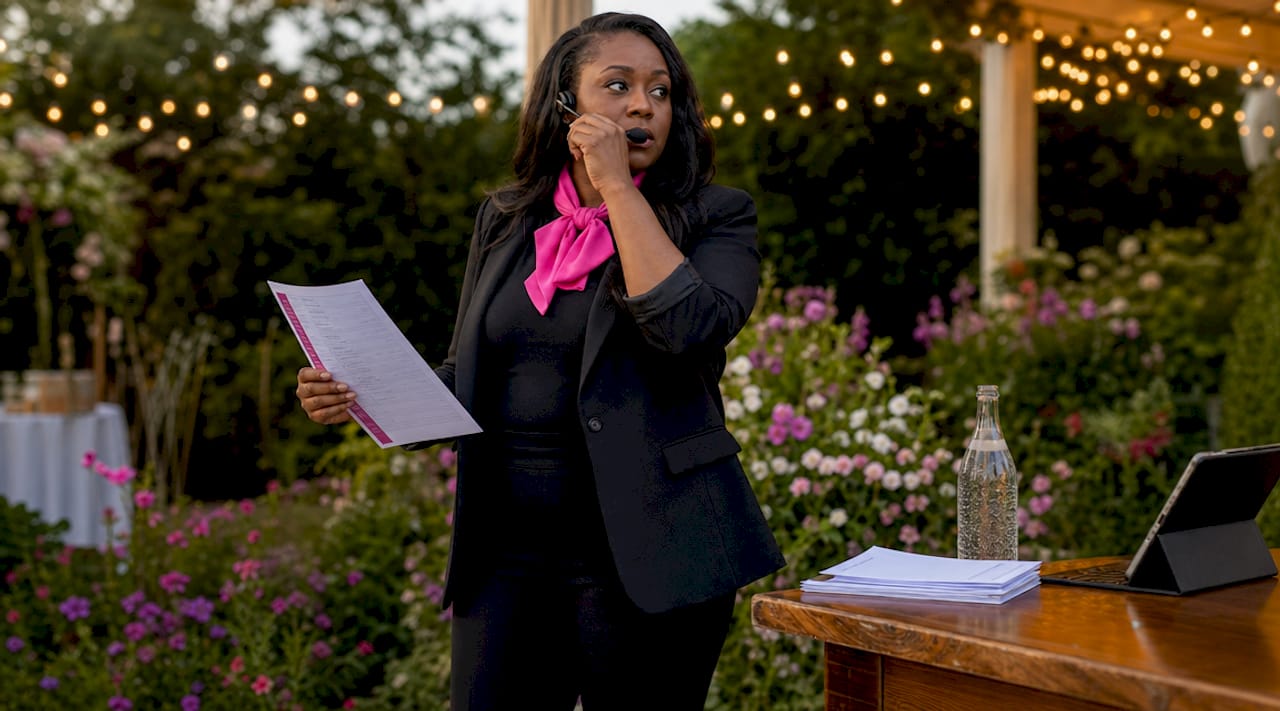
There are two versions of the wedding day timeline you need to create. The first is a simplified public version for guests, showing ceremony time, reception start, and key moments like the first dance and speeches. The second is a detailed vendor timeline that includes every setup window, transition cue, and logistical note. Sharing the full vendor timeline with guests overwhelms them. Sharing only the guest version with vendors leaves them without the information they need to coordinate.
Buffer time of 15 to 30 minutes between major timeline blocks absorbs delays and keeps the day on schedule. Hair and make-up sessions are the most common source of morning delays. The bride should be last in the styling chair to stay fresh for photographs, with stylists typically allocating 90 to 120 minutes for the bride and 45 to 60 minutes per bridesmaid. Build a 30 to 45 minute buffer into the morning schedule as standard practice.
Vendor arrival times must be scheduled with precision. Caterers need 2 to 3 hours for setup, DJs and bands need 1 to 2 hours, and photographers typically arrive 2 to 3 hours before the ceremony. Distributing the complete vendor timeline rather than isolated arrival times prevents vendors from arriving mid-ceremony or disrupting guest arrival.
| Timeline block | Recommended buffer | Why it matters |
|---|---|---|
| Morning hair and make-up | 30 to 45 minutes | Styling sessions frequently overrun |
| Pre-ceremony photography | 15 to 20 minutes | Travel and setup take longer than expected |
| Ceremony to reception transition | 20 to 30 minutes | Guest movement and cocktail hour setup |
| Dinner to speeches | 10 to 15 minutes | Catering service timing varies |
| First dance to evening entertainment | 15 minutes | Band or DJ changeover and sound checks |
A day-of coordinator manages the timeline, vendor communications, and guest flow, allowing you to focus on enjoying your day. This role is distinct from a venue coordinator. A venue coordinator focuses on venue logistics and house rules, while a day-of coordinator manages the overall event flow and acts as your single point of contact for every vendor. If your venue provides a coordinator, do not assume that covers everything. It usually does not.
Pro Tip: Ask your day-of coordinator to create a master contact sheet with every vendor’s mobile number, arrival time, and key deliverable. This single document prevents 90 per cent of day-of confusion.
How do you handle common hosting challenges on the day?
Even the most meticulously planned wedding will encounter at least one unexpected issue. The goal is not to prevent every problem but to resolve each one before guests notice.
For outdoor or partially outdoor weddings, weather contingency planning is non-negotiable. Confirm your wet weather backup plan with the venue at least four weeks before the date, and brief your coordinator on the trigger point for switching to it. Do not wait until the morning of the wedding to make that call.
Practical strategies for smooth day-of hosting include:
- Assign a trusted friend or family member to manage the gift table and card box, not a vendor
- Brief your MC or DJ on the exact running order and give them authority to make minor timing adjustments
- Place a small emergency kit at the venue with safety pins, stain remover, pain relief, and plasters
- Confirm final headcounts with your caterer no later than 72 hours before the event
- Designate one person to handle any supplier queries on the day so neither of you is fielding calls
“Wedding-day flow is everything. Avoiding long gaps and pacing the energy thoughtfully is what separates a good wedding from one guests talk about for years.” — Vogue, How to plan a wedding in 2026
Managing your own wellbeing on the day is as important as managing logistics. Eat breakfast. Drink water. Designate someone else to handle the small fires. You have done the planning. Trust the process and the people you have hired.
Key takeaways
A successful wedding hosting process depends on sequencing decisions correctly, from budget and guest list through to day-of coordination, with buffer time and clear vendor communication protecting every stage.
| Point | Details |
|---|---|
| Budget and guest list first | Fix both numbers before booking any venue or vendor to avoid costly revisions. |
| Venue locks the date | Book your venue before all other vendors, then confirm every other booking around that fixed date. |
| Two timeline versions | Create a simplified guest timeline and a detailed vendor timeline to keep everyone appropriately informed. |
| Buffer time is not optional | Build 15 to 30 minutes of buffer between major blocks to absorb the delays that will inevitably occur. |
| Day-of coordinator vs venue coordinator | These are different roles. A day-of coordinator manages overall event flow; a venue coordinator manages the space. |
Why I think most couples underestimate the power of a good timeline
I have worked alongside hundreds of wedding days across Scotland, and the single factor that separates the ones that feel effortless from the ones that feel chaotic is almost always the timeline. Not the flowers, not the venue, not the budget. The timeline.
Couples often treat the timeline as a rough guide, something to glance at and then set aside. Professional coordinators treat it as a live operational document. They update it in real time, brief every vendor against it, and use it to make decisions under pressure without needing to consult the couple. That is the point. When your coordinator has a detailed, well-built timeline, you are freed from the logistics entirely.
The other thing I see couples consistently underestimate is the value of entertainment coordination as a hosting tool. A skilled MC does not just announce the first dance. They read the room, manage energy, fill gaps gracefully, and keep guests engaged during transitions that would otherwise feel awkward. That is operational hosting expertise, not just performance.
My honest advice: build your timeline earlier than feels necessary, add more buffer than you think you need, and hire people whose job it is to manage the details so yours is simply to enjoy the day.
— STUART
How Freshentertainments can support your wedding hosting
Planning a wedding in Scotland and want professional entertainment that integrates with your day-of timeline from the start? Freshentertainments provides award-winning DJ hire, MC services, and bespoke entertainment packages designed to work alongside your coordinator and venue team, not against them.

From the moment you book, the Freshentertainments team works with your wedding entertainment timeline to position every musical moment precisely where it belongs in your running order. Whether you need a DJ-led evening reception, a live saxophone performance, or full all-day wedding hosting, the packages are built around your specific day. Explore the wedding entertainment packages or get in touch to discuss a bespoke quote for your celebration.
FAQ
What is the first step in hosting a wedding?
The first step is setting your total budget and confirming your guest count. These two figures determine every subsequent decision, including venue size, catering style, and entertainment options.
How far in advance should you book wedding vendors?
Book your venue and photographer 12 to 18 months in advance, entertainment 9 to 12 months out, and florists and stylists 6 to 9 months before the date. Popular suppliers on peak dates fill quickly.
What is the difference between a venue coordinator and a day-of coordinator?
A venue coordinator manages the venue’s logistics and house rules. A day-of coordinator manages the overall event flow, vendor communications, and timeline on your behalf, acting as your single operational point of contact.
How much buffer time should a wedding day timeline include?
Build 15 to 30 minutes of buffer between major timeline blocks. Morning hair and make-up sessions are the most common source of delays, so add a 30 to 45 minute buffer there specifically.
When should wedding invitations be sent?
Send invitations 6 to 8 weeks before the wedding with an RSVP deadline 3 to 4 weeks out. For destination weddings, send 10 to 12 weeks in advance to allow guests time to arrange travel.