
TL;DR:
- Proper event lighting enhances mood, visibility, and space perception, making the event feel vibrant and engaging. Choosing fixtures based on venue characteristics, event type, and budget ensures optimal atmosphere and technical reliability. Testing lighting setups in advance and matching fixtures to specific event phases create a memorable, well-coordinated guest experience.
Event lighting is the deliberate use of light fixtures and control technology to shape mood, visibility, and spatial perception at any gathering. Knowing how to select event lighting is the difference between a venue that feels alive and one that falls flat. The right choices affect guest experience, photography quality, and how your event flows from one moment to the next. Modern LED fixtures now dominate the industry due to their energy efficiency, long lifetimes, and precise colour control, making them the default starting point for any event lighting guide in 2026.
How to select event lighting: key factors first
Choosing event lighting starts with your venue, not your wishlist. Every other decision flows from the physical space you are working with.
Venue characteristics to assess:
- Size and ceiling height. A low-ceilinged function room needs different fixtures than a cathedral or converted warehouse.
- Ambient light. Daytime events with large windows require higher-output fixtures to compete with natural light.
- Power supply. Confirm the venue’s electrical capacity before specifying any rig. Insufficient power is one of the most common causes of on-the-night failures.
- Layout. Identify zones: stage, dining, dance floor, walkways, and reception areas each need different illumination levels.
Pro Tip: Ask your venue coordinator for a technical rider or electrical plan before you book any lighting equipment. It saves costly surprises on the day.
Event type shapes your lighting style as much as the venue does. A wedding calls for warm, intimate tones that photograph well. A corporate conference needs neutral, even illumination that keeps presenters visible and audiences alert. A birthday party or festival celebration benefits from dynamic colour changes and beam effects that energise the room.
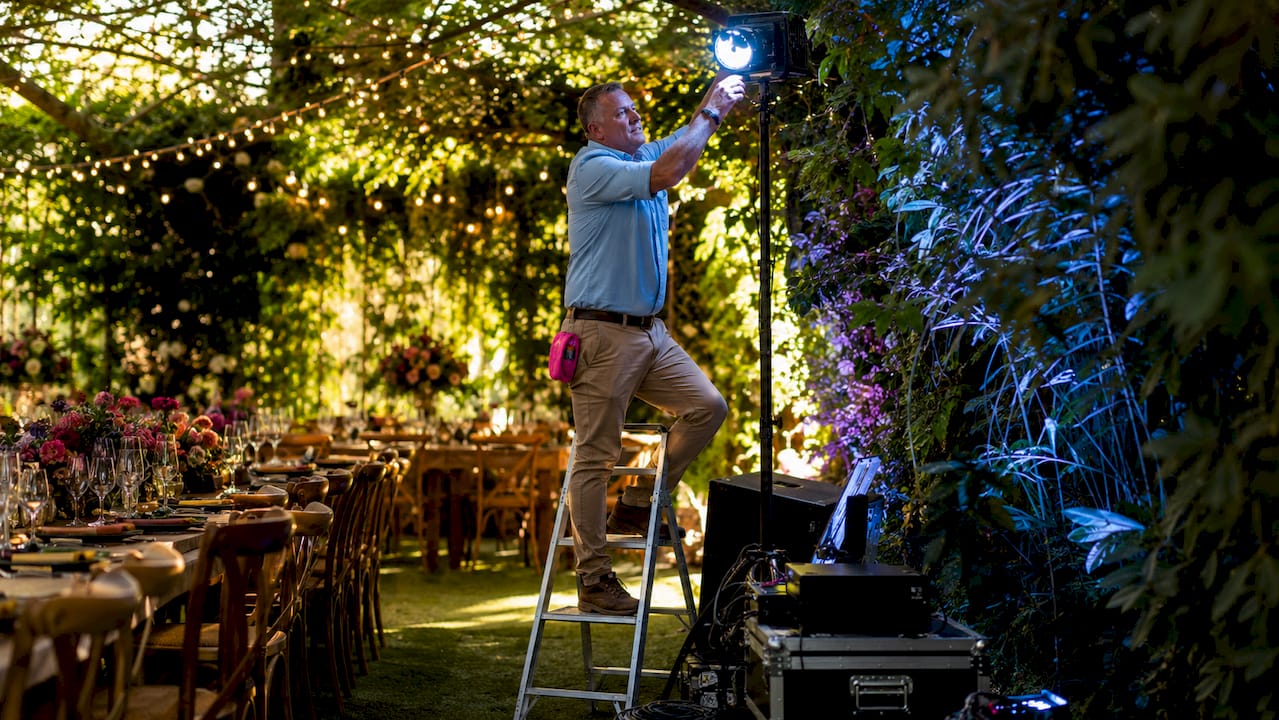
Budget layering is the most practical framework for prioritising lighting spend. Allocate for functional and safety lighting first: exits, walkways, and presenter areas must be adequately lit regardless of budget. Only then direct remaining funds toward decorative and brand-enhancing elements. This approach protects the event’s core function while leaving room for atmosphere.
Which lighting fixtures work best for each purpose?
Understanding fixture types is the foundation of any solid event lighting guide. Each type serves a distinct role, and mixing them correctly creates depth and visual interest.
| Fixture Type | Primary Use | Best For |
|---|---|---|
| Wash lights | Broad, even illumination | Stage fills, general mood, colour washes |
| Beam lights | Focused, dynamic effects | Dance floors, dramatic highlights |
| Uplights | Architectural enhancement | Walls, columns, venue perimeter |
| Pin spots | Accent lighting | Table centrepieces, focal décor |
| Tunable white LEDs | Atmosphere shifts | Multi-phase events, weddings |
Wash lights provide the base layer of any rig. They cover large areas evenly and set the overall colour temperature of a space. For a wedding reception, warm amber wash lights at 2,700K create an intimate, flattering glow that works beautifully on camera.
Beam lights add movement and drama. They are the fixtures you see cutting through haze on a dance floor. Use them sparingly: one or two well-placed beam fixtures create impact, while a dozen create chaos.
Uplighting is one of the most cost-effective ways to transform a venue. Effective uplighting avoids hot spots by placing fixtures every 8–10 feet, angled to graze walls rather than projecting light directly upward. This technique creates smooth, even architectural washes that make a plain function room look considered and polished.
Pin spotting is the detail work. Pin-spotting table centrepieces is a high-impact, cost-effective upgrade that highlights focal points while maintaining ambient mood. A single pin spot above a floral arrangement draws the eye without overpowering the room.
Pro Tip: Tunable white LED fixtures, which range from 2,700K to 6,500K, let you shift the room’s atmosphere from warm and intimate during dinner to bright and energetic for speeches, all without changing a single fixture.
How can you plan your lighting setup for best results?
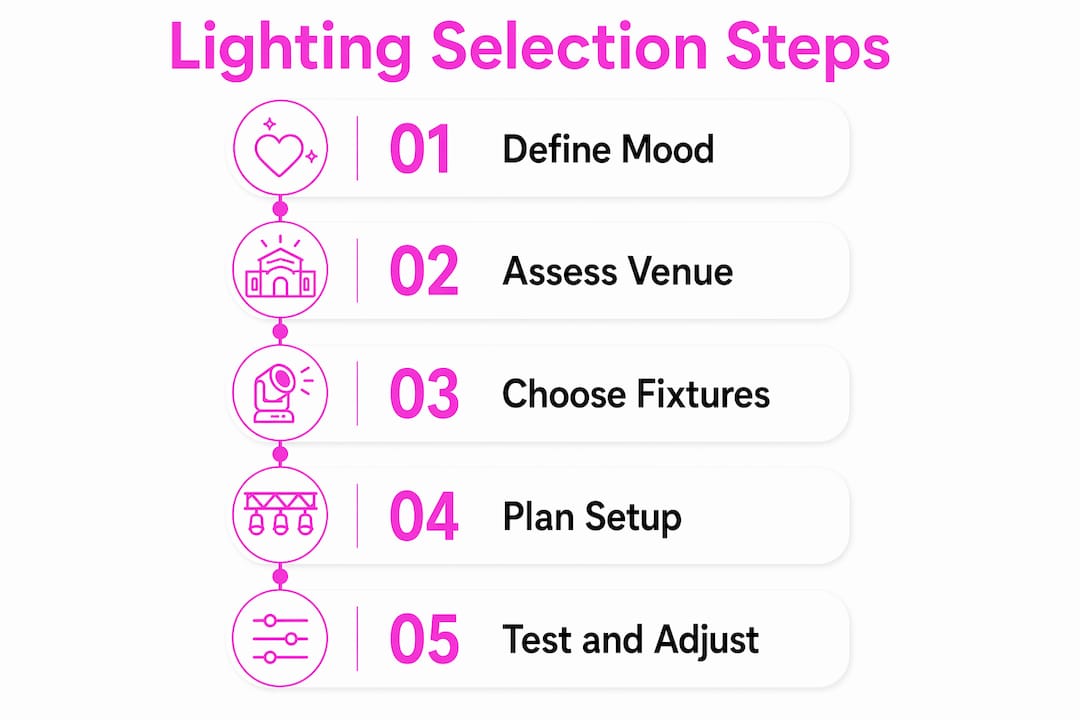
Lighting design works best when you define the mood first and then translate that into technical specifications. Start with the emotional outcome you want, then work backwards to fixture counts, placements, and control systems.
A practical planning sequence:
- Define the mood for each phase of the event (arrival, dining, speeches, dancing).
- Map the venue zones and assign illumination targets to each. Industry standards suggest 100–200 lux for lounges, 200–300 lux for general sessions, and 800–1,200 lux for focused presenter areas.
- Select fixture types for each zone based on the table above.
- Calculate fixture counts. Small events typically use 6–10 wash lights; medium events combine 8–12 beam fixtures with 6–10 wash lights for balance. That ratio gives you a useful starting benchmark.
- Confirm power availability with the venue and calculate total draw from your fixture list.
- Choose your control system: wired or wireless DMX.
- Schedule a full rehearsal and test run before the event day.
| Event Size | Wash Lights | Beam Fixtures | Uplights |
|---|---|---|---|
| Small (up to 80 guests) | 6–10 | 2–4 | 8–12 |
| Medium (80–200 guests) | 10–14 | 8–12 | 14–20 |
| Large (200+ guests) | 16+ | 12+ | 20+ |
On control systems, wireless DMX requires elevated antennas and careful line-of-sight management. Wired connections remain the preferred choice for critical lighting cues where reliability is non-negotiable. Treat a wireless DMX system like a radio network: scan for interference sources in the venue before the event and maintain clear sightlines between transmitter and receivers.
Pro Tip: Always run a full lighting cue sequence during your venue visit, not on the day. Lighting issues discovered at 4pm on a Saturday are far harder to fix than those found during a midweek rehearsal.
What mistakes should you avoid when choosing event lighting?
More light is not necessarily better. Precision and appropriate fixture placement avoid distracting hot spots and improve the overall visual composition of your event. This is the single most counter-intuitive lesson in event lighting, and it catches even experienced planners out.
Common pitfalls to avoid:
- Excessive fixture density. Packing too many lights into a space creates overlapping beams, colour bleed, and a visually cluttered result. Space fixtures deliberately.
- Ignoring control channel planning. Every DMX fixture requires a channel assignment. Running out of channels mid-rig is a fixable problem, but only if you plan for it in advance.
- Skipping compatibility checks. Not all fixtures work with all controllers. Confirm that your fixtures, dimmer packs, and DMX controller are compatible before the event.
- Underestimating power draw. A 20-fixture LED rig can still trip a venue’s circuit breakers if the load is not distributed correctly across available circuits.
- Neglecting dynamic cues. Static lighting for a four-hour event feels flat by the second hour. Programme at least three distinct looks: arrival, dining, and dancing.
“Lighting is best approached as a layered design combining ambient, accent, and task lighting to create emotional responses.” — GEO Events
Balancing function and aesthetics is not a compromise. It is the goal. The most visually striking rigs are always the ones where every fixture has a clear purpose. If you cannot explain why a fixture is there, remove it.
Matching lighting to your event theme and atmosphere
Colour temperature is the most direct tool for aligning your lighting with your event’s theme. Warm tones (2,700K–3,000K) suit intimate weddings and candlelit dinners. Neutral white (3,500K–4,500K) works for professional corporate events where clarity and focus matter. Cool tones (5,000K–6,500K) energise party environments and work well on dance floors.
For weddings, layering decorative lighting options such as gobo projections, uplighting, and pin spots reinforces the theme without overwhelming the space. A gobo projector can cast a monogram or floral pattern onto a wall or dance floor, adding a personalised touch that guests remember.
Lighting by event phase:
- Arrival and drinks reception: Warm, low-level uplighting and soft wash. Guests should feel welcomed, not spotlit.
- Dining: Slightly brighter wash with pin spots on centrepieces. Conversation-friendly, not theatrical.
- Speeches: Raise presenter lighting to 800–1,200 lux. Dim the room slightly to focus attention on the speaker.
- Dancing: Introduce beam lights, colour changes, and dynamic cues. This is where energy and movement matter most.
Integrating lighting with sound and entertainment creates a unified guest experience. When the DJ drops the first dance track and the lighting shifts simultaneously, the effect is far more powerful than either element alone. Freshentertainments builds this kind of integration into its sound and lighting packages, so the two elements work as one system rather than two separate hires.
Key takeaways
Selecting event lighting well means defining your mood first, matching fixtures to zones, and testing everything before the event day.
| Point | Details |
|---|---|
| Define mood before fixtures | Decide the emotional outcome for each event phase before choosing any equipment. |
| Layer ambient, accent, and task | Combine wash lights, uplights, and pin spots to create depth and visual interest. |
| Match lux levels to zones | Use 100–200 lux for lounges and 800–1,200 lux for presenter areas as your baseline. |
| Test control systems in advance | Rehearse all DMX cues on-site before the event day to catch compatibility issues early. |
| Budget function before aesthetics | Secure safety and task lighting first, then allocate remaining budget to decorative elements. |
What i have learned about lighting after years of events
The biggest mistake I see planners make is treating lighting as the last item on the checklist. They finalise the catering, the entertainment, the florals, and then ask what is left in the budget for lights. By that point, the decisions are already made for them.
Lighting should be in the conversation from the first venue visit. The moment you walk into a space, you are already reading its light: where the windows are, how high the ceiling sits, what the walls are made of. Those observations directly shape what will work and what will not.
I have also learned that testing on-camera is non-negotiable. What looks beautiful to the human eye in a room can look flat, washed out, or overly warm on a camera sensor. If photography or video matters to your client, and it almost always does, run your lighting cues while someone photographs the space. Adjust before the day, not during it.
The events that stay with guests are the ones where the lighting shifted with the mood. Dinner felt intimate. Speeches felt focused. Dancing felt electric. That progression does not happen by accident. It is the result of deliberate cue planning and a willingness to programme more than one static look. Start with mood, layer your fixtures, and test everything twice.
— STUART
How Freshentertainments can support your event lighting
Freshentertainments provides professional lighting and entertainment packages tailored for weddings, parties, and corporate events across Scotland. Whether you are planning an intimate ceremony or a large-scale celebration, the team offers expert consultation on fixture selection, placement, and control systems suited to your venue and budget.
Every package is built around your event’s specific atmosphere goals, with on-site support to handle setup, testing, and live operation. Freshentertainments integrates lighting directly with DJ and MC services, so your sound and light work together from the first dance to the last song. Explore the full range of wedding atmosphere packages and find the right fit for your celebration.
FAQ
What is the best lighting type for a wedding reception?
Warm wash lights at 2,700K–3,000K combined with uplighting and pin spots on centrepieces create the most flattering and photogenic atmosphere for a wedding reception. Tunable white LED fixtures allow you to shift the mood from intimate dining to energetic dancing without changing equipment.
How many lights do i need for a small event?
Small events of up to 80 guests typically require 6–10 wash lights as a baseline, with additional uplights around the venue perimeter. Beam fixtures are optional at this scale but add impact on a dance floor.
Should i use wired or wireless DMX for event lighting?
Wired DMX connections are more reliable for critical lighting cues and are the preferred choice for professional setups. Wireless DMX works well for flexible rigs but requires careful antenna placement and interference scanning before the event.
What lux level do i need for a speaker or presenter area?
Focused presenter lighting requires 800–1,200 lux to ensure the speaker is clearly visible to both the audience and any cameras recording the event. General session areas need 200–300 lux as a baseline.
How far in advance should i plan event lighting?
Plan your lighting at the same time as your venue booking, not after. Early planning allows you to confirm power capacity, fixture compatibility, and control system logistics without last-minute compromises.