
TL;DR:
- Custom wedding lighting transforms venues by layering ambient, accent, decorative, functional, and entertainment effects for a memorable look. Proper planning involves natural light assessment, warm color temperatures, and integrating lighting with the event schedule. Spending on professional lighting, especially DMX systems and custom monograms, enhances atmosphere and photos while DIY options save costs through bulk buying and reuse.
Custom wedding lighting is the single most transformative design element you can add to your celebration. Lighting outperforms flowers and linens in changing how a venue looks and feels, and how it photographs. Whether you are planning a grand ballroom reception in Edinburgh or a rustic barn wedding in the Scottish Highlands, the right lighting turns an ordinary space into something genuinely memorable. This custom wedding lighting guide covers every category, planning step, and budgeting decision you need to get it right.
What are the essential types of custom wedding lighting?
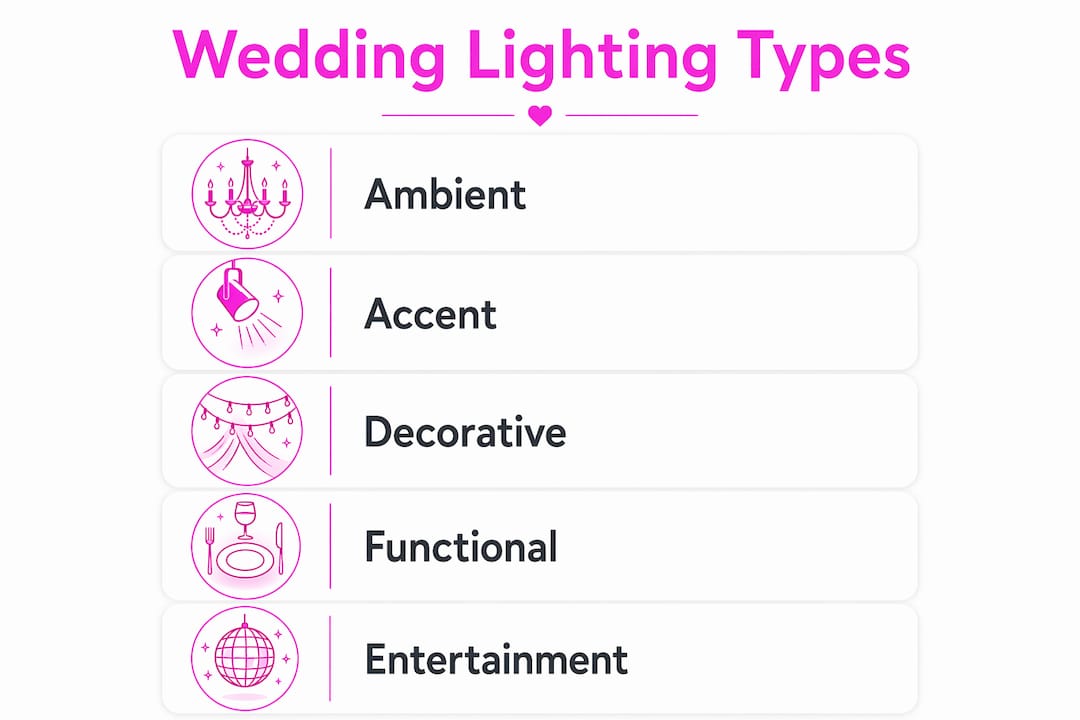
Professional wedding lighting falls into five categories: ambient, accent, decorative, functional, and entertainment. Each plays a distinct role, and the most impressive wedding lighting designs layer all five together.
Ambient lighting is your base layer. It provides the overall illumination that sets the mood for the entire room. Warm chandeliers, string lights across a ceiling, and softly lit drapes all count as ambient sources. Without a strong ambient layer, every other lighting choice looks disconnected.
Accent lighting draws attention to specific details. Spotlights focus on centrepieces, cake tables, and floral arrangements, while uplights cast a romantic colour wash along walls and columns. The two serve different purposes. Spotlights create focal points; uplights create atmosphere.
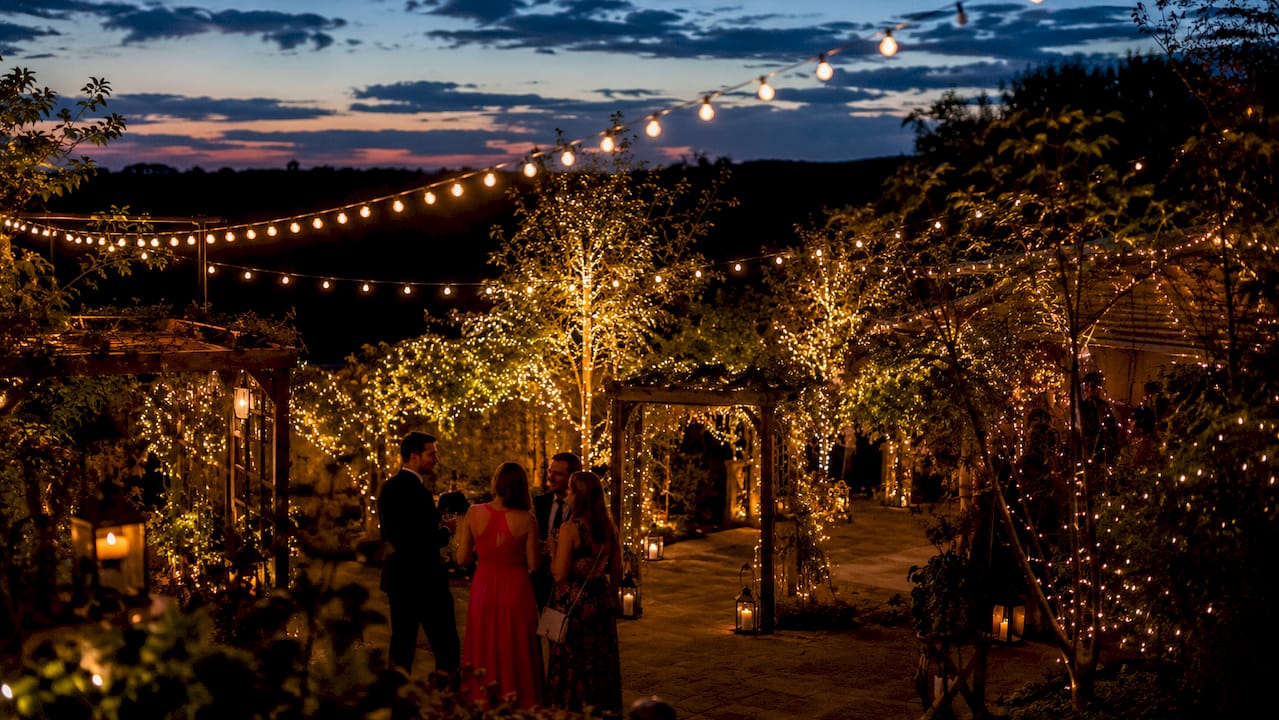
Decorative lighting includes fairy lights, festoon bulbs, neon signs, and lanterns. These are the elements guests photograph most. A custom neon sign with your initials or a canopy of Edison bulbs above the dance floor adds personality that no amount of table linen can replicate.
Functional lighting covers safety and practicality: pathway markers, exit signs, and task lighting for the catering team. It is rarely glamorous, but poor functional lighting causes accidents and disrupts the event.
Entertainment lighting is the most dynamic category. Moving heads, laser rigs, and LED par cans transform the dance floor from a flat space into a production. This category requires professional programming to work properly.
Pro Tip: Ask your lighting supplier to show you each category in isolation during a venue visit. Seeing ambient, accent, and entertainment lighting separately helps you understand what each contributes before you commit to a package.
| Lighting type | Primary purpose | Common examples |
|---|---|---|
| Ambient | Base illumination and mood | String lights, chandeliers, drapes |
| Accent | Highlight specific details | Uplights, pin spots, gobos |
| Decorative | Visual personality and style | Fairy lights, neon signs, lanterns |
| Functional | Safety and practicality | Pathway markers, task lighting |
| Entertainment | Dynamic dance floor effects | Moving heads, lasers, LED par cans |
How to plan custom lighting for your wedding venue
Planning your wedding lighting setup starts with a venue walkthrough at the exact time of day your reception will run. A venue walk-through at event time lets your designer judge natural light levels accurately. A room that feels bright at noon can feel cavernous at 7pm, and that difference changes every lighting decision you make.
Once you understand the natural light, focus on colour temperature. Warm-white lighting creates an inviting ambience; cool-white LEDs risk a cold, clinical feel and produce unflattering photographs. For most wedding receptions, a colour temperature between 2,700K and 3,000K delivers the golden, romantic glow that looks beautiful in person and on camera.
Follow these steps to build a solid lighting plan:
- Book your venue walkthrough at the same time of day as your reception. Bring your lighting supplier and photographer together so all three of you agree on what the space needs.
- Map your power sources before selecting fixtures. Knowing where sockets sit determines where you can place uplights and entertainment rigs without trailing cables across the floor.
- Choose wireless, battery-powered LED fixtures wherever possible. Wireless LED fixtures reduce trip hazards and keep the aesthetic clean, which matters especially in venues with stone floors or uneven surfaces.
- Select your colour palette to match your wedding theme. Warm blush and gold tones suit romantic styles; deep jewel tones suit dramatic or gothic themes. Test your chosen colours against your table linen and floral samples before finalising.
- Build a lighting timeline that mirrors your event schedule. Bright, welcoming light for the drinks reception; softer, warmer tones for dinner; dynamic entertainment lighting for the first dance and beyond. A lighting timeline aligned with your schedule enhances mood transitions and improves guest experience.
- Confirm venue restrictions in writing. Many venues prohibit fog machines, open-flame candles above a certain height, or laser rigs that point toward windows. Finding out on the day is too late.
Pro Tip: Send your photographer your lighting plan two weeks before the wedding. They can advise on any colour temperature or positioning changes that will improve your photos before anything is locked in.
What do custom wedding lighting costs look like?
Most couples spend between $300 and $1,200 on wedding lighting, though the range widens significantly when entertainment production is added. Understanding where your money goes helps you prioritise the elements that matter most.
| Lighting component | Typical cost range | Notes |
|---|---|---|
| Uplighting | $300–$600 | Per event; covers 10–20 fixtures |
| Custom monogram or gobo | $150–$350 | Includes design and projection |
| Speciality effects (lasers, fog) | $150–$400 each | Subject to venue approval |
| Fairy light canopy | $200–$500 | Varies by coverage area |
| DMX entertainment rig | $500–$1,500+ | Requires professional operator |
The clearest money-saving strategy for DIY couples is buying lights and candles in bulk and reusing them. DIY couples benefit most by purchasing string lights, fairy lights, and candles in volume and then repurposing them for engagement parties, rehearsal dinners, and home décor after the wedding.
Key budgeting decisions to make early:
- Prioritise uplighting if your venue has plain walls. It delivers the highest visual impact per pound spent.
- Invest in a custom gobo if you want a personalised monogram projected onto the dance floor or a feature wall.
- Hire a professional for entertainment lighting. DIY dance floor lighting rarely achieves the effect couples expect, and the cost of a professional rig is often lower than the cost of replacing cheap equipment that fails.
- Use battery-powered fairy lights for table centrepieces and ceremony arches. They are inexpensive, widely available, and require no electrician.
You can review typical DJ and lighting price ranges to understand how professional packages bundle these components in Scotland.
How can you personalise your wedding lighting?
Personalised wedding illumination is where lighting moves from functional to genuinely memorable. The most effective personalisation techniques work at every budget level.
- Custom gobos and monograms project your initials, wedding date, or a bespoke pattern onto walls, ceilings, and dance floors. A gobo costs a fraction of a floral installation and lasts the entire evening.
- Themed colour washes tie your lighting directly to your wedding palette. If your flowers are dusty rose and sage, programme your uplights to match. The cohesion reads beautifully in photographs.
- Dynamic entertainment lighting synced to music is the most dramatic personalisation option. DMX-controlled systems sync with music for a coordinated effect that cheap sound-reactive units cannot replicate. The difference between a DMX rig and a budget sound-to-light unit is the difference between a production and a disco.
- Layering static and active lighting creates depth. Keep your ambient and accent layers constant throughout the evening, then activate entertainment lighting for the first dance and party section. The contrast makes the transition feel like an event in itself.
- DIY decorative elements add charm without large costs. Jam jars filled with fairy lights, paper lanterns in your wedding colours, and candle clusters on mirror bases all photograph well and cost very little per unit.
Pro Tip: If you are using a professional DJ or entertainment company, ask whether their package includes DMX lighting control. Many couples assume lighting is separate and miss the opportunity to bundle it at a lower combined cost.
For more creative ideas on how lighting design transforms Scottish venues, the Freshentertainments blog covers venue-specific approaches in detail.
What are the most common wedding lighting mistakes?
The most frequent mistake couples make is overusing cool-white LEDs. Cool-white LEDs risk a cold, clinical feel and produce unflattering skin tones in photographs. Switching to warm-white equivalents costs nothing extra and fixes the problem entirely.
The second most common error is relying on cheap sound-to-light units for the dance floor. These units blink randomly to audio input rather than responding to the music’s structure. Cheap sound-to-light units blink randomly, while DMX-controlled systems follow the music’s dynamics with precision. The result with cheap units looks amateurish regardless of how good the rest of your décor is.
Avoid these additional pitfalls:
- Ignoring venue restrictions. Fog machines, haze units, and lasers are banned in many Scottish venues. Confirm in writing before booking any speciality effects.
- Placing power sources incorrectly. Extension cables running across dance floors and walkways are a safety hazard. Plan cable routes before the day, not during setup.
- Failing to schedule lighting changes. A static lighting scene from ceremony to last dance feels flat. Programme distinct scenes for drinks, dinner, speeches, and dancing.
- Skipping the technical rehearsal. Even a 30-minute run-through with your lighting operator and venue manager catches problems that would otherwise surface in front of 100 guests.
“Lighting is not a finishing touch. It is the foundation of your event design. Plan it first, not last.” — Event design principle shared widely across the professional wedding industry.
Pro Tip: Always ask your lighting supplier for a written cue sheet showing exactly when each lighting scene changes. Share it with your venue coordinator and DJ so everyone operates from the same plan.
Key takeaways
Custom wedding lighting requires layering five distinct categories, planning around your venue’s natural light, and choosing warm colour temperatures to create atmosphere that photographs beautifully.
| Point | Details |
|---|---|
| Layer all five lighting types | Combine ambient, accent, decorative, functional, and entertainment lighting for depth and cohesion. |
| Warm white beats cool white | Choose 2,700K–3,000K colour temperatures to avoid a clinical feel and flatter your guests in photos. |
| Plan your lighting timeline | Match lighting scenes to event stages: arrival, dinner, speeches, and dancing each need a distinct look. |
| DMX systems outperform budget units | Invest in DMX-controlled entertainment lighting for dance floor effects that actually sync with the music. |
| DIY savings come from bulk buying | Purchase fairy lights and candles in volume and reuse them across multiple events to reduce cost per use. |
What I have learned from watching lighting change everything
I have seen lighting do things that no other design element can. A marquee in rural Perthshire with plain white walls became a moody, intimate space in under an hour because the lighting operator knew what they were doing. The couple had spent months agonising over centrepieces. The centrepieces were lovely. Nobody talked about them. Everyone talked about the light.
The mistake I see most often is couples treating lighting as the last budget line. They spend heavily on flowers, stationery, and favours, then realise three weeks before the wedding that they have £200 left for lighting. At that point, your options are limited to fairy lights from a supermarket and hoping for the best. The couples who get this right book their lighting supplier at the same time as their venue, not after.
For DIY couples, my honest advice is to focus your energy on two things: a warm ambient layer and one statement decorative element. A ceiling of warm fairy lights plus a single custom neon sign will outperform a complicated DIY rig every time. Simplicity executed well beats complexity executed poorly.
The perfect wedding lighting setup is not about spending the most money. It is about understanding what each layer of light does and making deliberate choices. Start early, visit your venue at night, and work with people who have done it before.
— STUART
How Freshentertainments brings your wedding lighting to life
Freshentertainments works with couples across Scotland to create wedding atmospheres where lighting and entertainment work as one. Their packages combine professional DJ hire, MC services, and production lighting under a single plan, which means your DMX rig, your music, and your event timeline are all coordinated by the same team.
If you want a wedding party atmosphere where every lighting transition feels intentional and every moment on the dance floor is lit properly, Freshentertainments offers personalised consultations to match your venue, your style, and your budget. Contact the team to discuss your wedding date and find out which package fits your plans.
FAQ
What is custom wedding lighting?
Custom wedding lighting is a bespoke combination of ambient, accent, decorative, functional, and entertainment light sources designed specifically for a couple’s venue, theme, and event schedule. It goes beyond standard venue lighting to create a personalised atmosphere.
How much does wedding lighting typically cost?
Most couples spend between $300 and $1,200 on wedding lighting, with uplighting ranging from $300 to $600 and custom monograms from $150 to $350. Speciality effects such as lasers and fog machines add $150 to $400 each.
What colour temperature is best for a wedding reception?
Warm-white lighting at 2,700K to 3,000K is the best choice for wedding receptions. Cool-white LEDs create a clinical feel and produce unflattering photographs.
Do I need a professional for wedding lighting?
Entertainment lighting, particularly DMX-controlled dance floor rigs, requires professional programming. Ambient and decorative elements such as fairy lights and uplights can be managed by a confident DIY couple, but complex effects need an operator.
Can I reuse wedding lights after the event?
Yes. Buying fairy lights, string lights, and candles in bulk and reusing them for engagement parties, rehearsal dinners, and home décor is one of the most effective ways to reduce your overall wedding lighting cost.