
TL;DR:
- Event MC etiquette emphasizes respectful guidance, timing, and awareness to ensure a cohesive event experience. Proper preparation, audience reading, and careful communication distinguish professional MCs from amateurs. Adapting tone and protocol to event type is crucial for maintaining professionalism and guest engagement.
Event MC etiquette is the professional standard that governs how a master of ceremonies guides an event with respect, timing, and intentional communication. The MC’s role is to serve the event and its guests, not to dominate the room. Get this wrong and even a well-planned wedding or corporate function can feel disjointed. Get it right and the entire experience flows with energy, warmth, and purpose. This guide covers the core rules, preparation habits, and live performance skills that define excellent host etiquette for events.
What is event MC etiquette and why does it matter?
Event MC etiquette is the set of behavioural and professional standards that determine how a master of ceremonies conducts themselves before, during, and after an event. The industry phrase most professionals use is “MC protocol,” though “event MC etiquette” captures the same idea for anyone planning a wedding or corporate function. The foundation of good MC protocol is the “serve, don’t star” principle. The MC spotlights the event and its guests, never themselves.
This matters because the MC is the single voice that connects every segment of your event. A poorly briefed or self-indulgent MC creates awkward silences, confuses guests, and undermines the work of every other supplier in the room. A skilled MC with strong etiquette does the opposite. They make the whole event feel considered and cohesive.
What are the core responsibilities and etiquette rules for an event MC?
An MC’s primary duty is to manage event flow without overshadowing the people who matter most: your guests, speakers, and honoured individuals. Every word spoken should add context, excitement, or clarity. Filler speech detracts from event quality and signals a lack of preparation.
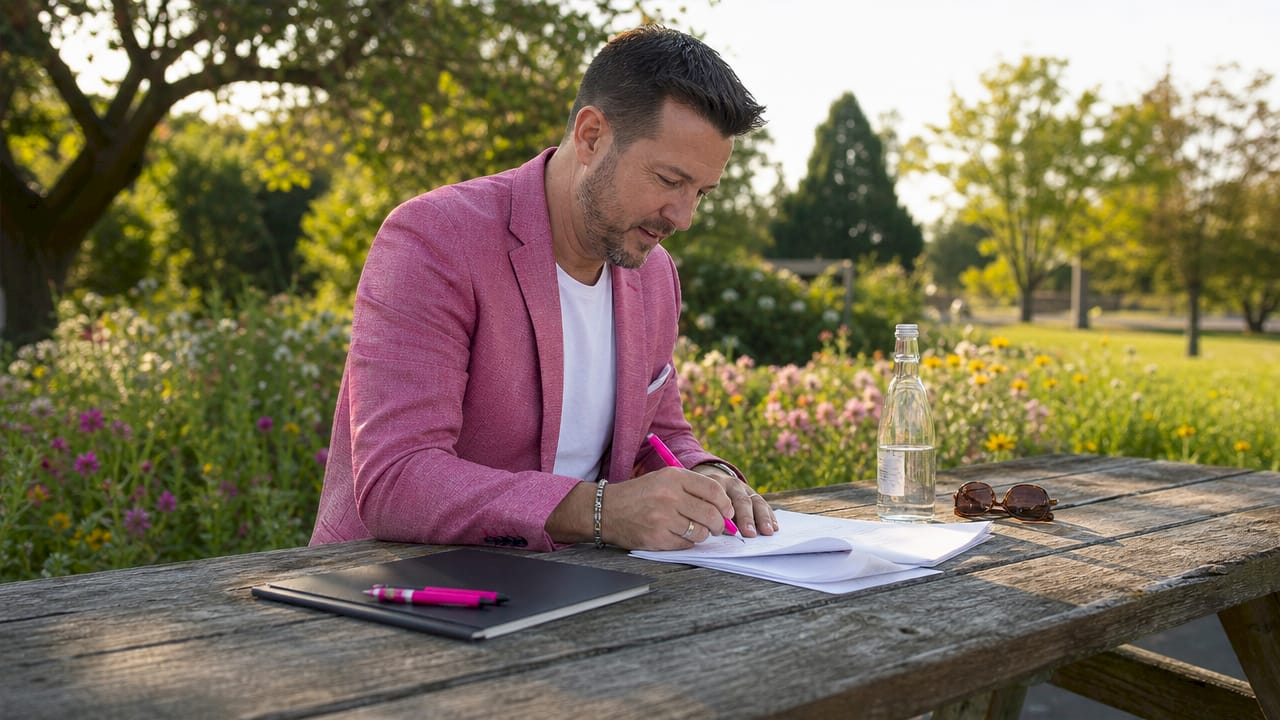
Timing is one of the clearest markers of professional etiquette. Opening remarks should last 3–5 minutes, with transitions and introductions kept to 30 seconds to 2 minutes. That discipline keeps energy high and respects your guests’ attention spans.
The core etiquette rules for any MC include:
- Keep remarks concise. Lengthy monologues pull focus away from the event’s purpose.
- Introduce speakers and guests with accuracy and respect. Mispronouncing a name is a basic but damaging error.
- Understand the audience. Tone, humour, and energy must match the demographic in the room.
- Avoid forced humour. Unnatural antics overshadow the event and make guests uncomfortable.
- Acknowledge sponsors and VIPs sincerely. Hollow or rushed acknowledgements feel dismissive.
- Coordinate with the production team. The MC is part of a wider crew, not a solo performer.
Pro Tip: If you are hiring an MC for your event, ask them directly: “What is your approach to timing?” Their answer will tell you everything about their professional standards.
How should an MC prepare before the event?
Thorough preparation is the single biggest differentiator between an average MC and an exceptional one. Professional MCs prepare at least 48 hours before the event with detailed knowledge of the run of show, name pronunciations, audience demographics, and client goals. That window gives time to resolve problems before they become live issues.
The preparation process for a professional MC follows a clear sequence:
- Build an event bible. This document includes the full timeline, speaker names with phonetic pronunciations, sponsor mentions, AV cues, and a list of no-go topics and sensitive subjects.
- Arrive hours before guests. Technical rehearsals with the AV and production team are non-negotiable. Mic checks, stage positioning, and cue confirmations all happen here.
- Use bullet points, not scripts. Word-for-word scripts produce robotic delivery. Bullet points keep the MC present and adaptable.
- Confirm all stakeholder details. Speak directly with the event organiser, venue coordinator, and key guests to verify timings and any last-minute changes.
- Practise tone and pace. A wedding MC needs warmth and celebration. A corporate MC needs efficiency and authority. Rehearse the register that fits the event.
Pro Tip: Ask the event organiser for a “no-go list” covering topics, names, or jokes that could cause offence. Even experienced MCs miss this step, and it is the one that causes the most avoidable damage.
You can find detailed guidance on choosing the right MC for your specific event type, which covers what to look for during the briefing process.
What communication and presence skills define good MC etiquette?
Live performance is where etiquette becomes visible. The best MCs read the room and adjust their energy levels based on what the audience is giving back. They do not bulldoze through a flat crowd with forced enthusiasm. They use gentle nudges and purposeful pauses to recalibrate the mood.
“Reading subtle audience cues and adjusting delivery prevents loss of engagement and sustains event momentum.” — Simon Banks
Spontaneity within structure is a skill that separates good MCs from great ones. A rigid, mechanical delivery signals that the MC is more focused on their own comfort than on the room. Embracing the unexpected, while staying anchored to the running order, creates the impression of effortless control.
The key presence and communication standards include:
- Handle mistakes with lightness. A well-prepared recovery line (“Well, that was not in the script!”) defuses tension and builds rapport.
- Introduce speakers with genuine warmth. Read the introduction, do not improvise it. Speakers prepare their own bios for a reason.
- Facilitate interaction tastefully. Audience participation works when it feels natural, not coerced.
- Maintain a respectful tone throughout. Sarcasm and edgy humour carry real risk, especially in mixed or formal audiences.
- Position the microphone correctly. A mic held too low or too close produces poor audio and signals inexperience.
The role of an event MC at weddings and corporate functions demands this level of live awareness. It is not enough to be charming. The MC must be consistently professional under pressure.
How does MC etiquette differ across weddings and corporate events?
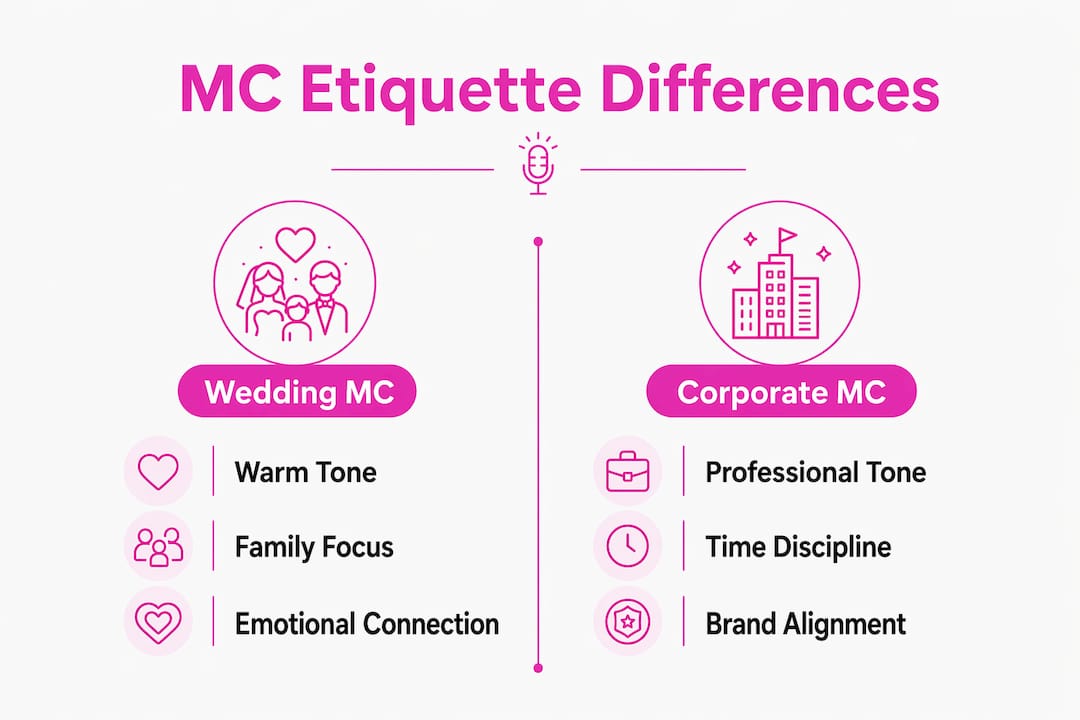
MC etiquette adapts significantly depending on the event format. A wedding MC and a corporate MC share the same core principles, but the application differs in tone, structure, and expectation.
| Factor | Wedding MC | Corporate MC |
|---|---|---|
| Tone | Warm, celebratory, personal | Professional, efficient, brand-aligned |
| Humour | Gentle, inclusive, family-friendly | Measured, relevant, audience-aware |
| Timing pressure | Moderate, with emotional flexibility | High, with strict schedule adherence |
| Protocol awareness | Seating, family dynamics, traditions | Precedence, speaker hierarchy, sponsors |
| Audience engagement | Emotional connection and celebration | Information retention and participation |
Wedding MCs balance emotional resonance with celebratory energy. They need to understand family dynamics, cultural traditions, and the couple’s personal story. Getting the MC role right at a Scottish wedding, for example, often involves navigating clan traditions, specific toasting orders, and a mix of guests with very different expectations.
Corporate MCs operate under tighter time constraints and must align their language with the brand or organisation hosting the event. Black-tie or high-profile functions add another layer: the MC must understand formal precedence, correct titles, and the protocol for acknowledging dignitaries or senior executives. Adapting scripting and humour to the specific audience is not optional. It is the mark of a professional.
What mistakes should an MC avoid?
The most common MC mistakes are predictable and entirely avoidable with proper preparation. Knowing what not to do is as valuable as knowing what to do.
- Dominating the stage. The MC is a guide, not the headline act. Any moment where guests are watching the MC instead of the event’s key moments is a failure of etiquette.
- Rambling off-topic. Every unrehearsed tangent erodes trust and wastes time. Intentional speech is the standard.
- Ignoring AV and logistics. An MC who has not checked their mic, confirmed cues, or spoken to the production team creates preventable chaos.
- Skipping the audience warm-up. Using the 5 minutes before proceedings begin to ask icebreaker questions builds connection and settles the room far more effectively than generic announcements.
- Relying on a word-for-word script. Scripts produce stilted delivery. Bullet-point notes keep the MC present and able to respond to the unexpected.
- Failing to prepare recovery lines. Unexpected moments happen at every event. An MC without a prepared response to a technical failure or an awkward silence looks unprepared.
Pro Tip: Before any event, write three recovery lines for common disruptions: a mic failure, a speaker running over time, and an unexpected pause. Having them ready means you never freeze.
Key takeaways
Strong event MC etiquette requires preparation, timing discipline, and the consistent commitment to serve the event rather than the MC’s own performance.
| Point | Details |
|---|---|
| Serve, don’t star | The MC’s role is to spotlight guests and the event, never themselves. |
| Prepare 48 hours ahead | Build an event bible with timings, pronunciations, and a no-go list before the day. |
| Keep timing tight | Opening remarks last 3–5 minutes; transitions stay within 30 seconds to 2 minutes. |
| Read the room live | Adjust energy and tone based on audience response, not a fixed script. |
| Adapt to event type | Wedding and corporate MCs apply the same principles with different tone and protocol. |
Why intentionality is the real foundation of MC etiquette
The advice in most MC guides focuses on what to do. What gets less attention is why the best MCs do it so consistently: intentionality. Every choice, from the length of an introduction to the pause before a key announcement, is deliberate. That is what separates a professional from someone who is simply confident on a microphone.
I have seen MCs with genuine stage presence completely lose a room because they were performing for themselves. The audience felt it immediately. Confidence without service is just ego. The MCs who consistently deliver memorable events are the ones who treat every word as a decision. They ask: does this add value, or does it add noise?
Emotional intelligence is the skill that makes this possible. Reading a room is not a talent you either have or do not. It is a practised habit of watching, listening, and adjusting. The MC who notices that the energy dropped after a long speech and responds with a well-timed, light remark has done something technically skilled. Most guests will not notice it consciously. They will just feel that the event flowed well.
My strongest recommendation for anyone planning an event is to treat the MC brief as seriously as the venue brief. The questions you ask, the information you share, and the standards you set in that conversation will determine the quality of the experience your guests have. Hire someone who asks you more questions than you ask them. That curiosity is the clearest sign of professional etiquette.
— STUART
Professional MC services for weddings and corporate events
Planning a wedding or corporate event and want the MC role handled properly from the start? Freshentertainments provides professional MC and entertainment services across Scotland and beyond, with a track record at premium venues and high-profile celebrations.
A professional MC from Freshentertainments arrives prepared, coordinates with your full production team, and manages your event’s flow with the timing and presence your guests deserve. From intimate Scottish weddings to large-scale corporate functions, the advantages of professional MC services extend well beyond the microphone. Freshentertainments also offers wedding entertainment packages that combine MC hosting with DJ hire, sound, and lighting for a fully coordinated experience.
FAQ
What does an MC do at an event?
An MC manages the event’s flow by introducing speakers, making announcements, and keeping the programme on schedule. Their role is to guide guests through the event while maintaining energy and professionalism throughout.
How long should an MC’s opening remarks last?
Opening remarks should last 3–5 minutes, with individual transitions and introductions kept to 30 seconds to 2 minutes. Longer openings risk losing audience attention before the event has properly begun.
Should an MC use a script?
Professional MCs use bullet-point notes rather than word-for-word scripts. Scripts produce stilted, mechanical delivery and make it harder to respond naturally to unexpected moments during the event.
How does wedding MC etiquette differ from corporate MC etiquette?
Wedding MCs prioritise warmth, emotional connection, and family-inclusive tone. Corporate MCs focus on efficiency, brand alignment, and strict schedule adherence. Both require preparation and audience awareness, but the register and protocol differ significantly.
How far in advance should an MC prepare?
A professional MC should be fully prepared at least 48 hours before the event. This includes a completed event bible, confirmed name pronunciations, AV rehearsal, and a briefing with the event organiser.