
Many couples assume that a generic playlist or standard DJ setlist will suffice for their wedding day, but research shows that personalised music selections significantly enhance emotional engagement and guest participation. Scottish weddings, with their rich cultural traditions and diverse guest demographics, demand thoughtful curation that honours heritage while creating an inclusive, energetic atmosphere. This guide walks you through creating a wedding playlist that blends traditional Scottish elements with contemporary favourites, ensuring every guest feels connected to your celebration from the first dance to the final song.
Table of Contents
- Why Tailored Playlists Matter For Your Scottish Wedding
- How To Blend Traditional And Modern Music Successfully
- Collaborating With Entertainers And Testing Your Playlist
- Tips For Creating A Memorable And Inclusive Wedding Soundtrack
- Discover Tailored Wedding Entertainment With Fresh Entertainments
Key takeaways
| Point | Details |
|---|---|
| Personalisation drives atmosphere | Tailored playlists create emotional resonance and honour your unique love story whilst engaging diverse guests. |
| Scottish traditions energise celebrations | Incorporating pipers and ceilidh bands encourages inclusive dancing and bridges generational divides naturally. |
| Early collaboration ensures success | Working with entertainers from the start and testing selections guarantees broad appeal and seamless flow. |
| Blending styles creates magic | Mixing traditional Scottish music with modern hits delivers a memorable, cohesive experience for all ages. |
Why tailored playlists matter for your Scottish wedding
Your wedding soundtrack shapes the entire emotional journey of your celebration, and Scottish weddings present unique opportunities to weave cultural heritage into modern festivities. Unlike generic playlists that treat all weddings identically, personalised music selections reflect your relationship whilst honouring the traditions that make Scottish celebrations distinctive. The difference between a memorable reception and a forgettable one often comes down to how thoughtfully you’ve curated your musical journey.
Scottish weddings benefit enormously from incorporating traditional elements like pipers and ceilidh bands, which create high-energy moments that naturally encourage guests to mingle and participate. These cultural touchstones serve multiple purposes:
- They honour Scottish heritage in a way that feels authentic rather than performative
- They provide structured dance opportunities that welcome even hesitant guests
- They create natural energy peaks that complement quieter, intimate musical moments
- They offer photo opportunities and memorable experiences that guests discuss for years
The magic happens when you balance these traditional elements with contemporary tracks that reflect your personal taste. A 70-year-old grandmother and a 25-year-old cousin might have vastly different musical preferences, but both will enthusiastically participate in a Gay Gordons dance before transitioning to a modern chart-topper. This generational bridge-building distinguishes thoughtfully planned Scottish wedding playlists from standard approaches.
“Customisable setlists honour culture whilst getting all ages mingling, transforming passive listeners into active participants who feel genuinely connected to your celebration.”
Consider how different musical choices affect your venue’s atmosphere. A grand Scottish castle might call for more traditional elements during the ceremony and dinner, whilst a contemporary Glasgow venue might balance modern tracks with strategic traditional moments. Your playlist should reflect not just your tastes but also the physical space and the expectations it creates. The goal isn’t to please everyone equally but to create moments where every guest feels included and engaged at various points throughout your celebration.
How to blend traditional and modern music successfully
Creating a seamless blend between traditional Scottish music and contemporary favourites requires strategic planning around timing, energy levels, and guest demographics. The most successful wedding music selections don’t simply alternate between old and new but instead create a narrative arc that builds energy, provides breathing room, and delivers peak moments at crucial times.
Start by mapping your reception timeline against energy levels. Your guests arrive with moderate energy after the ceremony, which gradually builds through dinner and speeches before peaking on the dance floor. Consider this framework:
| Reception phase | Musical approach | Example selections |
|---|---|---|
| Arrival and cocktails | Gentle Scottish instrumentals | Soft bagpipe melodies, acoustic folk |
| Dinner service | Upbeat but conversational | Modern Scottish artists, light jazz |
| First dance | Personally meaningful | Your chosen song regardless of genre |
| Dance floor opening | High-energy traditional | Ceilidh classics like Gay Gordons |
| Peak dancing hours | Mixed contemporary and traditional | Chart hits alternating with Scottish reels |
| Wind down | Slower, emotional tracks | Ballads and sing-alongs |
The transition points between these phases determine whether your reception flows naturally or feels disjointed. Professional DJs excel at smoothing these transitions between live traditional performances and recorded modern tracks, ensuring guests never experience jarring shifts in tempo or style. When a ceilidh band finishes an energetic set, your DJ should maintain that energy level with upbeat contemporary tracks rather than dropping immediately to a slow ballad.
Pro Tip: Create three distinct playlist sections labelled “build,” “peak,” and “sustain” rather than one continuous list. This structure helps you and your entertainers understand the intended energy arc and makes real-time adjustments easier based on crowd response.
Guest demographics significantly influence your traditional-modern balance. A wedding with predominantly older Scottish relatives might dedicate 40% of dance time to traditional music, whilst a younger, more diverse guest list might reduce that to 20%. Neither approach is wrong, the key is honestly assessing your specific audience. Consider these factors:
- Survey your guest list by age brackets and musical preferences
- Identify which guests will likely dance versus socialise
- Determine peak attendance times when maximum guests are present
- Schedule your most inclusive, energetic traditional pieces during those peaks
- Reserve niche contemporary tracks for later when only enthusiastic dancers remain
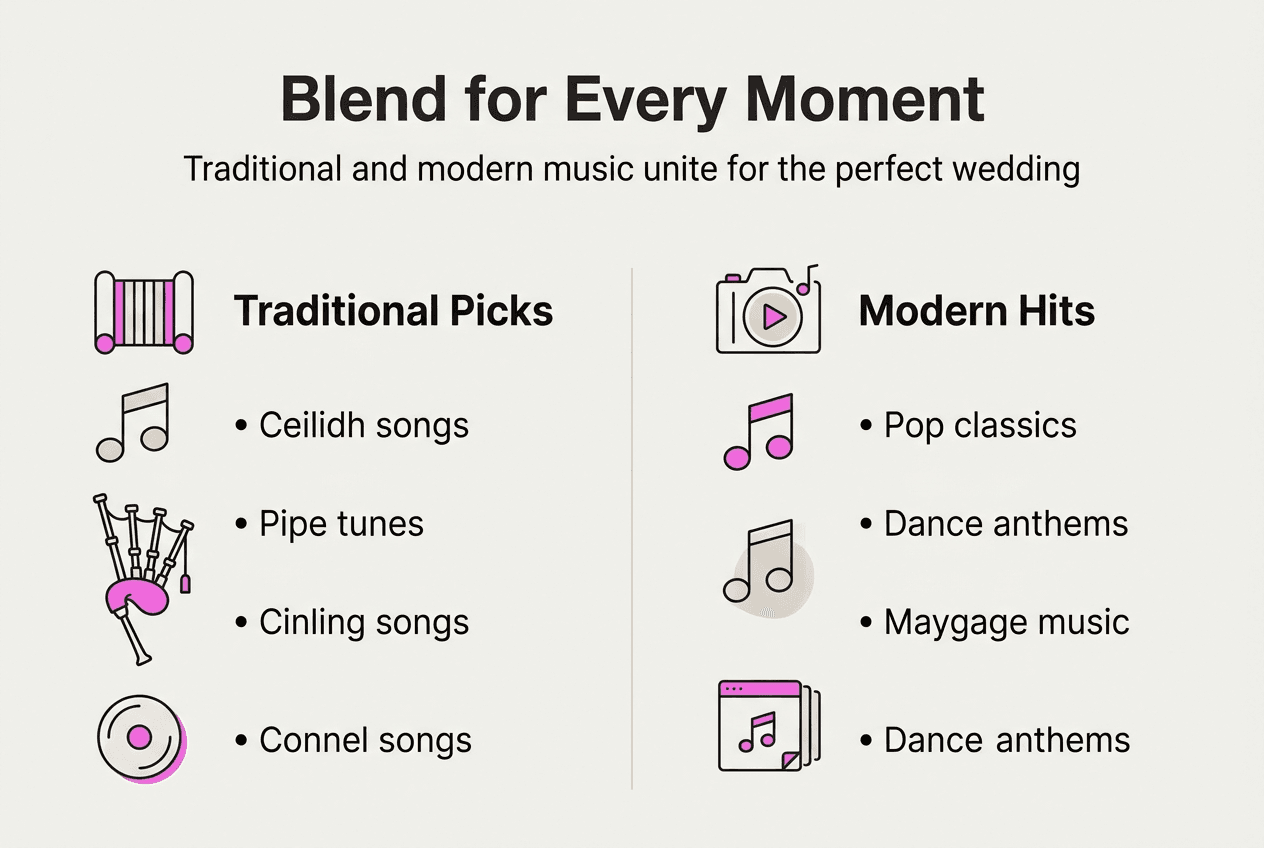
The most successful Scottish wedding playlists don’t treat traditional and modern music as competing forces but as complementary elements that serve different purposes. Traditional pieces create shared cultural moments and encourage participation from guests who might otherwise remain seated. Contemporary tracks allow younger guests and those less familiar with Scottish traditions to fully engage. By alternating between these styles strategically, you maintain energy whilst ensuring no demographic feels excluded for extended periods. This balance, refined through emerging 2026 trends, creates receptions where guests of all backgrounds find moments that resonate personally.
Collaborating with entertainers and testing your playlist
Your wedding playlist shouldn’t be created in isolation. The most emotionally impactful and socially successful soundtracks emerge from early collaboration with professional entertainers who understand crowd dynamics and can refine your vision into practical reality. DJs, ceilidh bands, and MCs bring experience from hundreds of weddings, offering insights into which songs consistently energise crowds versus which fall flat despite seeming perfect on paper.
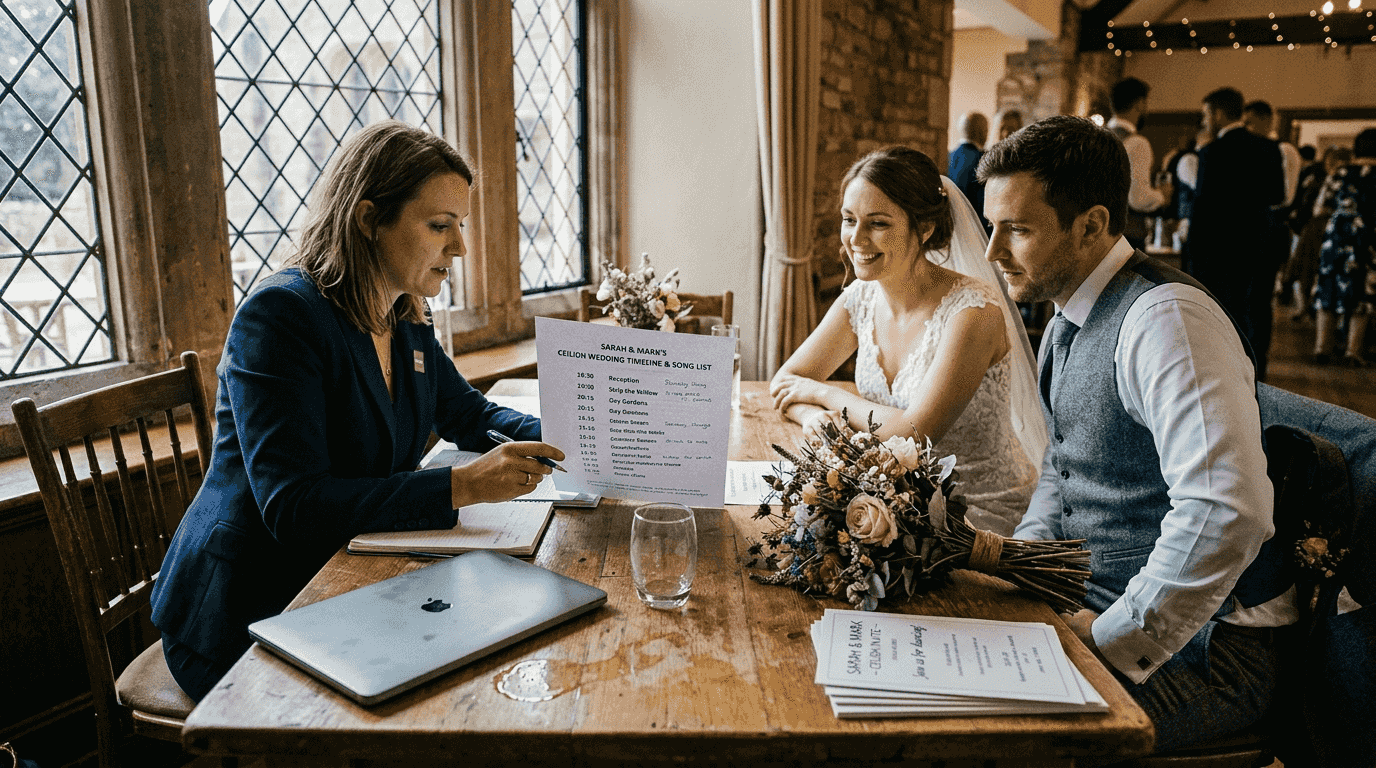
Begin these conversations at least four months before your wedding date. Share your initial playlist ideas whilst remaining open to professional feedback. An experienced entertainer might suggest reordering songs to improve flow, replacing tracks that don’t translate well in live settings, or adding transitional pieces you hadn’t considered. This collaborative process transforms your personal music preferences into a cohesive experience that serves both your vision and your guests’ enjoyment.
Key discussion points for entertainer meetings include:
- Your non-negotiable songs versus flexible selections where you trust their judgement
- Specific moments requiring particular moods (cake cutting, bouquet toss, last dance)
- Cultural traditions you want to emphasise or respectfully minimise
- Backup plans if certain songs don’t resonate with your crowd
- Technical considerations like volume levels, lighting cues, and equipment needs
Pro Tip: Create a shared online playlist that both you and your entertainers can edit, adding comments about why certain songs matter personally or where you envision them fitting into your reception timeline.
Testing your playlist before the wedding day provides invaluable insights that prevent disappointment. Play your selections during dinner parties, car journeys with friends, or family gatherings, observing which tracks spark conversation, singing, or dancing versus which pass unnoticed. This real-world feedback reveals whether your carefully curated list actually creates the atmosphere you envision or requires adjustment.
Pay particular attention to how different demographics respond. If your 60-year-old relatives seem confused or disengaged during your modern selections, consider whether you’ve allocated enough traditional pieces to keep them involved. Conversely, if younger friends check their phones during extended traditional sets, you might need to shorten those segments or intersperse more contemporary tracks. The goal isn’t achieving perfect consensus but ensuring every guest experiences multiple moments where the music speaks directly to them.
Balance remains crucial when incorporating your personal story into the playlist. Whilst your wedding should absolutely reflect your relationship, obscure indie tracks or inside-joke songs that only you and your partner understand can alienate guests. Reserve one or two deeply personal selections for key moments like your first dance, then prioritise broader appeal for general dancing. Your guests attend to celebrate with you, not to decode your musical autobiography.
Adjust tempo and song choices based on testing feedback and your venue’s specific characteristics. Songs that sound perfect through earbuds might lack impact through a venue’s sound system, whilst tracks that seem too energetic at home might prove ideal for getting hesitant dancers onto the floor. Trust your entertainers’ technical expertise about which songs translate well in your specific space, and remain flexible enough to swap selections that don’t serve the overall experience, even if you personally love them.
Tips for creating a memorable and inclusive wedding soundtrack
An inclusive wedding soundtrack ensures guests of all ages, backgrounds, and musical preferences find moments that resonate personally, transforming passive attendance into active celebration. The most successful playlists don’t attempt to please everyone simultaneously but instead create a varied journey where different demographics shine at different times. This strategic variety maintains energy whilst preventing any group from feeling marginalised or bored.
Genre and tempo variety form the foundation of inclusive playlists. Map your selections across these categories to identify gaps:
- Traditional Scottish (reels, strathspeys, slow airs)
- Contemporary Scottish artists (Paolo Nutini, Lewis Capaldi, Amy Macdonald)
- Classic crowd-pleasers (Motown, 80s hits, 90s anthems)
- Current chart-toppers (selected for broad appeal rather than niche tastes)
- Romantic ballads (for slower moments and emotional connections)
- High-energy dance tracks (to peak the energy at crucial moments)
If you’ve heavily weighted one category, redistribute selections to achieve better balance. A playlist dominated by current chart music might thrill your friends but alienate older relatives, whilst excessive traditional pieces could bore guests unfamiliar with Scottish culture.
Iconic Scottish tunes serve dual purposes in your playlist. They celebrate cultural heritage whilst providing familiar touchstones that even non-Scottish guests recognise and enjoy. Incorporating these cultural elements creates Instagram-worthy moments and conversation starters that distinguish your wedding from generic celebrations. Consider including:
- “Loch Lomond” during a key emotional moment
- “Caledonia” as guests arrive or during dinner
- “Flower of Scotland” if your crowd enjoys sing-alongs
- Popular ceilidh dances like Strip the Willow or Dashing White Sergeant
These selections work because they’re accessible rather than obscure, allowing even guests with no Scottish connection to participate meaningfully. Avoid the temptation to showcase rare traditional pieces that only folk music enthusiasts would appreciate, save those for personal listening.
| Guest demographic | Peak engagement time | Recommended music focus |
|---|---|---|
| Older relatives | Early evening (7-9pm) | Traditional Scottish, classic ballads, familiar sing-alongs |
| Middle-aged guests | Mid-reception (8-10pm) | 80s/90s hits, Motown, accessible contemporary tracks |
| Younger friends | Late reception (10pm-midnight) | Current chart-toppers, high-energy dance music, nostalgic 00s hits |
| Mixed groups | Ceilidh segments | Structured traditional dances that welcome all skill levels |
Schedule your dance classics strategically rather than randomly. The period between 9pm and 10:30pm typically represents peak attendance when maximum guests remain present and energised. Reserve your most universally appealing tracks for this window, ensuring the dance floor stays packed during your reception’s crucial middle phase. Save niche selections or slower tracks for earlier (when fewer guests dance anyway) or later (when only enthusiastic dancers remain).
Recognise that your reception will have natural energy peaks and valleys. Fighting these rhythms by maintaining constant high energy exhausts guests, whilst allowing energy to drop too low makes recovery difficult. Plan intentional peaks around key moments:
- Immediately after your first dance (capitalise on emotional investment)
- Following speeches (redirect attention from sitting to movement)
- During ceilidh segments (structured participation encourages hesitant dancers)
- The final 30 minutes (create a memorable, energetic conclusion)
Between these peaks, allow gentler tracks that give guests breathing room to socialise, refresh drinks, or simply rest before the next high-energy segment. This wavelike structure, refined through understanding how entertainment shapes memories, creates a more sustainable, enjoyable experience than relentless intensity.
Discover tailored wedding entertainment with Fresh Entertainments
Creating the perfect wedding playlist requires expertise, cultural understanding, and technical skill that professional entertainers bring to every celebration. Fresh Entertainments specialises in crafting unique musical experiences that blend Scottish traditions with contemporary trends, ensuring your reception atmosphere matches your vision whilst keeping every guest engaged and entertained.
Their expert teams work closely with couples to curate playlists that honour personal stories whilst maintaining the energy and inclusivity that transforms good weddings into unforgettable celebrations. Whether you envision a traditional ceilidh-focused reception or a modern party with strategic Scottish elements, their customisable packages adapt to your specific needs and venue characteristics. Explore their comprehensive wedding party atmosphere guide to understand how professional entertainment shapes guest experiences, or discover how entertainment creates lasting memories through thoughtful musical curation. Review their flexible wedding entertainment packages to find the perfect combination of DJ services, live music, and interactive elements that will make your Scottish wedding truly remarkable.
FAQ
How do I balance personal music preferences with traditional Scottish elements?
Start by allocating percentages based on your guest demographics, typically 20-40% traditional Scottish music depending on your crowd’s cultural connection. Reserve deeply personal selections for key moments like your first dance, whilst prioritising broader appeal for general dancing. Your entertainers can help identify which personal favourites translate well to group settings and which might work better as background music during dinner.
Why should I test my wedding playlist before the actual day?
Testing reveals how different demographics respond to your selections in real social settings, highlighting songs that energise crowds versus those that fall flat despite seeming perfect on paper. Play your playlist during gatherings with mixed-age guests to observe natural reactions, then adjust based on which tracks spark dancing, singing, or conversation. This process prevents disappointment when a carefully chosen song fails to resonate during your actual reception.
Should I hire a DJ or live band for playlist flexibility?
Most successful Scottish weddings combine both, using live traditional bands for structured ceilidh segments and DJs for seamless transitions and contemporary tracks. This hybrid approach provides the authentic energy of live performance whilst maintaining the flexibility to read your crowd and adjust selections in real time. DJs also handle technical aspects like volume control and timing that live bands can’t manage as precisely, ensuring your playlist flows naturally throughout your reception.
When should I schedule traditional Scottish music during my reception?
Position traditional segments during peak attendance (typically 8-10pm) when maximum guests are present and energised enough to participate in structured dances. Opening with a ceilidh set immediately after your first dance capitalises on emotional investment and encourages hesitant dancers through structured participation. Avoid scheduling traditional music too late when only younger guests remain, as they might not engage fully with cultural elements they’re less familiar with.
How can I ensure my playlist appeals to guests unfamiliar with Scottish culture?
Choose accessible traditional pieces like “Loch Lomond” or popular ceilidh dances that welcome beginners rather than obscure folk selections requiring cultural knowledge. Pair traditional segments with clear instructions or a caller who explains steps, transforming potential confusion into inclusive fun. Balance these cultural moments with universally recognised tracks from various decades, ensuring non-Scottish guests experience multiple musical touchstones that feel familiar. Following current wedding music trends helps identify which contemporary selections bridge cultural divides most effectively.