
Planning a wedding in Scotland involves juggling countless details, from securing the perfect venue to coordinating entertainment that keeps guests dancing until midnight. A comprehensive checklist transforms this overwhelming process into manageable steps, ensuring you don’t overlook critical elements whilst maintaining your sanity. This guide provides engaged couples with a structured approach to wedding planning, incorporating entertainment insights and practical milestones tailored specifically for Scottish celebrations that guests will remember for years to come.
Table of Contents
- Key takeaways
- Key criteria for your wedding planning checklist
- Essential checklist items for ceremony and reception planning
- Top entertainment options to include in your wedding checklist
- Managing your wedding planning checklist effectively
- Make your wedding unforgettable with Fresh Entertainments
- Frequently asked questions
Key Takeaways
| Point | Details |
|---|---|
| Detailed planning checklist | A comprehensive checklist helps manage tasks and prevents important details from being overlooked while keeping you organised. |
| Early entertainment planning | Booking DJs, bands, or interactive entertainment twelve to eighteen months ahead ensures availability and time for customisation. |
| Planning milestones | Adopt a timeline approach with monthly milestones from engagement to the week before the wedding and use reminders to avoid bottlenecks. |
| Venue and guest needs | Prioritise venue booking twelve to eighteen months in advance and address guest experience with dietary requirements, transport, and accommodation considerations. |
Key criteria for your wedding planning checklist
Creating an effective wedding planning checklist starts with understanding the major categories that demand your attention. You’ll need to organise tasks around venue selection, attire, guest management, and supplier coordination. Each category contains dozens of subtasks, so breaking them into logical groupings prevents important details from slipping through the cracks.
Your priorities should align with three core factors: budget constraints, guest experience, and timing. Budget determines which vendors you can afford and influences decisions about guest count and venue selection. Guest experience encompasses everything from ceremony comfort to reception entertainment, whilst timing ensures you book popular vendors before they’re unavailable. Planning milestones help couples manage wedding details efficiently, particularly when coordinating multiple suppliers simultaneously.
Entertainment deserves early consideration because it fundamentally shapes your celebration’s atmosphere. Booking DJs, bands, or interactive entertainment 12 to 18 months ahead ensures availability and allows time for customisation. This forward planning also helps you align entertainment with your ceremony and reception schedule, preventing awkward gaps or rushed transitions that disrupt the flow.
Managing deadlines becomes simpler when you adopt a timeline approach. Create monthly milestones starting from your engagement through to the week before your wedding. Assign specific tasks to each milestone, such as finalising the guest list by month six or confirming final numbers with caterers four weeks before the date. Regular checklist reviews keep you accountable and reveal potential bottlenecks before they become problems.
Pro Tip: Use a digital planning tool or spreadsheet to track checklist progress, setting automatic reminders for critical deadlines like deposit payments and contract signatures.
Essential checklist items for ceremony and reception planning
Your ceremony and reception form the heart of your wedding day, requiring meticulous attention to core logistics. Start by booking your venue as soon as you’ve set a date, ideally 12 to 18 months in advance for popular Scottish locations. Venues often fill quickly during summer months, and securing your preferred date early provides a foundation for all subsequent planning decisions.
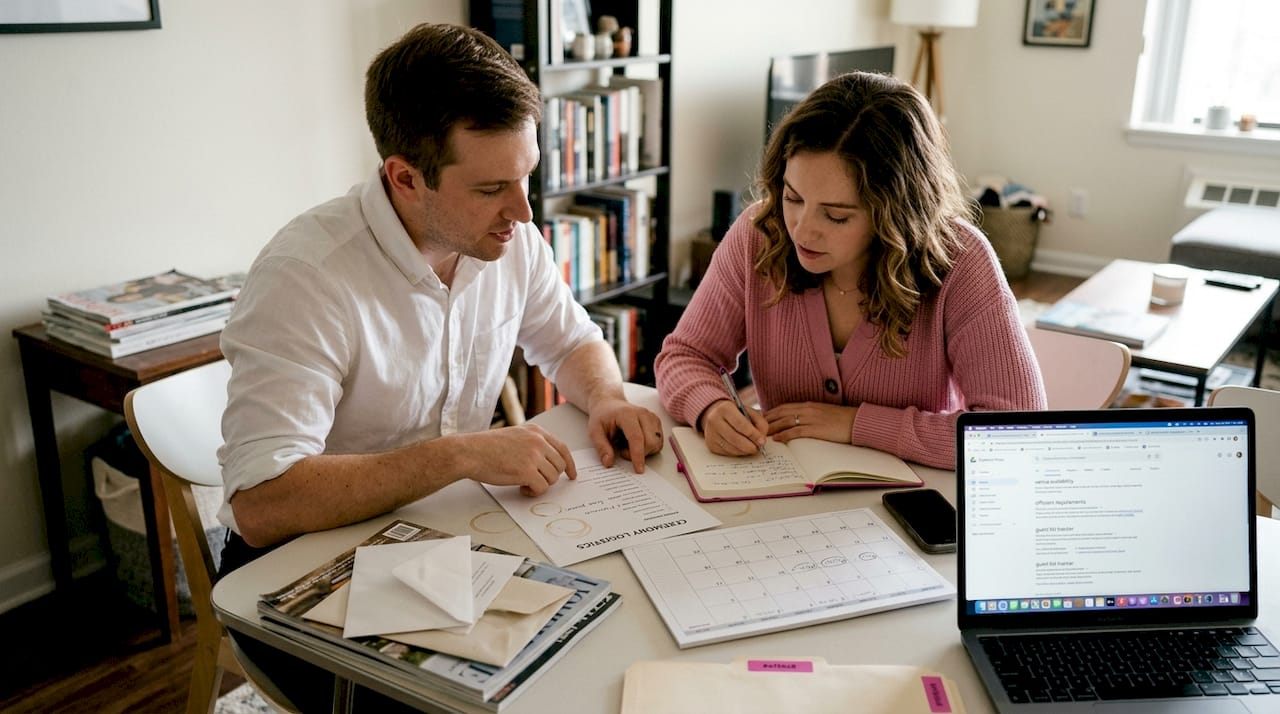
Catering arrangements demand careful consideration of dietary requirements, service style, and menu tastings. Confirm whether your venue provides in-house catering or allows external suppliers, then schedule tastings at least six months before your wedding. Discuss vegetarian, vegan, gluten-free, and allergy-specific options to ensure every guest enjoys the meal. Venue and catering significantly influence guest satisfaction, making these decisions crucial to your celebration’s success.
Your ceremony timeline requires coordination with your officiant, musicians, and readers. Plan the processional order, select readings or vows, and rehearse timing to avoid running over schedule. Most ceremonies last 20 to 30 minutes, but factor in additional time for guest seating and photography afterwards. This structure ensures smooth transitions between ceremony and reception.
Guest accommodation and transport logistics often get overlooked until late in planning. Research nearby hotels offering group rates, then include accommodation details in your invitations. For venues in remote areas, arrange shuttle services between hotels and the venue to prevent guests worrying about parking or drinking and driving. These thoughtful touches demonstrate care for your guests’ comfort and safety.
| Planning element | Recommended timeline | Key considerations |
|---|---|---|
| Venue booking | 12-18 months ahead | Availability, capacity, in-house services |
| Catering confirmation | 6-9 months ahead | Dietary needs, tasting sessions, service style |
| Ceremony details | 3-6 months ahead | Officiant, readings, music, rehearsal |
| Guest logistics | 2-4 months ahead | Accommodation, transport, parking |
Pro Tip: Create a detailed floor plan showing table arrangements, dance floor placement, and entertainment setup to visualise traffic flow and identify potential space issues before the day.
Top entertainment options to include in your wedding checklist
Entertainment choices dramatically impact your wedding’s energy and memorability. DJs offer versatility and extensive music libraries, adapting seamlessly to crowd preferences throughout the evening. They typically cost less than live bands whilst providing consistent sound quality and the ability to play any requested song. However, DJs lack the visual spectacle and organic energy that live musicians bring to performances.
Live bands create authentic atmosphere through skilled musicianship and stage presence that captivates audiences. They excel at building momentum during key moments like first dances or ceilidh sessions, particularly appealing for Scottish weddings embracing traditional elements. The trade-off involves higher costs, limited song repertoires, and potential sound inconsistencies depending on venue acoustics. Most bands require substantial setup time and space, considerations that matter in compact venues.
Photo booths and interactive entertainment options add memorable touchpoints beyond music. Modern photo booths offer instant prints, digital sharing, and customisable backdrops that guests adore. Interactive games like giant Jenga, lawn games for outdoor venues, or casino tables encourage mingling amongst guests who might not know each other. These additions work particularly well during cocktail hours or late evening when some guests prefer conversation over dancing.
Entertainment shapes unforgettable wedding memories and crowd engagement, making your selection one of the most impactful planning decisions. Consider interactive wedding entertainment ideas that complement your chosen music, creating layered experiences throughout the celebration. Many suppliers offer wedding entertainment packages bundling multiple services at competitive rates, simplifying coordination whilst potentially reducing costs.
| Entertainment type | Average cost | Best for | Limitations |
|---|---|---|---|
| Professional DJ | £800-£1,500 | Versatile music, budget-conscious couples | Less visual impact than live performers |
| Live band | £1,500-£4,000 | Traditional atmosphere, music lovers | Higher cost, limited repertoire |
| Photo booth | £400-£800 | Guest interaction, memorable keepsakes | Requires dedicated space |
| Interactive games | £200-£600 | Cocktail hours, outdoor venues | Weather-dependent for outdoor options |
Pro Tip: Schedule entertainment consultations early to discuss your musical preferences, special requests, and timeline integration, ensuring your chosen entertainers understand your vision completely.
Managing your wedding planning checklist effectively
Effective checklist management starts with setting realistic deadlines that account for supplier lead times and personal commitments. Break major tasks into smaller action items with specific completion dates rather than vague monthly goals. For example, instead of “book photographer by June,” specify “research five photographers by 15 May, schedule consultations by 30 May, make final decision by 15 June.” This granular approach prevents procrastination and clarifies exactly what needs doing.
Delegating tasks to your bridal party and family members distributes the workload whilst making loved ones feel involved. Assign responsibilities based on individual strengths and availability, such as asking organised friends to coordinate hen and stag parties or tech-savvy relatives to manage your wedding website. Clear delegation prevents you from becoming overwhelmed whilst ensuring tasks receive proper attention from capable hands.
Maintaining regular communication with suppliers and entertainers prevents misunderstandings and keeps everyone aligned. Schedule check-ins at key milestones, confirming details like arrival times, setup requirements, and final guest numbers. Effective management of timelines and vendors reduces stress and ensures event success, particularly when coordinating multiple moving parts simultaneously. Document all conversations and agreements in writing to avoid disputes later.
Weekly checklist reviews keep you accountable and reveal emerging issues before they escalate. Set aside 30 minutes every Sunday to assess completed tasks, update deadlines, and identify upcoming priorities for the week ahead. This routine creates momentum and prevents the paralysis that occurs when facing an enormous, unchecked list. Celebrate completed milestones to maintain motivation throughout the lengthy planning process.
Pro Tip: Create a master contact sheet listing all suppliers’ names, phone numbers, email addresses, and contract details in one accessible document, invaluable for quick reference during planning and on your wedding day.
Make your wedding unforgettable with Fresh Entertainments
Transforming your wedding vision into reality requires expertise, creativity, and meticulous coordination that professional entertainment specialists provide. Fresh Entertainments brings award-winning experience to Scottish weddings, offering tailored packages that elevate celebrations from ordinary to extraordinary. Our team understands how wedding party atmosphere shapes guest experiences, crafting entertainment solutions that match your unique style and preferences.
Choose from comprehensive wedding entertainment packages featuring premium DJ services, live music integration, and interactive elements that keep guests engaged throughout your celebration. Our experienced planners coordinate every entertainment detail, from timeline creation to technical setup, ensuring seamless execution that lets you focus on enjoying your special day. Wedding planners reviewing entertainment options consistently choose Fresh Entertainments for our reliability, professionalism, and commitment to creating unforgettable moments that honour Scottish wedding traditions whilst embracing contemporary trends.
Frequently asked questions
How long should you spend planning your wedding?
Most couples benefit from 12 to 18 months of planning time, allowing sufficient opportunity to secure preferred vendors and venues without rushing critical decisions. Shorter engagements of six to nine months remain feasible but require immediate action on major bookings and potentially limit venue availability. Starting early reduces stress considerably and provides flexibility to negotiate better rates or explore multiple options before committing.
What are the most important items on a wedding planning checklist?
Venue and catering bookings top the priority list because they determine your wedding date and influence nearly every subsequent decision. Securing entertainment and key vendors like photographers and florists follows closely, particularly during peak wedding season when popular suppliers book quickly. Guest list management and attire selection complete the essential early tasks, providing the foundation for detailed planning in subsequent months.
How can entertainment enhance my wedding celebration?
Entertainment creates the atmosphere and energy that transforms formal gatherings into joyful celebrations guests remember fondly. Selecting entertainment early allows seamless integration into your schedule, ensuring smooth transitions between ceremony, dinner, and dancing. Interactive and personalised entertainment options boost guest enjoyment by encouraging participation and creating shared experiences that strengthen the celebratory mood throughout your reception.
Should I hire a wedding planner or manage everything myself?
Hiring a wedding planner makes sense for couples with limited time, complex visions, or unfamiliarity with the wedding industry. Planners bring vendor relationships, negotiation expertise, and coordination skills that prevent costly mistakes whilst reducing your stress significantly. However, couples who enjoy detailed planning and have flexible schedules often successfully manage arrangements independently using comprehensive checklists and organisational tools.
What entertainment budget should I allocate for a Scottish wedding?
Entertainment typically represents 10 to 15 percent of total wedding budgets, translating to £1,500 to £3,000 for average Scottish celebrations. Premium packages featuring live bands, interactive elements, and extended coverage naturally cost more but deliver proportionally greater guest satisfaction and memorable experiences. Prioritise entertainment spending based on your crowd’s preferences and the atmosphere you want to create, recognising that engaged guests make every other element more enjoyable.