
TL;DR:
- Bespoke event planning involves designing and executing a completely custom event aligned with a client’s specific goals and identity. It requires early, strategic engagement and an outcome-first approach, focusing on guest experience flow and vendor integration. This approach is ideal for high-stakes weddings, corporate events, and private celebrations seeking meaningful impact rather than standard logistics.
Bespoke event planning is the complete, custom design and production of an event built from scratch around a client’s specific goals, audience, and identity. Unlike standard event coordination, which applies ready-made templates and focuses primarily on logistics, bespoke planning covers every element from concept through to execution. The process requires early strategic engagement, with recommended lead times of 4–8 months for local events and 6–12 months for destination celebrations. Freshentertainments, an award-winning entertainment specialist based in Scotland, is one example of a provider that delivers this level of personalised event design for weddings and corporate occasions alike.
What is bespoke event planning and how does it work?
Bespoke event planning is a strategy-led process where every element of an event is custom-built to achieve specific client outcomes. No templates are used. Every decision, from the room layout to the musical programme, serves a defined purpose tied to the client’s goals.
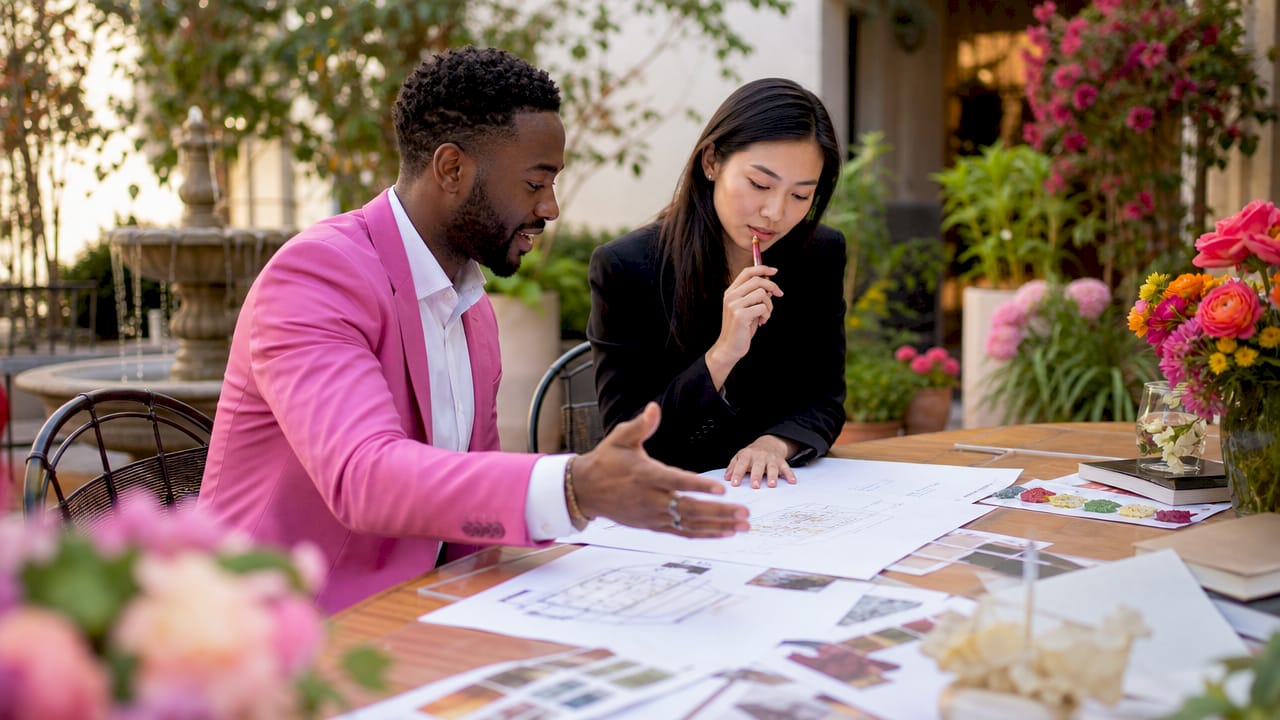
The industry term for this discipline is custom event management, though “bespoke planning” has become the widely accepted shorthand in the UK events sector. Both terms describe the same outcome-first methodology. The key distinction from standard coordination is that bespoke planning treats an event as an architectural project, not a logistical checklist.
At its core, the process follows five distinct phases.
-
Discovery and strategy setting. The planner conducts stakeholder interviews, defines the audience profile, and establishes measurable objectives. For a wedding, this might mean understanding the couple’s cultural background and the emotional tone they want guests to carry home. For a corporate event, it means identifying business outcomes such as lead generation or partnership acceleration.
-
Conceptual design. The planner develops a narrative arc for the event. This is not simply a theme. It is a structured story with a beginning, middle, and end that guides every design decision. Thematic cohesion, session formats, and environmental cues all serve this narrative.
-
Technical production planning. This phase covers what the industry calls showflow, the architectural management of how guests move through the event, when key moments occur, and how audiovisual elements support the experience. Poor showflow is one of the most common causes of events that feel disjointed despite looking beautiful.
-
Vendor integration. A bespoke planner manages all suppliers under a single point of accountability. This prevents the coordination gaps that occur when clients hire vendors separately and assume they will communicate effectively with each other.
-
Execution and live management. On the day, the planner manages timing, troubleshoots issues, and ensures the experience matches the design intent. The client attends as a guest, not a project manager.
Pro Tip: Brief your bespoke planner on the emotional outcome you want guests to feel as they leave, not just the aesthetic you want them to see. That single instruction shapes every technical and creative decision that follows.
How does bespoke planning differ from standard event coordination?
Standard event coordination focuses on logistics: booking a venue, arranging catering, confirming a supplier list, and managing a run-of-show on the day. It is reactive and transactional. Bespoke planning is proactive and architectural.
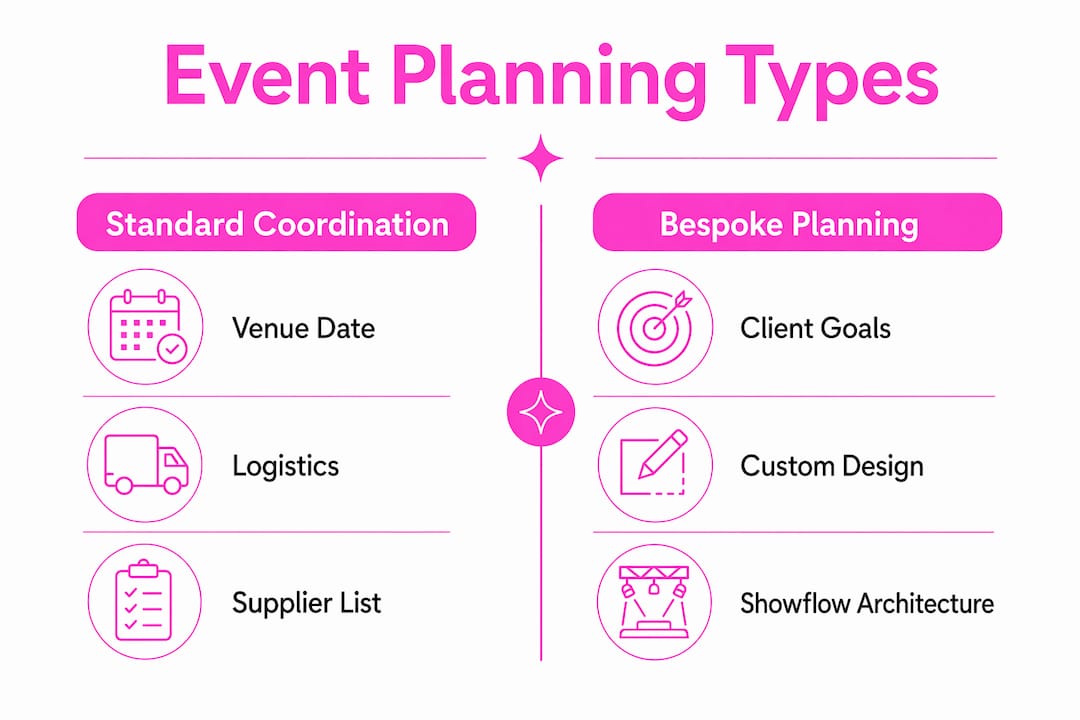
The table below shows the practical differences between the two approaches.
| Feature | Standard coordination | Bespoke planning |
|---|---|---|
| Starting point | Venue and date | Client outcomes and audience |
| Design method | Template or theme selection | Custom narrative arc |
| Vendor management | Client manages separately | Single integrated management point |
| Showflow design | Basic run-of-show | Architectural guest experience flow |
| Lead time required | Weeks to a few months | 4–12 months |
| Outcome focus | Event delivered | Specific goals achieved |
The architectural showflow distinction is the one most clients underestimate. Showflow determines when energy peaks, when quiet moments land, and how transitions between segments feel. A standard coordinator books the band and tells them when to start. A bespoke planner designs the entire arc of the evening so that the band’s entrance lands at precisely the right emotional moment.
Bespoke planning also solves a problem that standard coordination creates. When clients hire a venue, a caterer, a photographer, and an entertainment provider separately, each supplier optimises for their own deliverable. Nobody owns the overall guest experience. The coordination gap between those suppliers is where events fail. Bespoke planners close that gap by integrating all production disciplines under one accountable team.
Pro Tip: Ask any planner you are considering to describe their showflow process. If they cannot explain how they design guest experience flow from arrival to departure, they are offering coordination, not bespoke planning.
What types of events benefit most from bespoke planning?
Bespoke planning adds the greatest value when the event carries significant personal, commercial, or reputational weight. Three categories stand out.
Weddings are the most common application. A bespoke wedding is not simply a well-decorated reception. It is a personalised event experience built around the couple’s story, cultural identity, and the specific moments they want to create. Every element, from the ceremony music to the lighting shift during the first dance, is designed to serve that narrative. Freshentertainments builds bespoke wedding packages that integrate DJ performance, live saxophone, MC services, and custom lighting into a single, managed production rather than a collection of separate bookings.
Corporate events benefit from bespoke planning in a different but equally measurable way. Corporate bespoke planning should focus on desired business shifts such as pipeline acceleration, lead generation, and brand positioning rather than impressions or themes alone. An outcome-first approach means the attendee mix, the session sequence, and the entertainment are all engineered to move specific business relationships forward. Generic conference formats cannot achieve this.
Special celebrations including milestone birthdays, anniversaries, and private galas benefit because they carry high emotional stakes. The host wants guests to feel something specific. Bespoke planning ensures the event reflects the individual’s identity rather than a generic party format.
Across all three categories, the shared benefits are:
- Guests experience a coherent, memorable event rather than a series of disconnected moments.
- Hosts are fully present because complex logistics are managed by a trusted team rather than delegated to the host on the day.
- The event achieves its intended outcome, whether that is emotional impact, commercial return, or lasting memory.
- Budget is allocated against strategic priorities rather than distributed evenly across all line items.
How to plan a bespoke event: practical tips for getting started
The single most important decision in bespoke event planning is when to start. Short timelines force reliance on off-the-shelf rental inventory and pre-built packages, which defeats the purpose of bespoke planning entirely. Early engagement is what makes true customisation possible.
-
Start 4–12 months out. Local events need a minimum of 4–8 months. Destination events require 6–12 months to allow for custom fabrication, venue negotiations, and cross-border supplier coordination.
-
Define your outcomes before your aesthetics. Tell your planner what you want guests to feel, do, or decide as a result of the event. Aesthetic choices follow from that. Reversing the order produces beautiful events that miss their purpose.
-
Commit to the discovery phase. The initial stakeholder interviews and briefing sessions are not administrative formalities. They are where the event is actually designed. Clients who rush this phase receive a less tailored result.
-
Understand where budget creates the most impact. Bespoke planning does not mean spending more on everything. It means allocating budget where it serves the outcome most directly. A skilled planner will advise you on where investment changes the guest experience and where it does not.
-
Choose a planner with integrated production expertise. A planner who manages only logistics will hand off technical production to a separate team. That creates the coordination gap bespoke planning is designed to prevent. Look for providers who manage entertainment coordination alongside design and logistics.
-
Stay engaged without micromanaging. Bespoke planning requires your input at key approval stages. Between those stages, trust the process. Constant changes after the design phase is closed add cost and reduce quality.
Pro Tip: Write a one-paragraph brief describing the single most important moment you want guests to remember. Hand it to your planner at the first meeting. Every subsequent decision should be tested against that brief.
Key takeaways
Bespoke event planning is defined by outcome-first design, architectural showflow, and integrated vendor management. It requires early engagement and delivers results that standard coordination cannot replicate.
| Point | Details |
|---|---|
| Outcome-first design | Define what guests should feel or achieve before choosing any aesthetic or format. |
| Showflow is the core skill | Architectural management of guest experience flow separates bespoke planning from logistics coordination. |
| Lead time is non-negotiable | Plan 4–8 months ahead for local events and 6–12 months for destination bespoke celebrations. |
| Single point of accountability | Integrated vendor management closes the coordination gap that causes most event failures. |
| Hosts become guests | Bespoke planning frees clients to be fully present by removing day-of management from their responsibilities. |
Why bespoke planning has changed how I think about events
The shift I have observed over the past several years is not simply that clients want more personalised events. It is that they have started to understand the difference between an event that looks good and an event that does something. That distinction is what bespoke planning is built on.
The clients who get the most from bespoke planning are the ones who arrive with a clear sense of purpose. They know what they want the event to achieve. They are not fixated on a colour palette or a trending format. They want their guests to leave changed in some small but specific way, whether that means feeling celebrated, inspired, or connected to something larger than themselves.
The challenge I see most often is clients who engage too late and then expect the same quality of outcome. Bespoke planning is not a premium version of last-minute coordination. It is a fundamentally different process that requires time to work properly. When that time is not available, the result is a well-executed standard event, which is not the same thing.
My advice is simple. Treat your event as an architectural project. Engage early, brief clearly, and trust the process. The events that stay with people for years are never the ones with the biggest budgets. They are the ones where every moment was designed with intention.
— STUART
Bespoke event entertainment with Freshentertainments
Freshentertainments specialises in bespoke event design and entertainment production for weddings, corporate occasions, and private celebrations across Scotland and beyond. Every package is built around the client’s specific brief, integrating DJ performance, live saxophone, MC services, and custom event lighting into a single, managed production.
For couples planning their wedding, Freshentertainments offers a dedicated wedding party atmosphere guide that walks through every entertainment decision from ceremony to last dance. The team works directly with clients through a structured discovery process to ensure the entertainment serves the event’s narrative, not just its schedule. If you are planning a bespoke celebration and want entertainment that is built around your event rather than bolted on to it, Freshentertainments is the place to start.
FAQ
What does bespoke event planning mean?
Bespoke event planning means designing and producing an event entirely from scratch around a client’s specific goals, audience, and identity. No templates are used. Every element is custom-built to achieve a defined outcome.
How long does bespoke event planning take?
Local bespoke events require a minimum of 4–8 months of planning time. Destination events need 6–12 months to allow for custom fabrication, supplier coordination, and approvals.
Is bespoke event planning only for weddings?
Bespoke planning applies equally to corporate events, private celebrations, and milestone occasions. Corporate bespoke events are specifically engineered to achieve business outcomes such as deal acceleration and brand positioning.
What is showflow in bespoke event planning?
Showflow is the architectural design of how guests move through an event and when key moments occur. It is the technical framework that ensures the event experience matches the design intent from arrival to departure.
How is bespoke planning different from hiring a standard event coordinator?
A standard coordinator manages logistics and supplier bookings. A bespoke planner designs the entire guest experience, integrates all vendors under one accountable team, and measures success against the client’s specific outcomes rather than a completed checklist.