
TL;DR:
- Online wedding planner apps centralize budget management, guest coordination, and timelines, reducing planning chaos.
- AI features like automated vendor outreach and timeline generation save couples hundreds of hours and streamline organization.
- Success relies on a dedicated setup session and consistent data entry, as these tools complement human expertise, not replace it.
An online wedding planner app is a digital platform that centralises budget tracking, guest management, vendor coordination, and timelines into a single tool for engaged couples. Known in the industry as wedding management software, these platforms replace the chaos of spreadsheets and email threads with one organised system. Platforms like Bridebook, Everly, and TheWeddingPlanner.ai have made this category mainstream. Couples who plan without them spend over 6 hours weekly on administration and regularly exceed their budgets by 30 to 50 per cent. That figure alone explains why digital planning tools have become the default starting point for modern weddings.
What key features do online wedding planner apps offer?
The features built into wedding management software fall into five clear categories, each solving a distinct planning problem.

Checklist and timeline management forms the backbone of every credible platform. The app generates a personalised task list based on your wedding date, then sends reminders as deadlines approach. This removes the cognitive load of remembering what needs to happen and when.
Smart budget tracking goes further than a simple spreadsheet. Real-time alerts fire when a category is at risk of overspending, and payment records log deposits and balances against each vendor. Couples who use this feature consistently report far fewer financial surprises in the final weeks before the wedding.
Guest list and RSVP management handles far more than headcounts. Modern platforms record dietary requirements, plus-ones, table assignments, and communication history for every guest. Some tools generate seating charts automatically once RSVPs are confirmed, saving hours of manual arrangement.
- Vendor search and matching, with filters for location, style, and price range
- In-app messaging and contract storage for every supplier
- Shared access so both partners and a wedding planner can view the same data
- Photo inspiration boards linked directly to vendor profiles
- Integration with payment platforms to log deposits and final balances
Pro Tip: Set up your vendor section before you contact a single supplier. Storing every quote, contract, and email thread inside the app from day one means you will never scramble for a phone number or a price agreement at a critical moment.
AI-powered automation is now a standard feature on leading platforms. Everly, for example, uses AI to draft personalised vendor inquiry emails and send them at scale, which is why automated inquiries achieve an 85 per cent vendor response rate compared to 30 per cent for manual outreach. That gap represents dozens of hours saved on chasing replies alone.
How do AI and automation enhance wedding planning apps?
Artificial intelligence has moved from a marketing buzzword to a genuinely useful planning tool in the wedding software category. The most practical applications are vendor matching, timeline generation, and 24/7 question answering.
AI vendor matching works by cross-referencing your budget, style preferences, location, and date against a database of suppliers. The result is a shortlist of vendors who are available and within budget, rather than a generic directory you must filter yourself. Paired with automated outreach, this means couples can contact ten vendors simultaneously with personalised messages and receive responses within hours rather than days.
“AI wedding planner platforms handle approximately 90% of organisational tasks, saving couples thousands compared to traditional human planners, with average user savings reported at $5,200 against the $1,500 to $5,000 cost of hiring a human planner.”
Smart timeline generation is equally valuable. You input your wedding date, venue, and key milestones, and the AI produces a month-by-month planning roadmap. Milestone reminders then arrive automatically, so the question of whether you have booked your florist three months out is answered before it becomes a problem. Platforms like TheWeddingPlanner.ai and Everly both offer this as a core feature.
The 24/7 assistant function is underrated. Wedding planning questions do not arrive during business hours. Being able to ask an AI assistant at midnight whether your guest count affects your catering deposit structure, and receive a specific answer, removes a genuine source of stress. The critical discipline here is to specify budget, guest count, and dates when prompting the AI, so it generates tailored plans rather than generic advice.
Automation handles the operational layer. Creative decisions, final negotiations, and day-of coordination remain firmly in human hands. The technology is a co-pilot, not a replacement.
What types of wedding planner apps are there, and how do you choose?
Not every platform suits every couple. The category divides into four broad types, each with genuine trade-offs.
| Type | Best for | Key limitation |
|---|---|---|
| Free browser-based tools | Budget-conscious couples needing basic checklists and guest lists | Limited AI features and vendor integrations |
| Paid AI-powered platforms | Couples wanting automated vendor outreach and smart timelines | Monthly subscription cost |
| Vendor-funded commercial platforms | Couples who want a large vendor directory in one place | Recommendations may favour paying vendors |
| Independent budgeting tools | Couples who already have a planner but need financial tracking | No guest or vendor management features |
Browser-based planners outperform native apps in three specific ways: they require no storage space on your phone, update automatically without app store downloads, and allow account-free sharing so guests can access seating charts or photo galleries without installing anything. For couples planning a wedding in Scotland or elsewhere in the UK, where guests may span multiple generations with varying tech comfort, this sharing advantage is significant.
Paid platforms justify their cost through AI features and depth of integration. If you are managing a guest list above 100 people, tracking multiple vendor contracts, and coordinating entertainment alongside catering and floristry, a free tool will reach its limits quickly.
Pro Tip: Before committing to any platform, check whether it syncs across devices and allows your partner to log in simultaneously. A planning tool that only one person can update in real time creates more friction than it removes.
The choice ultimately comes down to three factors: your total budget for planning tools, your comfort with technology, and the complexity of your wedding. A 40-person intimate ceremony needs different software than a 200-person celebration across multiple venues.
How to use a wedding planner app without falling into common traps
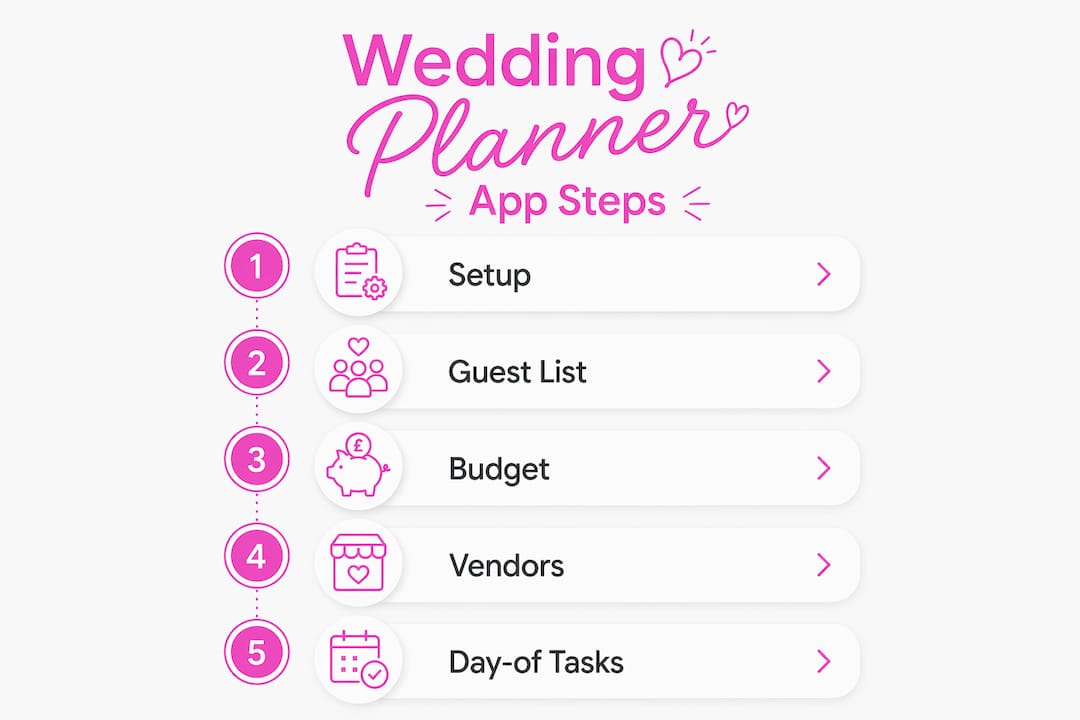
The most common mistake couples make is treating their planning app as a checklist rather than an operations hub. Effective app usage requires a dedicated setup session of two to three hours at the start, entering all guest data, budget allocations, and known vendor contacts before you begin any active planning.
Follow this sequence to set up correctly from the beginning:
- Enter every confirmed guest with their contact details, dietary requirements, and relationship category before you do anything else.
- Allocate your total budget across categories (venue, catering, entertainment, floristry, photography) so the app can flag overspending in real time.
- Add every vendor you are considering, even at the enquiry stage, so all communication history lives in one place.
- Assign task ownership for every checklist item, even if you are planning without professional help. Knowing which partner owns each decision prevents duplication and gaps.
- Set a weekly review time, 20 minutes on a Sunday evening works well, to update payment records and check upcoming deadlines.
Naming conventions and task ownership are what separate organised couples from overwhelmed ones. Label vendors consistently (for example, “Photographer: surname, company name, contract status”) so searches return clean results six months into planning.
Tool sprawl is the other major pitfall. Couples who use one app for guests, a separate spreadsheet for budget, a notes app for vendor contacts, and a shared folder for contracts end up with fragmented planning and information chaos. Pick one integrated platform and migrate everything to it within the first week. The short-term effort of consolidation pays back every time you need to find a contract or check a payment balance quickly.
Pro Tip: Keep a running log of every payment made, including the date, amount, and method, inside the app rather than relying on bank statements. When a vendor queries a deposit six months later, you will have the record in seconds.
Key takeaways
An online wedding planner app works because it centralises every planning task, budget record, and vendor communication into one system, removing the disorganisation that causes most wedding planning stress.
| Point | Details |
|---|---|
| Core definition | Wedding management software integrates budget, guests, vendors, and timelines in one digital platform. |
| AI saves significant time | Automated vendor outreach achieves an 85% response rate, saving couples over 100 hours of administration. |
| Setup determines success | Spending 2 to 3 hours on initial data entry unlocks the full value of any planning platform. |
| Browser-based vs. native apps | Browser tools offer easier sharing and no storage demands; paid AI platforms suit complex, larger weddings. |
| Apps replace organisation, not expertise | Human oversight remains critical for final negotiations, creative decisions, and day-of coordination. |
Stuart’s view: what apps do well, and where they stop
I have watched couples arrive at their wedding week in two very different states. The ones who treated their planning app as a genuine operations hub, not just a place to tick off tasks, were calm. The ones who used it intermittently, or ran three tools in parallel, were not.
What strikes me most is how often couples underestimate the setup phase. The app does not become useful the moment you download it. It becomes useful the moment your guest list, budget, and vendor contacts are all inside it. That two-hour investment at the start is the difference between a tool that works for you and one that sits unused.
The AI features on platforms like Everly and TheWeddingPlanner.ai are genuinely impressive for vendor outreach and timeline generation. But I would caution against over-relying on AI for final decisions. The human planner’s expertise in negotiating a contract or reading a venue’s flexibility on the day is not something any algorithm replicates yet. Use the AI to handle the operational load. Keep the judgement calls for yourself.
For couples planning entertainment specifically, the app is where you store the brief, the contracts, and the timeline. But the conversation about what the room needs to feel at midnight, the energy arc from dinner to dancing, that is a human conversation. No app replaces it.
— STUART
How Freshentertainments fits into your digital planning
Planning your wedding with a digital tool is only half the picture. The entertainment you book is what guests remember long after the flowers have wilted and the cake has been eaten.
Freshentertainments works alongside couples who are already using wedding planner apps to organise their day. Their bespoke packages covering DJ hire, MC services, live saxophone integration, and professional lighting are built to slot directly into your planning timeline. Every contract, brief, and timeline note can be stored inside your planning platform from the moment you enquire. If you are thinking about creating the perfect atmosphere for your reception, Freshentertainments brings the expertise that no app can replicate.
FAQ
What is an online wedding planner app?
An online wedding planner app is a digital platform that centralises budget tracking, guest management, vendor coordination, and timelines for engaged couples. Platforms like Bridebook, Everly, and TheWeddingPlanner.ai are leading examples of this category.
Are free wedding planning apps worth using?
Free browser-based tools are worth using for smaller weddings or couples with straightforward planning needs. They require no storage space and allow easy guest sharing, but lack the AI features and vendor integrations found in paid platforms.
How much time can a wedding planner app save?
Automated planning tools save couples over 100 hours in administrative tasks, primarily through automated vendor outreach and smart timeline management. The time saving is largest for couples managing guest lists above 80 people.
Do wedding planner apps replace a human wedding planner?
Wedding planner apps replace organisational labour, not human expertise. Day-of coordination and final vendor negotiations remain areas where a professional human planner adds clear value that software cannot match.
How do I get the most from a wedding planning app?
Spend two to three hours at the start entering all guest data, budget allocations, and vendor contacts into the platform. Assigning task ownership and using consistent naming conventions prevents the fragmented planning that undermines most couples’ experience with these tools.