
TL;DR:
- Selecting a host whose style aligns with your event’s tone enhances engagement and ensures a memorable experience for guests.
- Thorough briefing, experience in relevant formats, and a genuine chemistry call are critical for choosing the right event host.
Picking the right host can make or break your event. The energy they bring, the way they read the room, and how confidently they handle the unexpected all shape the experience your guests walk away with. Yet knowing how to choose event hosts is something many planners underestimate until they are mid-planning and overwhelmed with options. This guide cuts through that confusion. Whether you are organising a corporate conference, a wedding celebration, or a hybrid event, you will find clear criteria, practical comparisons, and specific recommendations to help you make a confident, well-informed decision.
Table of Contents
- Key takeaways
- 1. How to choose event hosts: match their style to your event
- 2. Verify experience at the right scale and in the relevant sector
- 3. Assess adaptability for live, virtual, and hybrid formats
- 4. Understand the difference between a host and a moderator
- 5. Know the different types of event host
- 6. Use a comparison framework before shortlisting
- 7. Ask the right questions before booking
- 8. Never skip the chemistry call
- 9. Factor in preparation time and briefing requirements
- My perspective on selecting the right host
- Make your event unforgettable with Freshentertainments
- FAQ
Key takeaways
| Point | Details |
|---|---|
| Match style to your event | A host whose tone and background align with your event type will engage your audience far more effectively. |
| Preparation time matters | Expect a professional host to need several weeks of lead time; be cautious of anyone who claims overnight readiness. |
| Virtual events need different skills | Online hosting requires platform fluency and on-camera presence, not just general presenting ability. |
| Chemistry calls are non-negotiable | A pre-booking conversation reveals whether the host respects your messaging and understands your audience. |
| Costs vary considerably | Corporate emcees typically range from £500 to £5,000 depending on event scale, complexity, and profile. |
1. How to choose event hosts: match their style to your event
The single most important criterion when selecting event hosts is alignment. A host who is brilliant at comedy roasts will feel jarringly out of place at a charity fundraiser focused on personal loss. Corporate events require a professional tone, tech summits call for a forward-thinking, ideas-led approach, and charity events demand genuine empathy and motivational warmth.
Start by defining the emotional register you want your event to carry. Is it celebratory? Thought-provoking? Informal and fun? Once you have that clarity, you can assess hosts not just by their CV but by whether their natural energy fits that register. Watch showreels with your audience in mind, not your own personal taste.
Pro Tip: Ask yourself: would this host make my specific audience feel comfortable and engaged within the first 60 seconds of speaking? If you cannot answer yes with confidence, keep looking.
2. Verify experience at the right scale and in the relevant sector
A host who has delivered polished performances at 50-person networking events may struggle to command a 700-seat gala. Scale matters. So does sector familiarity. An MC who understands the language and dynamics of, say, the financial services world will instinctively avoid missteps that an outsider would not even recognise as risks.
When you brief your MC with event details, the quality of their questions will reveal how experienced they truly are. A seasoned host asks about audience demographics, sensitive topics to avoid, the running order, and how they should handle technical delays. A less experienced one asks mostly about where to stand and when to speak.
Look for references from events of comparable size and complexity. A testimonial from a similar event is worth ten generic five-star reviews.
3. Assess adaptability for live, virtual, and hybrid formats
Not every host performs equally across formats. Live events reward charisma, physical presence, and crowd-reading skills. Virtual events require something different entirely. For virtual and hybrid events, a host must manage platform controls, handle transitions, and keep an online audience engaged without the benefit of physical energy in the room.
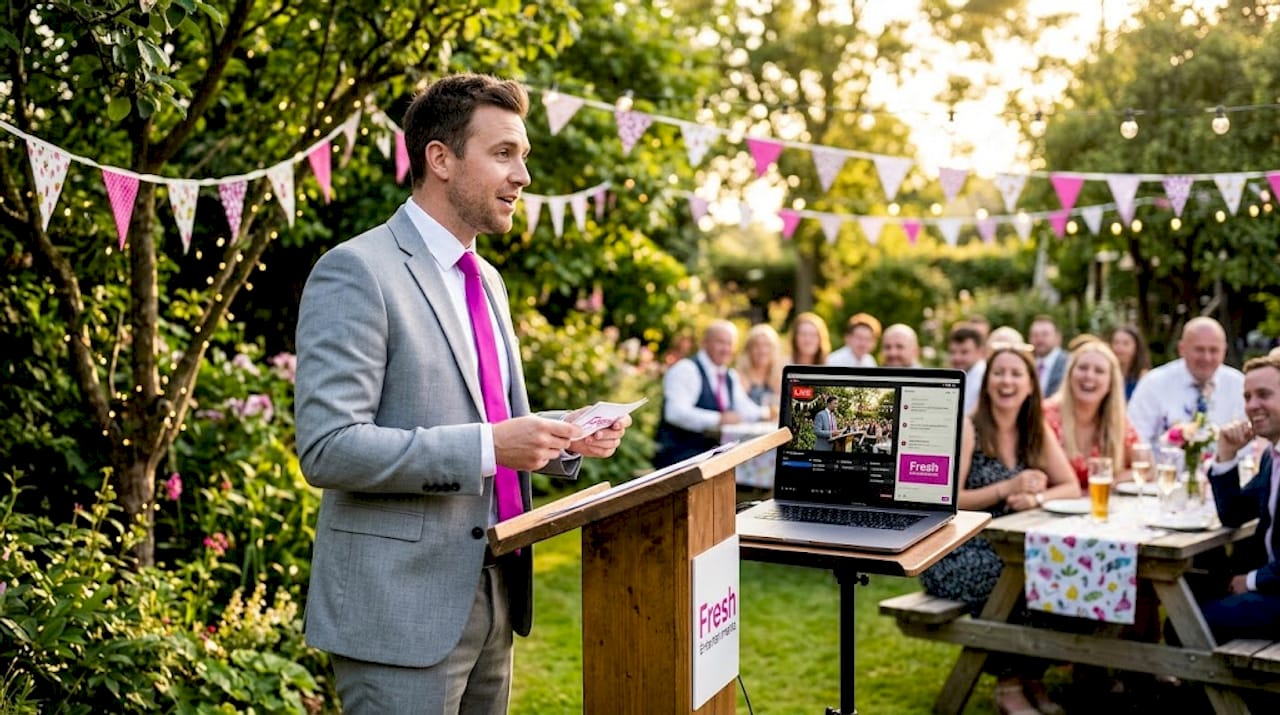
Camera presence is a skill in its own right. Hosts who are magnetic on stage can fall flat on a webcam if they have not developed the ability to speak directly to a lens and project warmth through a screen. When assessing hosts for online events, ask specifically for footage of them hosting in a virtual environment, not just highlights from live stages.
For hybrid formats, look for someone who can consciously address both rooms at once without either audience feeling like the afterthought.
4. Understand the difference between a host and a moderator
These two roles are often confused, and booking the wrong one leads to real problems. A host drives the overall event experience, keeps energy up, manages transitions, and acts as the audience’s guide through the programme. A moderator has a narrower, more intellectual function: they control conversations and manage equal participation among panellists, drawing out insight and keeping discussions on track.
If you need someone to front an awards ceremony or keep a conference flowing between sessions, you want a host. If you are running a panel discussion and need someone to ask sharp questions, manage time, and draw out quieter voices, you want a moderator. Sometimes one person can do both, but that is rarer than it might seem.
Moderators with journalism or academic backgrounds tend to bring the strongest combination of structured questioning and the ability to adapt when a conversation takes an unexpected turn.
5. Know the different types of event host
Understanding the main host profiles helps you narrow your search considerably. Here is a breakdown of the most common types:
- Professional corporate hosts. Polished, reliable, and experienced in large-scale conferences and business events. They are skilled at maintaining authority without being stiff.
- Comedy and entertainment hosts. Better suited to parties, awards nights, and social occasions where a lighter, more playful energy is welcome. Their improvisation skills shine when events go off-script.
- Industry-specific hosts. These hosts bring specialist knowledge of a particular sector. They reduce the risk of jargon misfires and connect more naturally with a specialist audience.
- Virtual and hybrid hosts. Trained in platform management and on-camera delivery. They understand how to moderate online chat, run polls, and keep digital attendees from dropping off.
- Wedding MCs. A distinct category. The best wedding emcees combine warmth, humour, and genuine sensitivity to the couple’s story, all while keeping timings tight and the dancefloor full.
Identifying which category fits your event is step one. Within each category, the quality and fit will still vary widely, which is why the criteria in the other sections of this guide remain equally important.
6. Use a comparison framework before shortlisting
Once you have identified two or three candidate hosts, a structured comparison saves time and prevents gut-feel decisions you might later regret.
| Host type | Best suited to | Typical fee range | Preparation time | Key strength |
|---|---|---|---|---|
| Corporate emcee | Conferences, product launches | £800 to £3,500 | 3 to 6 weeks | Polished delivery and agenda control |
| Entertainment host | Parties, awards, galas | £500 to £2,500 | 2 to 4 weeks | Energy, improvisation, crowd work |
| Industry specialist | Niche or technical events | £1,000 to £4,000 | 4 to 8 weeks | Credibility and sector fluency |
| Virtual host | Online and hybrid events | £500 to £2,000 | 2 to 4 weeks | Platform literacy and on-camera presence |
| Wedding MC | Weddings and receptions | £600 to £2,000 | 4 to 6 weeks | Personal warmth and timeline management |
Note that corporate emcees can range from £500 to well over £3,000 depending on profile and complexity. Celebrity-level hosts sit considerably higher. Budget transparency from the outset protects you from surprises.
Pro Tip: Always ask what the fee actually covers. Some quotes exclude travel, accommodation, rehearsal time, or a pre-event briefing call. Get it in writing before you commit.
7. Ask the right questions before booking
The event host hiring process should always include a direct conversation before any contract is signed. Clarify fees, preparation time, cancellation policies, technical needs, and travel requirements upfront so there are no gaps in expectation later.
Good questions to ask include:
- Have you hosted an event of this size and format before?
- How do you handle technical failures or unexpected schedule changes on the day?
- What do you need from us in terms of briefing materials and lead time?
- Which parts of your script or delivery are fixed, and which are customisable for our event?
- What is your cancellation and rescheduling policy?
The answers tell you as much about professionalism as any showreel. A host who is vague about cancellations or dismissive about preparation needs is a risk you do not need on event day.
8. Never skip the chemistry call
Chemistry calls validate mutual fit and reveal whether the host will respect your event’s messaging, handle sensitive moments with grace, and adapt their approach to your audience. This is where you discover whether they are genuinely curious about your event or simply looking to transplant their standard set.
A great chemistry call is not just the host impressing you. It is both sides testing whether the working relationship will actually function under pressure.
Pay attention to how many questions they ask about your audience and your goals versus how much they talk about their own previous work. The best hosts are intensely curious about the brief. They want to understand who will be in the room and what you need those people to feel by the end of the evening.
9. Factor in preparation time and briefing requirements
Hosts typically require several weeks of preparation before your event. Anyone claiming they can step in at short notice with minimal material should prompt serious caution. Adequate preparation reduces the risk of information errors, mistimed announcements, or awkward ad-libs that land poorly.
Thorough briefing with runsheets, pronunciation guides, and technical details is not optional. The most common reason events feel poorly hosted is an information mismatch: wrong speaker introductions, misread timings, or AV cues missed because the host was not properly prepared. Your job as the event planner is to give them everything they need. Their job is to use it.
Build your briefing document early and share it at least two weeks before the event. Then schedule a final run-through in the week before to confirm all details are still accurate.
My perspective on selecting the right host
By Stuart
I have seen planners spend months obsessing over venue décor and catering menus, then book their host in the final fortnight as an afterthought. It is the single most common mistake in the event host hiring process, and the consequences are very visible on the day.
What I have learned is that credentials are a starting point, not a finish line. I have worked alongside hosts with impressive CVs who completely misread the room because nobody had a proper briefing conversation with them. And I have seen relatively unknown MCs absolutely own a room because they took the time to understand the audience and the tone the client actually wanted.
The thing most planners overlook is flexibility. Not flexibility in the sense of “can they ad lib?” but flexibility in the sense of: when the schedule shifts by 40 minutes, when the keynote speaker overruns, when the AV fails, does this person hold the room together or do they freeze? That quality is genuinely hard to assess from a showreel. It only surfaces in a proper conversation and, ideally, in references from events where something went unexpectedly wrong.
My honest advice? Prioritise curiosity over charisma. The host who asks the most intelligent questions about your audience in the chemistry call will almost always outperform the one who dazzles you with stories from their past events.
— STUART
Make your event unforgettable with Freshentertainments
Finding and briefing the right host is just one part of creating an event people genuinely remember. Freshentertainments has spent years matching skilled MCs and emcees to weddings, corporate events, and celebrations across Scotland and beyond.
Whether you need an experienced wedding entertainment package that includes professional hosting, lighting, and music, or guidance on how entertainment elevates your guests’ experience, the Freshentertainments team can help you find the right fit. Every booking is supported by expert coordination to make sure your host, your entertainment, and your event flow work together perfectly. Explore the full range of packages at freshentertainments.com and start building something worth remembering.
FAQ
What are the most important qualities of a good event host?
The best event hosts combine adaptability, thorough preparation, and a genuine ability to read their audience. They ask smart questions during the briefing process and hold the room confidently when things do not go to plan.
How do I find event hosts for a corporate conference?
Look for hosts with verified experience at events of a similar scale and industry focus. Ask for references from comparable events and always conduct a chemistry call before signing any contract.
What questions should I ask event hosts before booking?
Ask about fees, cancellation policies, preparation time, and technical requirements before committing. Also ask how they handle unexpected changes on the day, as this reveals their real level of experience.
What is the difference between a host and a moderator?
A host drives the overall event experience and manages transitions, while a moderator focuses on facilitating panel discussions and managing equal participation among speakers. The roles require different skills and should not be treated as interchangeable.
How much does it cost to hire a professional event host?
Corporate emcees typically cost between £500 and £5,000 depending on experience, event complexity, and profile. Always confirm exactly what the quoted fee includes before you agree to a booking.